![PortStrategy[GreenPort]](https://www.portstrategy.com/wp-content/uploads/2026/09/PortStrategyGreenPort.svg)






Is the cascade effect a threat, an opportunity, or both?
Outside factors are influencing the plans of both the Black Sea and the Baltic ports
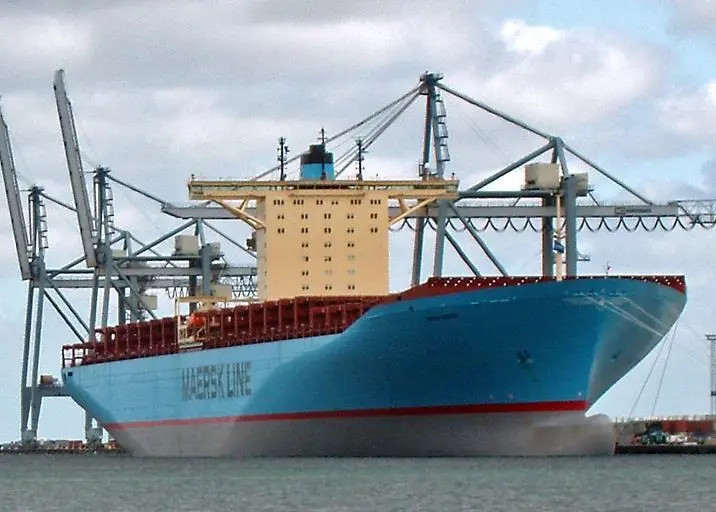
Steve Wray of Ocean Shipping Consultants explains that despite the modest recovery, lines are still being seduced into ordering the larger vessels, because of the undoubted advantage of the economies of scale – note Maersk’s latest possible venture with 16,000 teu vessels. And although such vessels would not be going into either the Black Sea, with its Bosphorus bottleneck, or the Baltic, there is a “cascade” effect on other trade lanes.
“The sheer level of ordering for ULCS and ‘new panamax’ vessels is difficult to justify and overtonnaging – again – will be the most likely outcome,” says Mr Wray. Although much will be absorbed, the cascade will lead to 6,000 teu-plus vessels coming on to routes that used to see much smaller ships.
At the same time, fuel is much more expensive and there is pressure for slower steaming and dropping port calls. The overall effect will be an inducement for further concentrating the number of direct port calls and the growth of transhipment activity to ensure that all the remaining ports/regions are still served.
Is this a threat or an opportunity, or both? It depends where you are standing. Mr Wray says the shipping lines have already cascaded large tonnage into services where there isn’t, at present, the demand. But demand or not, this still means pressure on the ports to accommodate the larger vessels.
We should expect vessel sizes on direct calls to reach upwards of 10,000 teu in the next five to 10 years in the Baltic, with the Black Sea region following closely behind, he says.
So, although the current demand does not justify that many direct calls, the region is looking at a comeback and ports with sufficient deep water to berth the larger vessels will be in a better position to benefit from a growth in trade. For example, DCT Gdansk has already managed to make itself an attractive proposition and secured direct calls by Maersk Line vessels of more than 8,000 teu.
As well as slow steaming and less route deviation, the pressure to reduce costs is leading to new alliances and the merging of routes – both pointing to a reduction in the number of direct port calls. “This trend for fewer calls is likely to continue and favour centrally placed, larger ports, although the remaining smaller ports will still have a role to play as outports on various feeder rotations,” says Mr Wray.
If transhipment activity increases, so will the importance of feeder flows, boosting the need for smaller ports to gear up to handle containers at dedicated berths.
This will also give the smaller ports leverage, as connection times will be even more critical in the new cost-saving regimes to ensure transit times are strictly controlled. “This is where the negotiations can start for the port, which may be able to get a good deal by offering particular berthing windows that a shipping line requires.”
Related Articles
 PORT & TERMINAL NEWS
 EXPANSION & DEVELOPMENT
 PORT & TERMINAL NEWS