



Middle Eastern moves
Middle East container trade rides the wave of increased regional spending. Mike Mundy reports
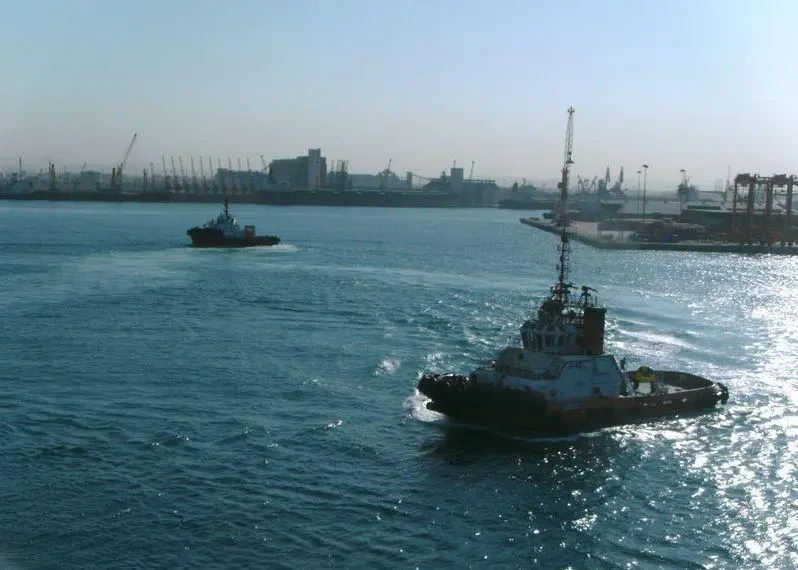
The Middle East has raised its container game, with growing cargo volumes on the back of an increased disposable income.
Shipping lines have responded accordingly swapping transhipment for direct calls. And a re-dressing of the trade imbalance has further improved the situation, lowering the amount of empties being exported.
Figures from Drewry plot Middle East container throughput growth at a CAGR of 11% between 2000 to 2011, compared with the world average of 8.8%. Taking just one example, Saudi Arabia’s largest port, Jeddah registered 18% growth, backed by impressive port developments.
Moving on with the analysis, Ocean Shipping Consultants has charted the forward development of Middle East in a new study of the container trade in the region and the premier trends associated with it.
The study – Middle East Containerport Markets to 2025 – employs three economic scenarios in its forecasts: “base, enhanced recovery and continued instability” and in addition a scenario which examines the possibility of slower transhipment demand due to an increase in the number of direct services to medium sized ports.
The region is divided into three port regions:
– Arabian Gulf and Gulf of Oman: United Arab Emirates, Iran, Eastern Saudi Arabia, Kuwait, Northern Oman, Bahrain, Qatar and Iraq.
– Arabian Sea and Gulf of Aden: Southern Oman, Southern Yemen, Dijbouti and Horn of Africa.
– Red Sea: Western Saudi Arabia, Jordan, Southern Israel, Eastern Egypt, Sudan, Eritrea and Western Yemen.
Capacity need
Across all three regions, OSC forecasts an ongoing requirement for new container terminal capacity driven by increased demand, the introduction of larger vessels and the requirement to configure terminals to handle more laden export containers as nations invest in export industries.
On the basis of known port investment plans, it is calculated that total container handling capacity at Middle East ports is set to increase by 41% to 71m teu/year over 2012-20. Of this, Arabian Gulf and Gulf of Oman capacity is expected to grow by 42% to 45.6m teu/year; Arabian Sea and Gulf of Aden capacity is forecast up by 32% to 10.6m teu/year; and Red Sea capacity is projected to rise by 45% to 14.9m teu/year.
Middle East container port demand, by type, is forecast across the various scenarios to increase. Under gateway demand, OSC expects growth of 53%-69% to 29m-34m teu over 2012-20, and by a further 22%-28% to 36m-41m teu over 2021-25. Transhipment demand is projected to increase 37%-60% to 24m-27m teu over 2011-20, and by a further 18%-28% to 28-36m teu over 2021-25. Total demand is forecast to grow by 45%-64% to 53m-60m teu over 2012-20, and by a further 20%-28% to 64m-76m teu in 2025.
OSC further highlights that in the period 2001-12 container throughput in the Middle East increased by 250%, and by 66% over 2006-12 to 36.3m teu. Since 2006, the Arabian Gulf ports have been the strongest performers with a 69% increase to 25.1m teu. However, growth slowed from 11% in 2011 to around seven per cent in 2012. Taking the decade to 2012, throughput grew most rapidly in the Red Sea range, at 311%, to reach 6.6m teu.
Meanwhile, in the Arabian Sea/Gulf of Aden range, volumes grew by 171% over 2001-12, and by 54% over 2006-11 to 4.6m teu. Growth surged from -4.2% in 2011 to 13.6% in 2012.
Related Articles
 PORT & TERMINAL NEWS
 PORT & TERMINAL NEWS
 PORT & TERMINAL NEWS