

Moving on out
Smart ports have extended their natural boundary to get a foothold in the wider logistics chain. Alex Hughes reports
There are now countless logistics companies able to offer a whole variety of services beyond the port gate, picking up and delivering cargo using a huge variety of modes. Despite this, port authorities and terminal operators are still demanding more choice, which the private sector quite often is still not providing.
To get around this, port authorities are increasingly making their own investments in logistics to ensure cargo makes its way to their port and not to that of a rival. Significantly, many terminal operators are also following suit, not necessarily to make additional profit, but to ensure that they can maintain traffic levels in increasingly fierce market conditions.
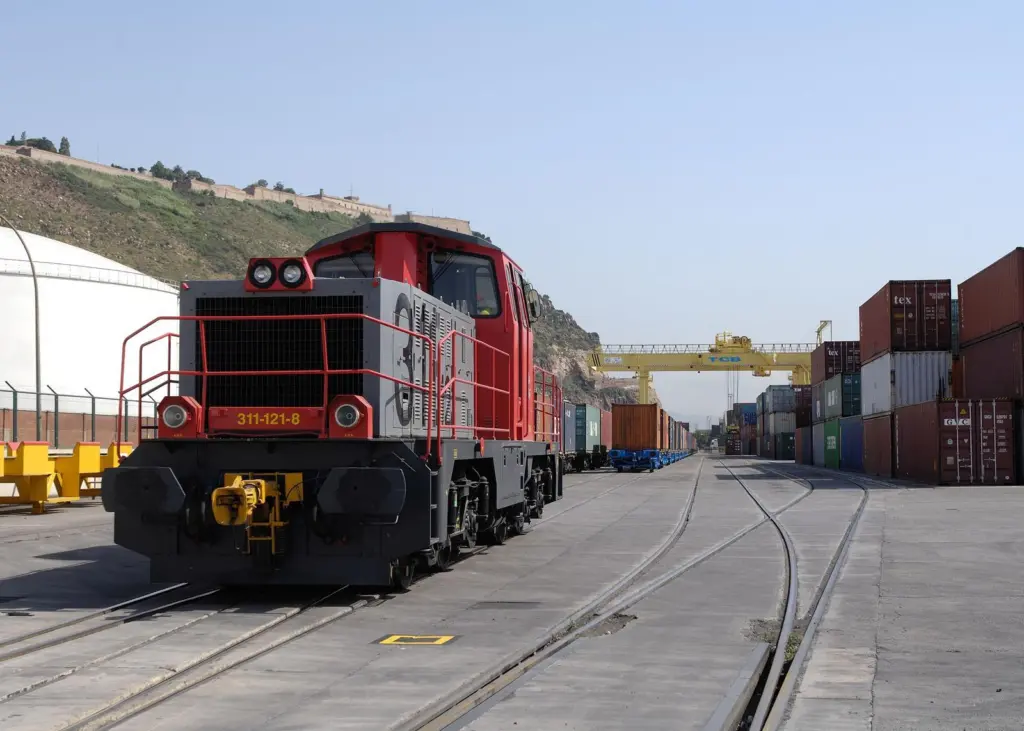
The Barcelona-based Grup TCB operates its own intermodal rail services from container terminals in both Valencia and Barcelona. Miguel Duro, sales and marketing director, explains that, when these were added to the service portfolio, it was because the group was strongly convinced that this was going to add value to its services and also help its customers.
“It would help us to maintain existing volumes and attract new business to our terminals that had not previously been there. In addition, it has helped us increase our traditional hinterland or area of influence so that we are now able to offer connections into inland points that were not covered in the past,” he says.
As part of this overall strategy, the group has also established a presence in inland rail terminals such as tmZ Services in Zaragoza and at Valladolid, while other locations are also being considered.
“We cannot necessarily provide rail services more profitably and more efficiently than outside specialists, but that is not the point. We offer these services because it allows us to differentiate ourselves from other service providers. What we are doing is to integrate the sea leg of the total supply chain with the landside leg. This can only be of benefit to users, cargo, and the final client or consumer,” says Mr Duro.
Limited choice
When TCB first began organising its own intermodal trains in 2006, national rail operator RENFE was the only company providing container-rail services, with the deregulation of rail freight still in its infancy. Since then, the group has established “a fruitful co-operation with RENFE” that has resulted in a substantial increase in the number of containers now being moved by rail. Nevertheless, Mr Duro says: “We do not rule out coming to agreements with other available operators if the situation requires it.”
Significantly, both TCB Railway Transport and TCV Railway Transport are 100% subsidiaries of TCB and TCV, respectively, with there currently being no intention of selling stakes in either company to third parties.
Asked whether both rail companies have been a financial success, Mr Duro says that strong financial returns were not necessarily the main objective.
“We believe that both our intermodal operators provide important support for the commercial function of our terminals. In both cases, TCB and TCV, the results have been above our expectations and speak for themselves.”
Indeed, so pleased has the company been with how rail services have boosted terminal throughput that new ones are continually being added.
“Services require constant reviewing and updating as they have to be adapted to the needs and requirement of the markets and our clients. Today, we run over 70 trains every week from Valencia and Barcelona,” says Mr Duro.
Expertise buy-in
All locomotives and container flat wagons are leased from specialist companies, with train compositions being contracted according the specific requirements of the individual rail corridor, which takes into account such factors as length, weight and the mix of 20’ and 40’ containers. Furthermore, the commercial risk of selling the rail slots, filling the trains and achieving a financially viable load factor on those trains operated remains wholly with TCB and TCV.
“We have no plans to buy either wagons or locomotives in the future. We believe that we should not enter what is a very specialist sector,” says Mr Duro.
Going forward, he says that ways of improving the service are constantly under review, since it is thought this is the only way of keeping them attractive to customers and therefore remaining competitive in the market.
“As an example, I can mention that we are just in the process of implementing a dedicated IT management system, which has been developed in-house. This will help us to improve our operational efficiency and provide a better overall service to our customers.”
Empty challenge
In Rotterdam, the InlandLinks platform was set up by the Port of Rotterdam Authority in collaboration with the Association of Inland Terminal Operators.
Spokesperson Minco van Heezen says that, though not a formal organisation as such, it does work very well. “It is a unique instrument, providing the logistics sector with sustainable and transparent connections to and from Europe’s largest seaport,” he says, explaining its existence is predicated on providing a platform for inland terminals to present themselves to the market. At present, it encompasses more than 60 terminals in the Netherlands, Germany, Belgium and a number of other European countries that have inland shipping and/or rail connections with Rotterdam.
One of the main aims is to cut out the unnecessary movement of empty containers, with estimates of around 25% of all landside movements generated by Rotterdam being of empties, amounting to some 2.5m teu annually. InlandLinks has therefore developed an application – the empty depot tool – to substantially reduce the transport of these, which is seen as a real breakthrough in terms of efficiency and sustainability for the entire logistics chain.
The online application indicates those inland terminals where shippers and logistics service providers can pick up and deposit empty containers, and later reuse these containers for a new load.
“This means it is no longer necessary to always return the empty containers to Rotterdam,” says Mr Van Heezen. “This saves a great many unnecessary kilometres, which leads to lower costs and lower CO2 emissions.”
Chain partner
Hans Smits, chief executive of the Port of Rotterdam Authority, notes: “By strongly investing in the optimisation of the logistical chain, we strengthen our position as the largest port in Europe. Improving efficiency for our clients and the entire chain is therefore an important part of our mission. Moreover, good, reliable connections with our hinterland network are a spearhead with which Rotterdam distinguishes itself from other ports. The new application InlandLinks developed innovatively unites these two points.”
In 2013, OOCL, Cosco, K-Line and Yang Ming all became users of the empty depot tool, bringing to 13 the number of participating shipping lines who, between them, account for 60% of the total containers handled at the the port. A further three shipping companies have also indicated an interest in signing up.
In addition to the empty depot tool, the InlandLinks concept also includes an online intermodal route planner, which can be used to map out the most sustainable and efficient shipping route to and from Rotterdam using inland shipping or rail connections, thereby cutting costs for users.
Related Articles
 OPERATIONS
 OPERATIONS
 PRODUCTS & SERVICES