![PortStrategy[GreenPort]](https://www.portstrategy.com/wp-content/uploads/2026/09/PortStrategyGreenPort.svg)





Carriers face terminal ownership dilemma
As the global shipping industry faces a number of financial challenges, shipping lines are facing a “dilemma” with their container terminal ownership strategies, says Drewry in its newly released annual report.
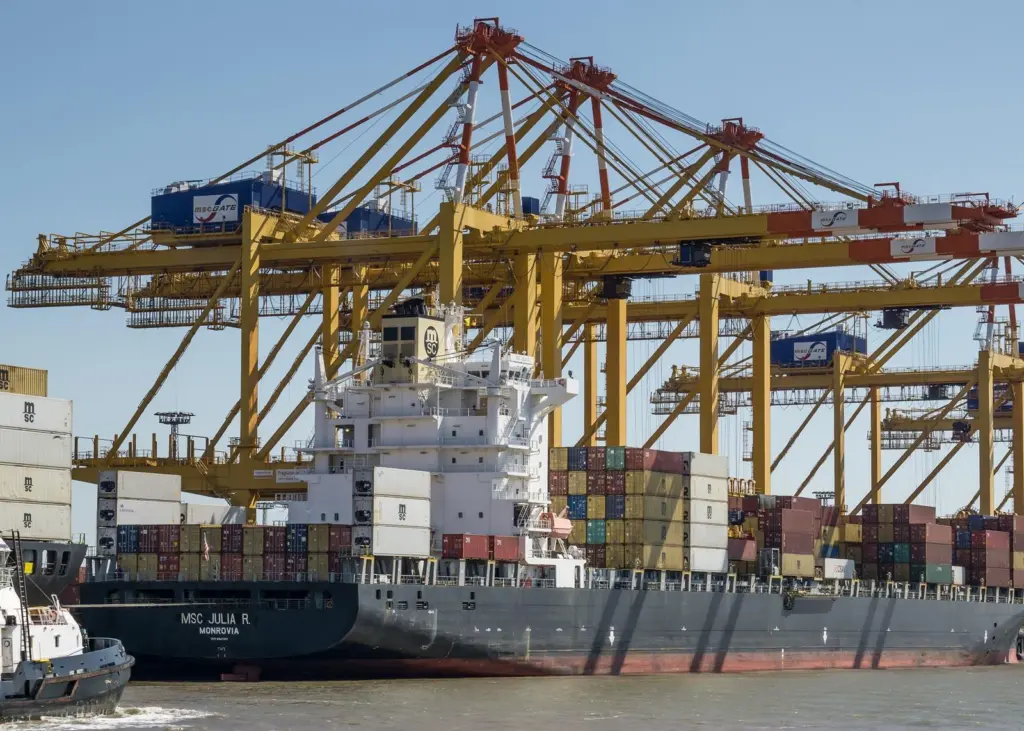
Drewry’s latest publication, Global Container Terminal Operators Annual Report 2015, looks at the activities of the 16 carriers that make up the big four global alliances (2M, Ocean Three, G6 and CKYHE).
This comes as a number of shipping lines have been selling some of their container terminal assets in order to raise cash, and while it could be assumed this is a common strategy for all carriers, Drewry says this is not the case.
According to Drewry’s report, each carrier has “varying approaches” to strategies with regard to terminal ownership. Maersk Line for example has no terminal interests as all activity of this nature is carried out by sister company APM Terminals, operating at arm’s length. Leaving aside Maersk, when it comes to terminal ownership, Drewry says the remaining 15 carriers “by no means conform to the herd mentality often levied at them when it comes to ordering bigger ships”.
Terminals are generally attractive assets and so have great value in terms of raising money in the short term if sold off. Yet at the same time, owning terminals may well be a profitable part of a line’s activities and so a good business to stay in for the long term – and perhaps expand further into, says Drewry. There is also the fact that terminals often provide access to port capacity in key locations in a line’s network, and so are strategically important assets.
According to the report, only five carriers have so far followed the predicted route and engaged purely in the disposal of some of their terminal assets, or stakes in those assets: Hanjin, Yang Ming, K Line, Hyundai and MOL. Three have sold stakes in terminal assets but at the same time are also still making terminal acquisitions: TIL/MSC, CMA CGM and NYK.
In the case of TIL/MSC and CMA CGM, minority stakes in their existing portfolios have been sold, but the overall strategy remains to continue investment in the terminal sector – using terminal companies that have separate identities to their shipping line parents and a degree of independence.
Only the Cosco Group and China Shipping have indulged in buying more terminal assets, eschewing the disposal of terminals. China Shipping acquired a 20% stake in HPH’s Terminal 8W in Hong Kong, a 10% stake in Yang Ming’s Kao Ming terminal in Kaohsiung and a 24% stake in APMT’s Zeebrugge terminal. Cosco acquired a 40% stake in Terminal 8W and a 10% stake in the Kao Ming terminal.
A rumoured merger between the two companies could also mean further expansion of the terminals business.
The five remaining carriers – OOCL, APL, Evergreen, Hapag-Lloyd and UASC – show no recent change with regard to terminal assets.
Whatever happens, Drewry says further change in carriers’ terminal portfolio ownership is inevitable, given the ongoing financial pressures in the liner industry.
Related Articles
 PORT & TERMINAL NEWS
 EXPANSION & DEVELOPMENT
 PORT & TERMINAL NEWS