


Proactive approach of terminal operators in carbon emission reductions
The reduction of carbon emissions is one of the major challenges facing the European transport chain. For many years terminal operators have taken concrete steps to reduce their emissions, writes Lamia Kerdjoudj-Belkaid, FEPORT secretary general.
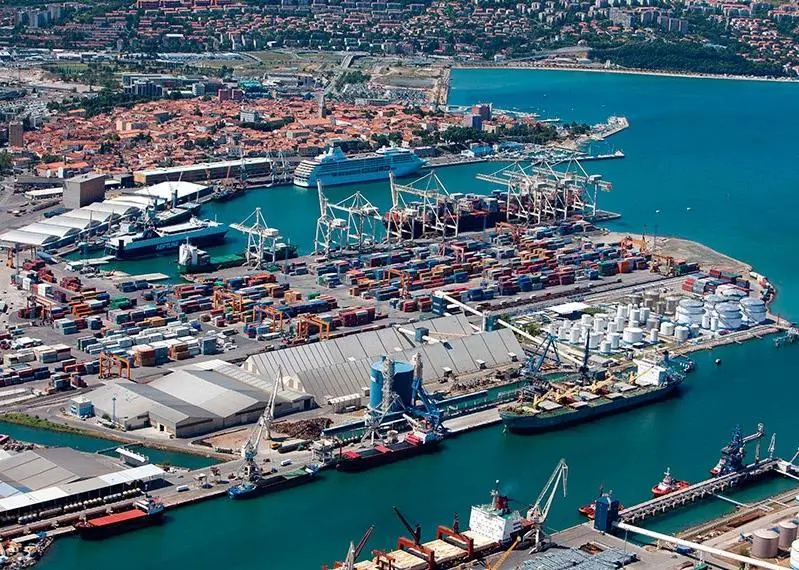
Industry remains the best place for stakeholders to take initiatives aiming at reducing emissions. It is impossible for an operator to gauge emissions against a benchmark period (for instance, annual carbon emissions). Therefore, when calculating emissions, it is important that operators only calculate those for which they are accountable for. For example, in a seaport terminal, seaborne vessels are a large source of emissions over which port authorities and terminals have direct no control.
Against this backdrop, the major container terminal operators in the European Union have created the EEEG Guidelines for calculating the greenhouse gas emissions footprint for container terminals. Those guidelines have been endorsed by FEPORT.
The guidelines are a voluntary methodology which allows container terminals to calculate their CO2 emissions on a periodical basis. The EEEG guidelines are currently used by APM Terminals, Contship Italia, DP World, ECT, Eurogate, HHLA, Hutchison Port Holdings and PSA who collectively account for over 75% of container lifts in the European Union’s seaports.
The FEPORT/EEEG Guidelines have existed and been actively used since September 2012. The guidelines are the only commonly agreed upon guidelines for calculating carbon emissions for terminal operators.
How does the FEPORT/EEEG methodology work?
The methodology is based on two key components, namely the total emissions of a terminal and the total number of containers that have moved in and out of the terminal. There is no restriction on the activities included in the port operations as long as the scope of activities over the years is consistent.
The total emissions of a terminal are established by multiplying energy consumption (say 100l of diesel fuel) by its emissions factor. By doing this a terminal can establish its total emissions in line with the Greenhouse Gas (GHG) Protocol, an internationally accepted standard for carbon footprint calculations. This methodology allows emissions from individual activities to be combined for a total picture.
The total number of containers that have moved in and out of a terminal is used as normalisation factor to link the consumption to the core activity of the operation. Measuring emissions at port level on an annual basis would be misleading as it does not take into consideration the sometimes great variation in the amount of movements within a terminal.
The methodology is utilised by dividing the total terminal emissions by the total number of containers entering and exiting in a set period (for instance annually). This gives the total figure for a terminal’s total emissions per container handled (kgCO2e/box).
Benefits of FEPORT/EEEG Guidelines
The FEPORT/EEEG Guidelines allow a container terminal operator to compare their emissions on a periodical basis at a meaningful level, namely at container level. In a situation where there has been emission increases per container, the operator can easily identify the source of the increase by examining different fuel consumptions separately. A detailed, internal evaluation of emissions allows operators to focus on specific emissions problems and take meaningful actions to reduce emissions in the future.
A clear example of this is the Port of Felixstowe, part of the Hutchison Port Holdings group, which has used the EEEG guidelines to record its emissions on an annual basis. The Port of Felixstowe’s total terminal emissions have reduced from 13.1kgCO2e/box in 2009 to 9.7kgCO2e/box in 2015. This translates into a reduction of almost 26% in six years. This is a clear example of the proactive approach taken by terminal operators in reducing their emissions. It also displays how the guidelines are an effective tool for establishing CO2 emissions on a meaningful basis.
At ECT in the Port of Rotterdam, emissions vary per terminal. Since the EEEG Guidelines have been used for calculating the carbon footprint, emissions at the terminal have been reduced by more than 20%. But what is even more important is the increased awareness that we have an opportunity to reduce the impact of our terminal on global warming. Reductions in the emissions have been achieved in both introducing more energy efficient equipment and economising the operations.
How to work towards further reduction of emissions
The FEPORT/EEEG Guidelines on carbon emissions clearly display that terminal operators are taking proactive measures to reduce their emissions.
Given the positive impact of the guidelines, FEPORT Environment, Safety and Security Committee (ESS) is currently working to simplify the guidelines and expand its applicability to other cargo types. This will assist all operators in taking steps to reduce their emissions. FEPORT would therefore encourage that legislators, be it at regional, national and at EU level, support industry best practices such as the FEPORT/EEEG Guidelines.
There also needs to be a recognition from European and national authorities that terminal operators are being proactive in reducing emissions. It is true that emissions in the port area are a major problem that must, however, be addressed by all maritime and port stakeholders within the entire port area and sometimes beyond.
The OECD study on shipping emissions in ports correctly points out that only 15% of the total emissions in the port area and only 1.5% of CO2 emissions can be attributed to terminal activity. EUROGATE Terminals in Germany has installed its own wind turbines, this being an example of terminal proactivity. It allows the port operator to produce about 18 Mio. kWh CO2-free electricity annually which is directly used at the terminal. Besides a reduction of about 8.300t CO2, this also means little transportation loss, no strain on the public grid and protection of the surrounding landscape by using an industrial area for the power plant.
From a legislative perspective, it is important that the European institutions and the national authorities focus on legislation that has a real impact on the environment, without creating disproportionate economic difficulties on industry. For instance, FEPORT has supported the adoption of the Non-Road Mobile Machinery Regulation which aims progressively to reduce the emissions of non-road mobile machinery engines and to phase out polluting equipment. FEPORT has also signed a MOU with PEMA (Port Equipment Manufacturers Association) in which both organisations will assist each other in working towards new equipment with reduced emissions.
Related Articles
 REGULATION & POLICY GREENPORT
 REGULATION & POLICY GREENPORT
 REGULATION & POLICY GREENPORT