

The Ems Case, lessons learned
A few years ago, the ‘Ems case’, which involved regular dredging to facilitate the navigation along the Ems River, opposed the city of Papenburg to the Federal State of Germany. Paris Sansoglou, Secretary General of the European Dredging Association points out at the main issues for dredgers in this case.
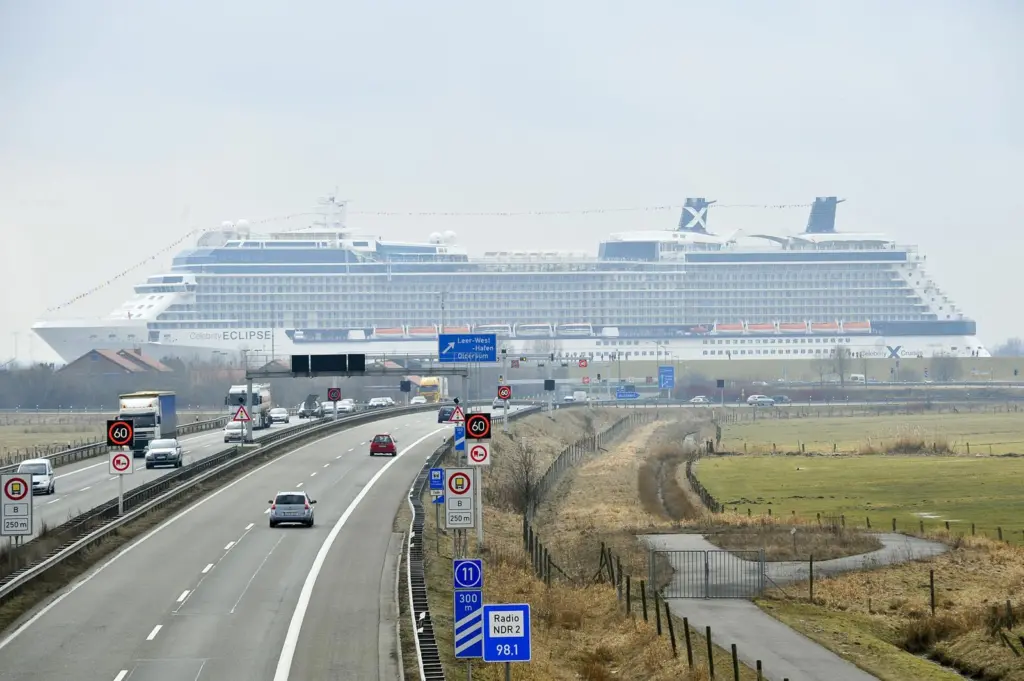
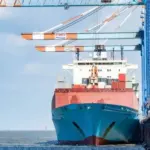
Located in Papenburg, a Lower Saxony town along the river Ems (~40km from the sea), Meyer Werft shipyard is specialised in the construction of large sophisticated cruise ships and special-purpose ships. Newbuilt cruise ship on the Ems, from Papenburg to the sea.
The river Ems was deepened from a natural draught of 6.3 metres to 7.3 metres. The authorisation for the ‘Capital dredging works’ was given on 31 May 1994, only days before the final transposition of the Habitats directive in Germany.
On 17 February 2006, the German government initiated the procedure to establish the Lower and Outer Ems as Natura 2000 sites by notifying the EU Commission. The EU Commission included these sites in its draft list and requested the German government’s agreement, pursuant Article 4(2) of the Habitats Directive (92/43/EEC).
Legal Case
On 20 February 2008, the City of Papenburg seized the Administrative Court of Oldenburg, arguing that as a seaport with a shipyard, its planning, investments and its economic development depended on the Ems remaining navigable for large seagoing ships. The City expressed its concerns that with the Lower and Outer Ems included as Natura 2000 sites, the necessary recurrent dredging operations would require in every case an appropriate assessment (Habitats Art. 6.3). The Court of Oldenburg prohibited the Federal Republic of Germany from giving its agreement (pursuant Article 4(2)) until its judgment was completed.
On 26th May 2008, the Court of Oldenburg referred questions to the European Court of Justice (ECJ) for a preliminary ruling (Case C-226/08), including:
5° Must ongoing maintenance works […] definitively authorised […] before […] transposition of [the Habitats Directive], undergo an assessment […] pursuant to Article 6(3) or (4) […] ?’
On 9th July 2009, the ECJ Advocate General emitted his Opinion which the ECJ followed closely but not completely, as it included in its ruling a useful clarification that allowed for a pragmatic interpretation:
“[…] ongoing maintenance works […], must, to the extent that they constitute a project and are likely to have a significant effect on the site concerned, undergo an assessment of their implications for that site […]”
This conclusion of the ECJ meant that maintenance dredging operations could be seen as one single ‘project’ and the Court explicitly stated:
“If, having regard in particular to the regularity or nature of those works or the conditions under which they are carried out, they can be regarded as constituting a single operation, in particular where they are designed to maintain the navigable channel at a certain depth by means of regular dredging necessary for that purpose, the maintenance works can be considered to be one and the same project for the purposes of Article 6(3) of Directive 92/43, as amended by Directive 2006/105.”
The importance of this ruling cannot be underestimated as the European Court of Justice is the ultimate interpreter of the European Law and the Court of Oldenburg followed this decision to the letter for all European aspects on 22nd November 2010.
The main issues for the dredgers
The Concept of a Project
In its judgment, the ECJ referred to recurrent maintenance dredging and considered that it could be seen as a project. However, the concept of ‘plan or project’ is unfortunately not defined in the directive. This concept is used in Art. 6.3 of the Habitats Directive to decide on the need for an ‘appropriate assessment’ or not.
This lack of definition is usually palliated with the European jurisprudence. For instance, there was a ‘Cockles Case’ in 2004 in which the solution was to take the definition of the term ‘project’ from the Environmental Impact Assessment Directive (EIA, 2011/92/EU).
In the particular context of the EIA Directive, the following definition of a project is provided:
– the execution of construction works or of other installations or schemes;
– other interventions in the natural surroundings and landscape, including those involving the extraction of mineral resources.
This definition should be read in conjunction with Annexes I and II of this Directive. Annex I corresponds to indent 1 of the above definition and covers the realisation of large industrial facilities while Annex II corresponds to indent 2 and covers specified industrial plant and infrastructure projects. Project types that are characteristic for the dredging and marine contracting industry are listed under Annex II, for instance “Reclamation of land from the sea” or “Construction of ports, harbours and terminals”. But in this same Annex II, it is also explicitly mentioned (item 10.k) that the maintenance and reconstruction of “Coastal work to combat erosion and maritime works capable of altering the coast” are clearly excluded from this Annex and from the scope of the definition of project under EIA.
The definition of ‘project’ under the EIA Directive should therefore not be stretched beyond the context and purposes of that Directive. To transpose the same definition to clarify the Habitats Directive can be misleading, particularly with regards to maintenance dredging.
In fact, in the general concept of a project one usually distinguishes between the project phase (during which certain works or one-off products are realised), from the operational phase (during which products, services and/or maintenance activities are produced or carried out on a regular basis).
For the dredging sector this relevant distinction should be applied. The sector distinguishes between capital dredging (project phase) and maintenance dredging (operational phase).
Therefore, despite the ECJ rulings, maintenance dredging should not be considered as a ‘plan or project’ in the sense of Art. 6 of the Habitats Directive.
Capital versus Maintenance Dredging
This leads us to the other key issue in this case, namely the distinction between Capital dredging and Maintenance dredging. Capital dredging refers to infrastructure projects in the aquatic, marine or coastal environment and require usually environmental impact assessment and appropriate assessment (if near or at a Natura 2000 site).
Maintenance dredging refers to the maintenance of an existing and completed infrastructure for which the project has had to go through the legal procedures. Thus, like all infrastructure projects, maintenance is an intrinsic part of the (capital) project. Its possible environmental effects have been assessed in the initial project impact evaluation. There should be no new environmental effects and, in theory, maintenance dredging should not require a separate impact assessment.
Therefore, the ECJ conclusion that a separate appropriate assessment may be required for maintenance dredging is not consistent with the concept of a project. But, maintenance dredging is necessary to maintain the conditions in which the Lower and Outer Ems were when they were selected as Natura 2000 sites.
Conclusion: a ‘Pragmatic’ Approach
There is a need for a definition of ‘plan or project’ in the Habitats Directive. However, with regards to concrete implementation by the EU Member States, the pragmatic approach proposed by the Germany should probably be used as best practice. The European Commission integrated elements of this approach in its Habitats guidelines but had to take the ECJ ruling into account. The approach can be summarised as follows:
1° In general, maintenance dredging should not be seen as a project in the sense of Art. 6 of the Habitats Directive and therefore should not require an appropriate assessment under the same article;
2° The required assessments (EIA or appropriate assessment) for the authorisation of capital dredging projects should incorporate where possible the associated recurrent maintenance dredging campaigns (maintaining the conditions in compliance with the authorisation);
3° Under specific (exceptional) circumstances, maintenance dredging operations may sometimes need to be regarded as constituting distinct ‘maintenance dredging programmes’ (for example because of changing techniques, conditions or regularity) and, if they are likely to have a significant effect on the nearby Natura 2000 site, should undergo a separate appropriate assessment for each campaign.
Finally, maintenance dredging should be designed and performed in a way to ensure that they contribute to achieving both navigation and Natura 2000 conservation objectives and should be included into the management plan of the nearby protected areas. This is in line with the new holistic and integrated approach, known as ‘Building with Nature’. In this approach, both physical and biological aspects of Nature are integrated in a project’s design (EcoDynamic Design), and the project is implemented in such a way that it integrates more harmoniously and more harmlessly into Nature and when possible to Nature’s benefits.
Related Articles
 REGULATION & POLICY GREENPORT
 REGULATION & POLICY GREENPORT
 REGULATION & POLICY GREENPORT