


“Design in Safety” or “Design for Safety”?
When developing cargo handling equipment, manufacturers need not just to consider the concept of “Designed-in Safety” but also to introduce a “Design for Safety” methodology. Hannu Oja, Konecranes’ Director of Port Technology, explains the differences
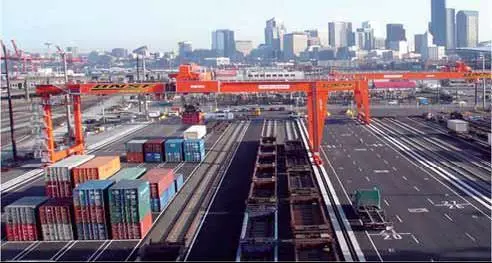
“Design in safety” refers to the exposure of personnel to hazards caused by the machine, machine reliability and fault probability. Today, to avoid accidental mishaps, the essential safety requirements are set by legislation, their amendments and standards; typical examples are:
• the Machinery Directive within European Community; and
• OSHA regulations in Americas.
Engineers are provided with numerous methods and tools to identify and deal with risks, faults and their consequences; however this approach is strongly focused towards the machine itself and its potential hazards to the user or adjacent persons. “Design for safety”, by definition, is intended not only to consider the direct physical consequences caused by the equipment. To create a safe operational environment requires wider understanding of how the equipment is used continuously and productively in various conditions and with various users. The key issue to “design for safety” is the recognition of “hidden” equipment properties and functional behaviour which may subject the equipment and/or personnel to hazardous situations – or preferably to more safe operation.
Be wise or sharp?
What is the difference between a wise and a sharp person? The sharp one survives from the situation; while the wise one never falls into it. T some extent, the safety requirements covered by standards aim to be wise, by identifying possible hazards beforehand. Even if the intention is good, often too much is left in generic form to leave room for interpretation, or too detailed to blur the intended purpose. The harmonized standards set the baseline which must not be violated, and are intended to fulfill compliance with legislation; however this cannot be interpreted as being all you can do. The case is similar while you plan to dine out; would it be sufficient to pick a restaurant knowing that the hygienic standards are followed? Definitely not, if you expect enjoyable experience! Similarly, equipment safety in a particular application and operation should be evaluated with a wider
Safety ladders
Complete safety is the vision for which we are all aiming. It should be understood, throughout the whole life cycle of the product, originating from the design board, manufacturing, use and maintenance up to disposal, that safety requires continuous awareness on the actions that are taken. The baseline of safety is driven by legislation, standards and design rules. Engineers have versatile roles depending on the stakeholder they serve; developed functional solutions shall provide value to customers, but in a cost conscious way. Safety is never compromised by qualified engineers and their decisions on chosen structures, design margins and properties have a great influence, such as:
• Streamlined and sound load carrying elements prevent secondary load impacts and their failure mechanisms are easier to predict, visually inspect and maintain (e.g. box section vs. lattice, direct drives vs. universal shaft or chains).
• Load assumptions derived from real operating conditions to provide lifetime fatigue properties or which indicate the vicinity of end of safe use status in a recognisable manner (e.g. pitting wear well before breakage).
• Access to, and maintainability of, all necessary locations and components. The practical problem with dealing only with the baseline is the interpretation between individuals and institutions. Standardization aims to harmonize the requirements, but how they are applied vary from one location to another.
The preventative aspects of safety are generally interpreted as installed addon devices for different purposes. These include various indicating and warning devices informing the driver and/or adjacent personnel around the equipment. As these devices are either designed to protect the equipment against extreme loading conditions, they also override the human control to stop motions as detection occurs. However, even though the technology development of different devices has progressed fast, the nature of the devices are still limited to a few types of incidents only. Without acknowledgement of this, the operations personnel may be led into having too high confidence on guarding features of installed devices. The operators in the port environment are already loaded up with a large number of information sources; so the role of addon devices is to some extent only acting as a “reminder” of safe operating instructions and work processes. Due to the need for human interaction, the preventative devices may even detract from the safety culture. The application of proactive safety starts with and the understanding of the operation where the equipment is used. It’s sad to report, but statistically (by the TT Club) more than two-thirds of the accidents initiate from operational issues. What can be done to significantly decrease mishaps which initiate from human error?
In today’s port operations, the amount and speed of simultaneous events set a demanding and challenging environment for all participants. Increased cargo volumes and pressure to shorten turnaround times consequently squeeze the decision time for operators and every deviation in the logistic chain, process or event creates a risk of hazard. Proactive safety begins from minimizing the possible interruptions, which prevent the personnel focus their core duty. A lot can be done with process planning in terminals: access control, vehicle routing, yard management and training. Simply put: the need to create a predictable surrounding where actors follow common rules and deviations won’t happen. The design of equipment can complement – but not replace – the general safe environment. The best the equipment can provide is the ease and confidence of use, to maximize the user’s focus on his task. Starting with sound, vibration and noise free control stations to maintain the driver’s capability over the work shift, all functions, features and activities shall be provided with minimum effort. Examples of these are:
• Multi-purpose controllers to enable on touch operation
• Active load control to prevent sway even with an inexperienced driver
• Integrated, dedicated solution driven mechanisms to decrease the mix of components and maintenance
• Rapid response on motion drives with dedicated zero-speed floating and micro movements.
This approach is beyond any installed add-on devices – it has to be integrated and in-build into the equipment’s behaviour.
Safety with solution synergy
“Safety in design” is a wide and versatile concept, penetrating into the roots of the design philosophy and culture evolved by each manufacturer. The understanding of safety is a development process and there is no short-cut to the next level. However, the comparison is difficult as the different properties and measures are not strictly quantitative. Safety is not created only by various details according to standards, the top level architecture and solution principles define the consequences, with which the potential hazard issues may vanish and remove the need of further protective measures. Today, as the equipment consists of multiple technologies, the integrator in charge is the one who is responsible for the safe functional behaviour – it is an illusion that system partitioning and shared responsibility between different actors could provide continuous safety path. “Design in safety” is the tangible part of the creation of the equipment, which is able to inspect, measure and verify – a stationary reflection that the equipment can be certified for the intended use. With this approach the baseline and partly the preventive aspects can be fulfilled. “Design for safety” involves a much wider approach while understanding the real use and interpreting that into practice. It brings the intangible aspect of the in-built and integrated equipment proactive features, which together with the local safety culture may lift the operations to the next step up the safety ladder.
Related Articles
 EQUIPMENT
 ALTERNATIVE FUELS GREENPORT