![PortStrategy[GreenPort]](https://www.portstrategy.com/wp-content/uploads/2026/09/PortStrategyGreenPort.svg)





Mixed messages
The Black Sea’s terminal strategy fails to line up with statistics, finds Stevie Knight
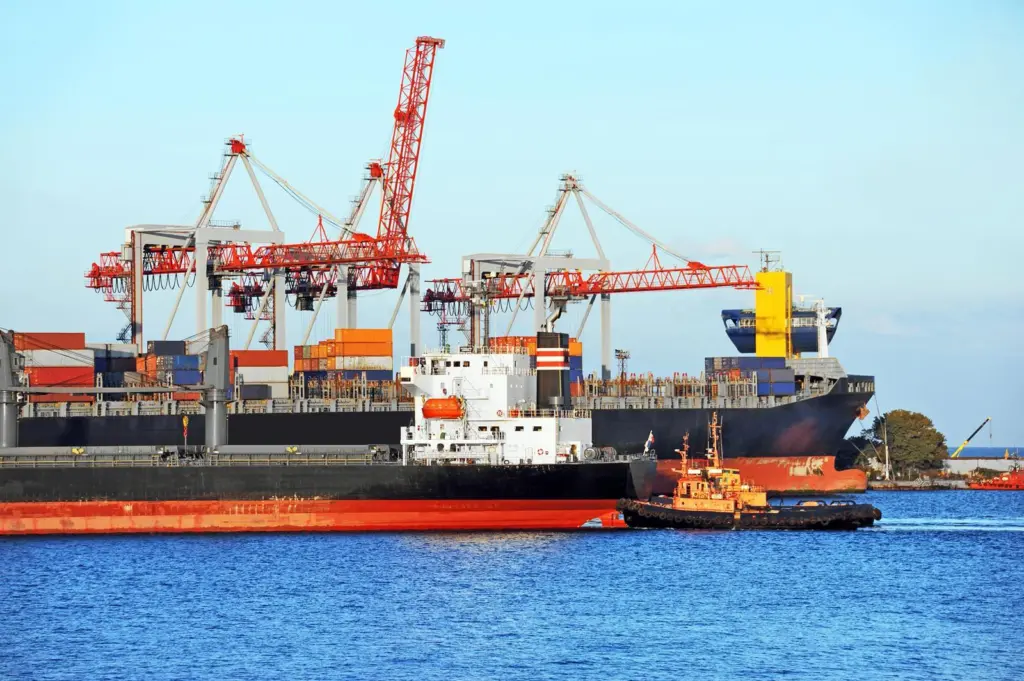
A look at Ukraine’s 2016 container figures shows a gain of 31%: a stark contrast to Georgia which posted a 12% loss. Consequently, one is bent on shaking things up with new players and significant investment while the other seems lost in the quagmire of failed reform. But it’s Georgia, not Ukraine, that’s pressing ahead with a $2.5bn project.
That cash is being invested in Georgia’s deep sea Port of Anaklia project, which is aiming for 100m tonne capacity in total over nine phases. However, it is still some decades away. The initial step, centred on the first pair of container terminals, is for a still-ambitious but more understandable 900,000 teu, explains chief executive of the Anaklia Development Corporation (ADC), Levan Akhvlediani, with a price tag around $600m.
Needless to say, there are a number of doubters wondering what local company TBC Holding and US firm Conti International have let themselves in for: they point out the region has, so far, only attracted a tiny fraction of those sought after boxes. Nor would the figures lead you to believe there is much need for development: 2015 saw Georgian throughput drop by 16%, compounded by last year’s fall which was partially distorted by Poti’s storm-blocked fairway in the winter.
Just where will the additional volume come from? Klaus Laursen of APM Terminal’s facility at Poti pegs total capacity for the area at a little over 300,000 teu adding: “We do not see significant growth in the immediate future.” In fact, Poti put its own 1m teu expansion onto the back burner just a couple of years ago.
Cargo claims
ADC’s answer to the cargo question seems to be ‘everywhere between here and China’. Certainly, the new deepwater port will have a 600ha economic zone to help it along and efficient technology on the quayside. Mr Akhvlediani says that “the number of moves per crane will be more than double that of current Georgian ports” and further claims that the new facility will have an “uptime over 95%”.
Most importantly, Anaklia will be able to receive vessels of 10,000 teu. If there can be said to be a defining factor this is probably it: until now, the immediate area has been limited to feeder-sized vessels around 1,700 teu, so the ability to take direct calls promises to pluck domestic cargo from Turkish transhipment points. Further, Anaklia could take over as a gateway for the 17m people of the South Caucasus region including neighbours Armenia and Azerbaijan, as well as pulling cargo from even further abroad.
Mr Akhvlediani sees the initiative – tied with road and rail links – as able to “boost the competitive advantage of Georgia as a transit country… re-establishing Georgia as a logistics hub”. Anaklia, he believes, will be able to coalesce freight and draw boxes in from a number of disparate routes, adding that “over time, the port will surely attract larger volumes of transit cargo to and from the landlocked central Asian countries, EU-Iran trade and the Silk Road as well”.
This last point is particularly interesting as rather than suffering from the Black Sea conflict, Anaklia might instead benefit from sanctions forcing European cargo away from Russia.
Degree of pull
Will the new port really exert that degree of pull? Alex Kyriakoulis, a corporate/infrastructure partner at Holman Fenwick Willan, warns against being overly dismissive but does admit “it requires a lot of things to work out”, adding a number of factors are vital to success – not all of them under ADCs control.
Among these are Georgia’s comprehensive trade agreements with the EU on the one hand and China on the other: this, needless to say, takes time and political effort.
There’s also hinterland access: “A port can have as much capacity as it wants, but unless it can survive as a dedicated transhipment terminal it won’t get anywhere without those transport links,” says Mr Kyriakoulis. Therefore, it depends on a critical 18 kilometre track joining the port to the main railway network. Happily, the government seems committed to the $100m needed for the connection. However, more support may be needed in the future: some critics point to limited capacity along sections of the Georgia-Azeri rail link.
Although the project clearly has political weight behind it, there are questions. Will Anaklia, less than 70 kilometres away, suck the life from Poti which presently handles 82% of Georgia’s volumes and has its own mega-port ambitions? And what about ICTSI’s Batumi operation? The official answer is that the new port will help create new cargo flows rather than moving old ones, but as Mr Kyriakoulis points out: “Will they all just sit idly and watch Anaklia leap ahead?”
Despite this, Poti itself may now be seeing the beginnings of a Silk-Road related fillip: its free zone is being mopped up by energy company CEFC China which has grabbed three-quarters of Poti’s 300ha space. So maybe ADC has a point after all.
Friend or foe?
Georgian ports’ fortunes will inevitably be linked to those of the Baku-Tbilisi-Kars (BTK) rail line due to open this year. It’s part of the route that promises to take goods from one side of Eurasia to the other in just 15 days via Turkey and Iran so it could provide stiff competition. But it may be that local ports should begin rooting for its success.
The reason is simple: if the BTK railway turns out to be a loser, then it stands to dissipate cargo even further. On the other hand, if it’s a winner the line will bring cargo into Georgia and a proportion will inevitably find its way out through the country’s ports.
Some cargo may even decide to avoid taking the whole ride: potentially starting in China but dropping the route after Tbilisi and making its way directly across the Black Sea, avoiding the railway’s big swing south via Turkey and instead, shipping directly up to Poland and Romania via ports like Anaklia.
A COUNTRY IN LIMBO
Round on the northern side of the Black Sea, Ukraine’s container rebound shows the country is emerging from the darkness of the Crimean conflict. However, it hasn’t done anything to rekindle the passion for reform.
According to Alexander Kifak of ANK Law Firm, the country’s ports are now hanging in a kind of limbo “somewhere between privatisation and state ownership”.
He’s concerned about the state of affairs: after all the country has no less than 13 functioning seaports and it’s sitting in a prime location – even given the conflict with Russia which lost the country three-quarters of its transhipment cargo.
Ukrainian facilities urgently need a good dose of privatisation says Mr Kifak, sorting ownership and concessions out along European lines and clearing up the endless red tape. He points out that ports need to be nimble about pricing especially in a difficult market but government-determined tariffs are the highest in the world, four times the average of others in the region. Insult is added to injury because three-quarters of the money is returned to the state’s budget instead of being used for long overdue upgrades. But despite setting out the port wares, the government has let opportunities evaporate.
HFW’s Alex Kyriakoulis adds that sadly even the recent privatisation deal for Odessa – the most interesting subject for most operators – fell through, noting that “the reason for the failure seemed to be existing problems in the business which were not addressed and a privatisation process that did not meet international standards”. He adds: “In our experience, a privatisation usually works as a catalyst to tidy up loose ends so as to make the asset marketable and bankable.” But the process takes willingness and effort, both of which may, in reality, be missing from “some or all” of the parties concerned.
As Mr Kifak explains, the dance has gone on for several years, reforms almost-but-not-quite being implemented. Unfortunately, having halfway crossed the bridge to privatisation only to be blocked once again, he says “the vague status of the ports” has stalled any development momentum.
Related Articles
 PORT & TERMINAL NEWS
 EXPANSION & DEVELOPMENT
 PORT & TERMINAL NEWS