


A relevant four letter word
In the world of port logistics, one consistent “four letter word” is D-R-A-Y, which refers to trucking of containers between a yard facility and a link to railways where boxes can move hundreds, sometimes thousands of miles around the country.
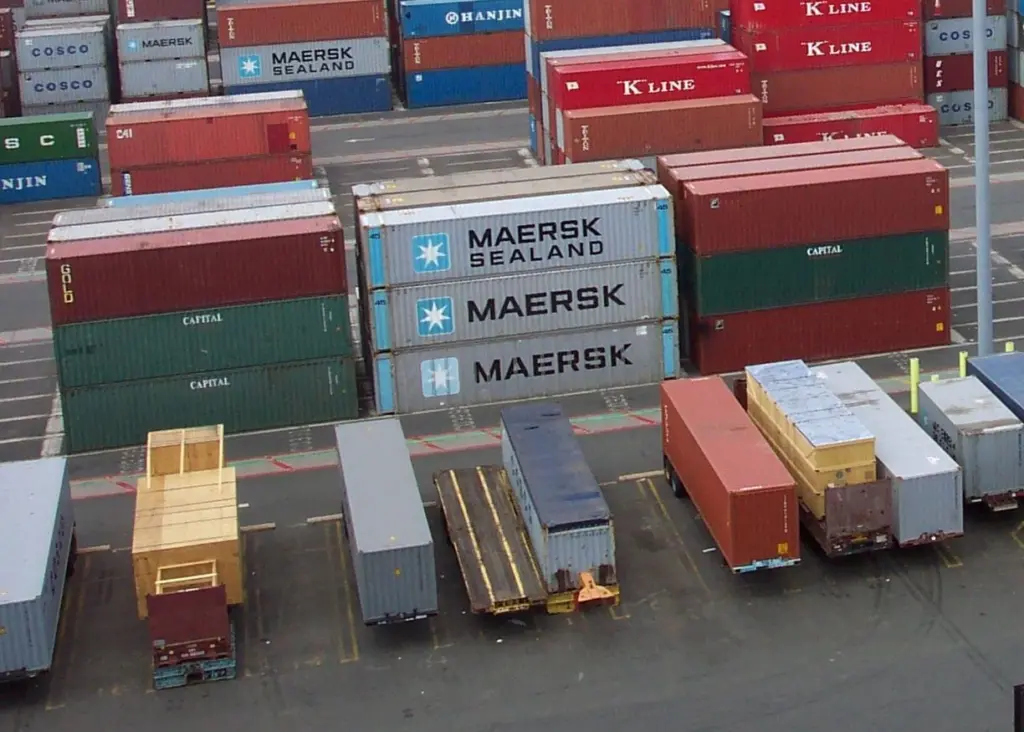
Big ports like New York, which struggles with road congestion and traffic gridlock, offer rail spurs directly to facilities where the big ships unload.
The Alameda Corridor, connecting LA/LB, on the “Left” coast, with main-line Class 1 railroads east of Los Angeles, is in an expansion phase, further into the San Gabriel Valley. In Norfolk, CSX Railroad, in the midst of building out its “National Gateway” to the Midwest, has arranged an on-dock rail link to handle Maersk cargo moving through the APM Terminal.
A presentation by Florida East Coast Railway at the National Retail Federation’s Supply Chain Summit, held in early May, lays out the case for such links. As its name suggests, the line parallels the Atlantic coastline, running 350 miles through a populous part of the state from Miami in the south, to Jacksonville in the north.
In the very crowded southern part of Florida, rail links at Miami and Port Everglades (near Fort Lauderdale) are set to open in 2012 and in 2014, respectively. At a time that a different form of gridlock, of the political variety, prevails in Washington, DC, the FEC presentation reveals that Public Private Partnerships are funding these projects.
The Miami project, costing around $50m, is expected to eliminate 60,000 truck movements annually. In Port Everglades, about 25 miles north, 40,000 truck moves are likely to be curtailed, in a project costing roughly $73m.
As ports discuss such arrangements with rail carriers, always consider their look and feel from the customer’s viewpoint. The FEC has cut a deal with a big Class 1 railroad, Norfolk Southern (a competitor of CSX) for box transport through to Atlanta.
What also piqued my interest was the construction of on/off ramps for boxes in Georgia, including at Savannah – which has carved out a niche in servicing distribution centres for the big box retailers, and others. In the future, sellers of consumer goods, including the big chains, will be judged by their reductions in emissions (and called out very publicly if they lag behind). FEC describes its logistical contours as a win-win in the form of a “critical component to help retailers to reduce their carbon footprint.”
Ports will also be winners, if they factor such considerations into their planning.
Related Articles
 INSIGHT & OPINION
 INSIGHT & OPINION
 INSIGHT & OPINION