2017 freight volume at Port of Antwerp was up 4.4% on 2016, setting a fifth consecutive growth record.
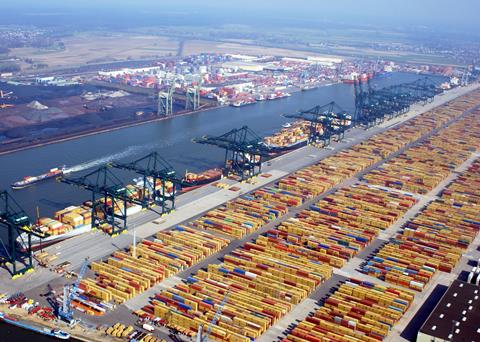
In 2017 the port handled 223,606,610 tonnes of freight. The container volume expanded in tonnage by 4.3% (123m tonnes), liquid bulk such as oil derivatives by 5.7% (73.1m tonnes), and conventional breakbulk such as steel by 4.8% (10.3m tonnes). Ro-Ro was also up 10.5% (5.1m tonnes).
Jacques Vandermeiren, CEO of Antwerp Port Authority, said: “Finishing the year with such strong growth figures gives us confidence for the future.”
Dry bulk decline
Only dry bulk such as coal and ores saw a decline, finishing the year with a drop of 3.7% (12.2m tonnes).
The last quarter of 2017 scored best for container volumes, with growth of 7% (in TEU) compared with the last quarter of the previous year. In addition to that there were three months in 2017 (May, August and October) with an absolute record volume of more than 900,000 TEU.
“The favourable economic climate in combination with the big alliances that continue to opt resolutely for Antwerp means that container handling in Antwerp currently has the wind behind it,” Mr Vandermeiren explained.
Analysis
In the breakbulk segment, growth was significantly apparent in imports and exports of iron and steel (up 7.8% to 8,350,565 tonnes).
Raw iron and steel imports from India were up 91% to 520,209 tonnes. Imports of steel from countries such as South Korea, Taiwan, Vietnam and Turkey expanded, offsetting China imports (down 44% to 657,308 tonnes).
The last quarter of 2017 was the best ever in the liquid bulk segment. The rise in the total volume of liquid bulk was driven by an increase in the amount of crude oil handled, up by 49.9% (to 5,963,279 tonnes).