


BUOYANT TRADE PITY ABOUT THE IMBALANCE
There has been a serious re-shuffling of the alliances on the trade routes between Europe and South America as lines seek to get to grips with an uncomfortable balance between imports and exports. Rainbow Nelson reports.
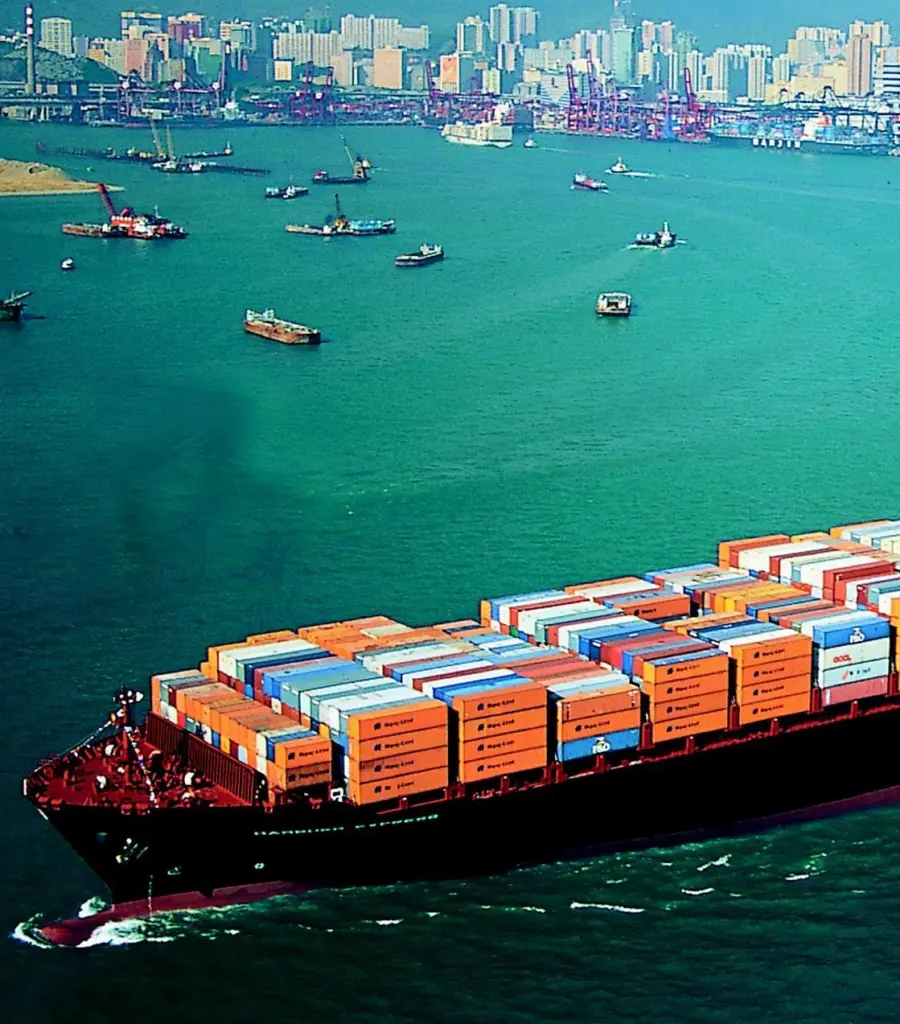
While ships are heading northbound with full utilisation, the strength of the euro and the weakness in key importers such as Argentina and Venezuela are resulting in the lines carrying out far too many repositioning moves for empty containers.
Southbound vessels have reported utilisation levels as low as 40% with a high percentage of empties on the Europe-South America leg of the journey.
Following losses on its “Lambada” service, P&O Nedlloyd has decided to ditch its efforts to go it alone on the trade and joined forces with six other lines in a bid to offer greater frequencies. The new alliance, which comprises Hamburg Sud, Hapag-Lloyd, Alianca, CMA CGM, P&O Nedlloyd and NYK Line, will offer a three-string service employing 16 ships of 2,500TEU capacity that will enable the group to offer three services a week between the largest ports.
“We reached a joint agreement with the Hamburg Sud group to consolidate the strengths of our respective networks, ” says Jeremy Nixon, P&O Nedlloyd’s Europe trades director. “Hamburg Sud had two loops and we had one. We will be putting the three together and cutting out any duplication to offer the best overall coverage.”
Previously, alliance partners Hamburg Sud, Alianca and CMA CGM had offered two regular weekly services employing 6 ships between 2,000 and 2,600TEU, calling at Southampton, Rotterdam, Hamburg, Antwerp, Le Havre, Sepetiba, Santos, Buenos Aires, Montevideo and feedering or working with a third party to serve Asuncion, Rio Grande and Sao Francisco do Sul.
P&O Nedlloyd, since leaving the alliance with CSAV and Contship Containerlines two years ago, had been calling at Rio de Janeiro, Santos, Buenos Aires, Rio Grande, Itajai and Salvador employing six ships with a capacity of between 1,388 and 1,730TEU. Of the 16 ships that will be operated under the new alliance when it comes into force in June, Hamburg Sud is providing the bulk of the fleet with 10 vessels, P&O Nedlloyd will provide five and CMA CGM one. P&O Nedlloyd will employ its new Blue Star-class vessels, currently under construction in Korea. The 2,500TEU shipss, says Nixon, are “custombuilt” for the trade and will increase the group’s reefer intake.
The tonnage enhancements will allow the group to lift approximately another 500 containers per week northbound to the existing capacity which, according to Nixon, is not going to significantly impact the market.
With P&O Nedlloyd and Hamburg Sud both operating cabotage services in Brazil with its Mercosul line and Alianca respectively, the alliance will also be well equipped to feeder cargoes along the Brazilian coast and to Manaus, the continent’s second largest free trade zone. These services will not form part of the alliance.
“This co-operation only relates to deepsea products. Any cabotage will be left to the individual routings of each line. That is one of P&O Nedlloyd’s strengths to move coastal cargoes, ” says Nixon. By transhipping cargoes from its deepsea to cabotage services P&O Nedlloyd will be able to serve Vitoria, Paranagua. Montevideo, Zarate, Asuncion, Ushuaia, Rosario, Punta Arenas, Puerto Deseado, Puerto Madryn, Recife, Fortaleza and Manaus. Full details of the service schedule will be announced by the alliance shortly, says Nixon. He hints that there is likely to be some shuffling of terminals as the new alliance seeks to procure a reduction in its terminal handling charges using its new purchasing powers.
DEMAND FOR REEFER SLOTS TO SOAR The six-company alliance is similar to the Eurosal arrangement Hamburg Sud has with Hapag-Lloyd, P&O Nedlloyd, CSAV and CMA CGM on the smaller Europe to West Coast trade. The west coast service, however, operates a weekly frequency and employs smaller tonnage, in the 1,900 to 2,500TEU range.
The timing of the new service is interesting, as it will come into force after the fruit season in Argentina and Brazil. With poultry exports from Brazil also expected to surge in the next few months on the back of the problems being experienced in Asia as a result of chicken flu, demand for export slots, in particular reefer slots, is expected to reach record levels in the next few months.
The Brazilian Association of Chicken Exporters, is encouraging members to prepare for new orders and has already revised estimates this year upward from a 15% increase in chicken exports to 25%, taking it to around $2.5 billion.
With low fruit stocks in the European Union following last year’s drought, European demand for such goods should also be a positive influence on the trade route in 2004.
Despite the obvious advantages of starting the alliance sooner, the decision to commence in June is also linked to the delivery of the new vessels, which come on-stream in the second half of the year. And notwithstanding the punishing imbalance in the trades, Nixon says things are “pretty positive on the southbound routes which are dominated by auto-related company to company volumes which are part of a global logistics network and operate differently to the normal trade. “The good news is that you have positive growth in both segments but the northbound is growing faster than Europe. The economy is recovering in Brazil and Argentina and both source a certain amount of their goods from Europe, ” says Nixon. But there are signs that the strength of the euro is holding back growth on the southbound leg while growth northbound continues thus exacerbating the imbalance.
In the future, the increase in frequency, it is hoped, will allow the group to compete with the world’s number one and two container lines, Maersk Sealand and Mediterranean Shipping Co. Maersk operates the largest ships on the South America east coast to Europe routes on its weekly service between Buenos Aires and Vigo.
The 3,700 to 4,500TEU vessels also call at Montevideo, Rio Grande, Santos, Pecem, Algeciras, Rotterdam, Thamesport, Bremerhaven, Antwerp and Le Havre. These vessels have 800 reefer slots to allow the line to compete for the high paying cargoes.
Maersk has also increased the reach of its west coast South America service from the US east coast to Europe. Services now arrive in the North European ports of Rotterdam, Le Havre and Felixstowe direct from South America’s most robust economy, Chile.
The company is employing 3,100TEU vessels on the route which have placed new demands on west coast South America ports to keep up with the infrastructure developments that have been implemented on the east coast.
As well as the formation of the new alliance, there have been further adjustments to two other groupings. The Joint Service South (SSSA) consortium comprising Zim, Maruba and Niver, has been disbanded due to the difficulties of the imbalances on the trade. The JSSA operated with six ships between the Mediterranean and the South America east coast. In its place, Zim is teaming up with CMACGM, Libra and Ybarra under the New Sirius South America service and Niver will take slots on the service. The New Sirius service will make direct calls at: Genoa, Livorno, Rio de Janeiro, Santos, Paranagua, Buenos Aires, Montevideo, Rio Grande, Sao Francisco, Santos, Rio de Janeiro (alternate weeks), Salvador, Las Palmas, Valencia, Barcelona, Genoa.
“The imbalance is directly linked to the economic policy and the political decisions taken in South America, ” says Jose Luiz Gonzalez Perez md of Atlas Maritime, agent for Niver Lines in Brazil, referring to currency devaluations at the start of last year. “We don’t believe that there will be an equilibrium but there is no country that can live without imports.”
After the dissolution of the JSSA, Maruba will join Costa Container Lines and its newlymerged Gilnavi, in the new Seagull consortium. Maruba and Costa will deploy three vessels each and call directly at Valencia, Genoa, Livorno, Fos, Barcelona, Rio de Janeiro, Santos, Paranagua, Buenos Aires, Montevideo, Rio Grande, Sao Francisco, Santos, Rio de Janeiro, Salvador, Pecem, Las Palmas and Valencia.
CSAV in its alliance with CP Ships brands Lykes Lines and Contship Containerlines, and its own Uruguayan subsidiary, Montemar, have also added to capacity on their triangular service from Europe to West Africa and South America in an effort to capture the huge increases in export volumes from Brazil.
In May last year a fifth ship was added to the fleet and in July, the 1,730TEU newbuilding ROBERT RICKMERS also joined the service. A ship sails every eight days calling in Dakar and Abidjan, Zarate, Montevideo, Rio Grande, Santos, Rio de Janeiro and, since July, also Pecem (Fortaleza).
The increased reliance on alliances on these trades shows a general trend towards consolidation in the industry but also a response to the problem of moving loss-making boxes around which has become a serious issue for both lines and ports. The largest container terminals in Santos, South America’s largest port, have both experienced a sharp increase in the number of empties they are handling for clients repositioning boxes for exports. Libra’s T-37 operation, which commands about 34% of the total containers moved in Santos has seen less profitable empty moves increase from 15% to 25% of its total moves. Santos itself has seen a similar increase.
“A PROBLEM FOR US AND A PROBLEM FOR THEM” “We have a big imbalance between exports and imports. It’s a problem for us. It’s a problem for them (the lines), ” says Roberto Tortima commercial director of Santos Brasil’s Tecon terminal, Brazil’s largest container terminal. Empties moving through Tecon increased from 67,592 teu in 2001 to 101,564 in 2002.
Export boxes continue to surge while the imports have stayed static. In 2003, container volume growth was running at 20% up on volumes in 2002. Total container volumes from the port reached 1.4mTEUs in 2003.
While carriers struggle with the imbalance, shippers are facing rates of $2,000 per FEU from the south of the country to Europe but less than half that in the other direction. Rates on some cargoes heading southbound have reached record lows of E200 per TEU, according to lines. There have been efforts to increase rates southbound with the Europe/East Coast South America carriers introducing a $344 increase in October last year and a further $170 rate increase at the start of the year.
“They have gone up significantly with the rate restoration, ” says Nixon. “But they had to. We had a situation where you were being paid rates where the revenue didn’t even cover the variable costs let alone the cost of the network. Charter rates continue to escalate rapidly and further freight rate increases are essential to keep the long term investment in the trade.”
These increases are all part of the lines’ efforts to reduce the losses incurred from the widening imbalance problem and the rapid increase in the charter rate market, which has now reached record levels.
Related Articles
 PORT & TERMINAL NEWS
 PORT & TERMINAL NEWS
 OPERATIONS