

CAF report praises Colombia, slams Ecuador
The ” Quality of Port Services” report complied by Spains Polytechnic University of Valencia on behalf of the Andean Development Fund (CAF) has concluded that ports in Colombia have made the biggest improvements in terms of service quality, while those in Ecuador still lag far behind. The reports remit was to compare progress in the Colombian ports of Cartagena and Buenaventura with Puerto Cabello in Venezuela, Callao in Peru and Guayaquil in Ecuador.
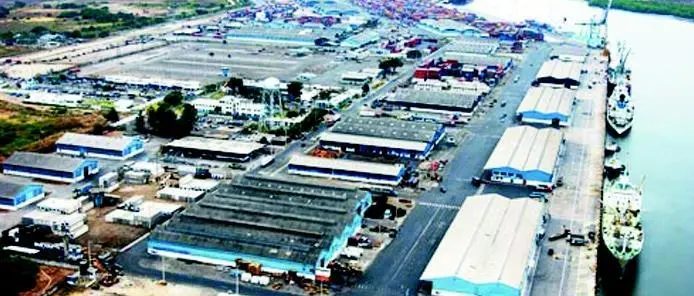
Guayaquil, in particular, came in for some serious criticism, with the report noting that it suffered from poor service quality and corruption. Furthermore, there were no integrated policies in place which would resolve these difficulties, nor a suitable legal framework to implement them. The port also suffers from poor telecommunications, road and rail links, a shortage of cranes and a too shallow access channel.
In Ecuador, large companies are now looking to shift freight out of Guayaquil to more competitive local ports, which, despite being smaller, offer far higher quality service. The report quotes the La Favorita supermarket chain which pulled out of Guayaquil, citing inefficiency, and nowadays uses the port of Manta.
The mayor of Guayaquil has subsequently put together a steering committee representing all parts of the maritime community to look at ways of helping the port become more competitive. “It is not necessary to spend much money. It is more necessary to concert efforts to improve administrative processes and work practices to reduce bureaucracy and coordinate actions so that all parties working in a way that allows time optimisation, ” notes Constanza Calderon, CAF assistant director in Ecuador, adding that a followup report will be issued in 8-10 months time to measure the progress of any improvement.
CAF has suggested that Guayaquil uses the same quality service programme implemented by Valencia , which resulted in container throughput increasing from one million to more than 1.8 million TEUs/year.
Related Articles
 PORT & TERMINAL NEWS
 PORT & TERMINAL NEWS
 OPERATIONS