






Chemical reaction
Fuel cell technology could be the perfect partner for localised port fleets. Stevie Knight reports
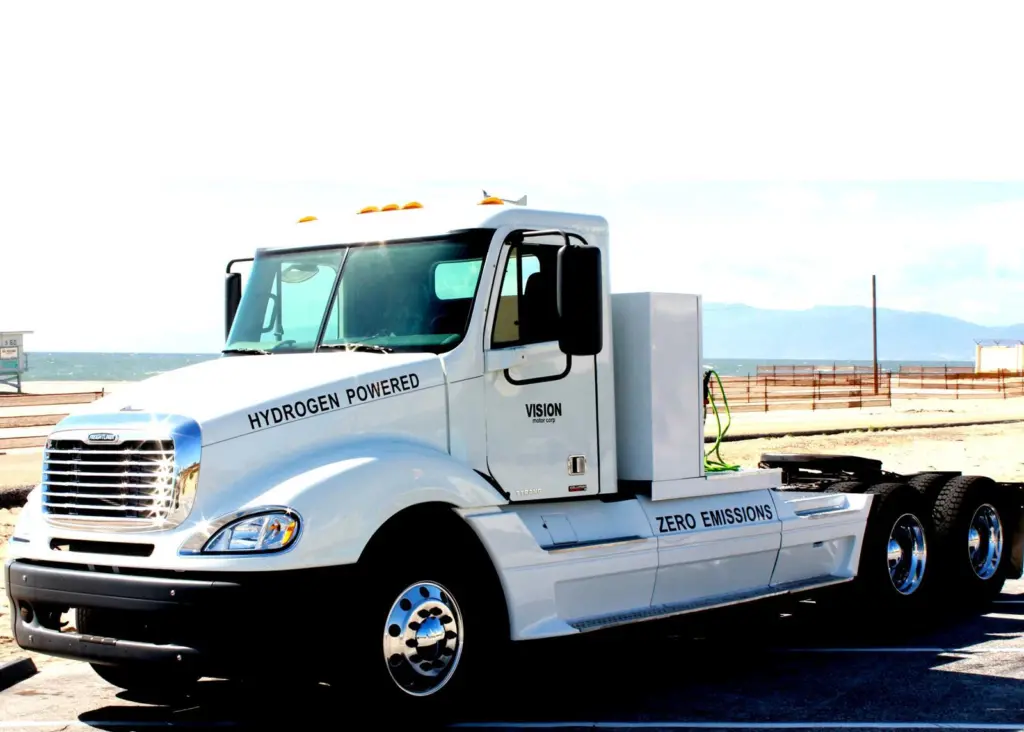
Fuel cell technology has been around for a long time, but developments in the last 10 years have brought it from the sci-fi pages and on to the hard paving.
“What needs to be pointed to is that is isn’t really ‘novel’ technology anymore: here in the US, it’s already established in the forklift market,” says Jennifer Gangi of Fuel Cells 2000.
Others agree. “The work has been done, it’s viable and market ready. What is needed now is production volume to get the upfront investment right down,” says Margery Ryan of Fuel Cell Today. “At the moment manufacturers are targeting the low hanging fruit, and ports are ideal, as they have localised and return-to-base fleets – and fuel cells will happily cross a number of applications.”
At the moment, she says, it’s still a little expensive to put in place, but once it gets out there and into mass production, the costs look like dropping. And, once installed, running costs are generally very low.
James Warner of the Fuel Cell & Hydrogen Energy Association adds that it’s a new technology, so it takes a certain commitment to see it through. So, it’s the old chicken and egg problem – but the chicken, in this case, is a very interesting bird with many layers of application.
Showing off
It helps that there are initiatives like Helsinki’s new Vuosaari facility which aim to show off the various technologies – and gain a competitive advantage. Vuosaari opened three years ago but its location within the city of Helsinki places strict limitations on emissions and noise pollution. Last year, it kicked off the Demo2013 project (a joint initiative by Tekes and the Fuel Cell Finland Industry Group) and has been asking for partners towards the demonstration next year.
Interestingly, fuel cells have already been shown to give large savings with other parts of the supply chain, as Wal-Mart and others have gone ahead and introduced fork lifts powered by fuel cells.
Even so, although Ms Gangi admits is still pretty hard to get to real numbers, despite the upfront investment it looks like you get a pretty fast return.
This return isn’t just about money though: she points out when WalMart changed over from the use of Lithium Ion batteries in its forklifts, one of the biggest – and immediate – returns was space as there was no need to keep a whole storage and recharging area for them. Secondly, although there is a ‘fast charge’ option for batteries, it does shorten their life, and the slow charge means a battery change over – or hanging around till it’s done. Fuel cell recharging only takes a few minutes and it’s the driver that fills up – you don’t need another worker involved in the process.
Light fantastic
Further, the fuel cells work out lighter than batteries, and that’s one of the appeals – the fuel cell fits right into that same available space on forklifts, so it will do the same on other applications. “So there’s a lot of room for retrofits,” adds Ms Gangi.
Even better, fuel cells don’t run down like a battery: they don’t leak power, so what you put in is there to get out again. Further, in sub-zero temperatures batteries slow down but fuel cells just keep working.
But perhaps the most compelling argument is efficiency: a fuel cell is more than two to three times more efficient than internal combustion engine. After all, burning fuel to make a ‘bang’ which gets translated into a mechanical motion isn’t going to give you the best energy pathway.
Ms Gangi makes the point that with hydrogen fuel cells you get the best of both worlds. The hydrogen fuel gives you a clean, green – and very efficient – power source, but with a hydrogen pump on the quay the handling equipment is free to roam after filling up, unlike the grid-powered models. “So what you have is an electric drive train efficiency coupled with the freedom of liquid fuel filling.”
Clive Coker of CQ Consulting points out “with any new technology, the initial costs can be a deal breaker – but there are circumstances where you’d think twice; it makes sense if, for example, a direct connection to the grid isn’t possible”.
Integration pays
Mr Warner says: “Fuel cells can bring dramatic integrated emission reductions at ports: it’s this ‘integrated’ aspect that is interesting because once you have established one arm of your industrial fleet you can branch out from there.”
For example, he says you might want to start with the smaller handling machines like forklifts, since they are already proven and have a well established production. But on a second tier you could look at drayage short haul: this is traditionally the place where old vehicles on their last legs go to die – but it means that the ports have a problem with local emissions as these aren’t the cleanest of trucks.
Further these fuel cells are the only technology suitable for heavier applications that allows for close to zero emission generation – you can’t run heavy trucks or buses entirely off batteries due to the weight of the cells needed.
The obvious thing to ask, is about safety issues – after all, the images of the Hindenburg burning in the sky were some of the most iconic – and memorable – of the early 20th Century.
However, Ms Gangi says yes, you have to put safety regimes in place but it compares favourably with other fuels.
Hydrogen goes up in the air and dissipates, unlike gasoline, which makes a gas pool on the ground. Yes, a gas leak is something to be wary of – you need special nozzles to keep the system closed but with proper protocols and sensors in place, it’s really not a big issue: after all it’s something that has been successfully dealt with in other sectors.
Although forklifts are by now well-established applications, fuel cell trucks have already started to be picked up, and Vision Motors has recently completed a sale of 100 trucks now being used at the Ports of Long Beach and Los Angeles says Ms Gangi – and applications for mobile harbour cranes surely can’t be far away.
On top of this, there’s also the possibility of using the technology for energy backup for vital services and reefer terminals. “Its very useful in developing regions such as Africa where you can have a problem with security of power,” concludes Ms Gangi.
Related Articles
 TERMINAL OPERATIONS
 DIGITAL
 TERMINAL OPERATIONS