




China and Malaysia moot port alliance
China and Malaysia are apparently forming a ‘port alliance’ to fast-track trade between the two countries and reduce customs bottlenecks.
China’s top envoy to Malaysia, Huang Huikang, told the South China Morning Post : “The port alliance will serve not only as a maritime network between the two countries, but also the bond of trade and business and tourism.”
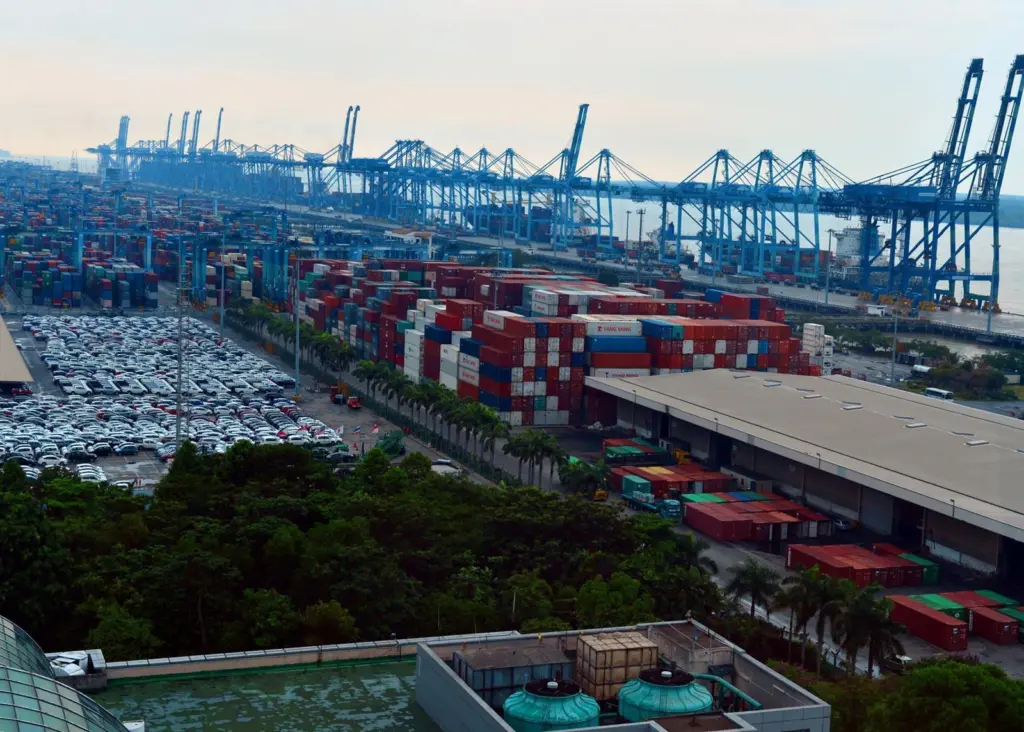
Under the port alliance, ten Chinese ports – Dalian, Shanghai, Ningbo, Qinzhou, Guangzhou, Fuzhou, Xiamen, Shezhen, Hainan and Taicang, will collaborate with six Malaysian ports – Port Klang, Malacca, Penang, Johor, Kuantan and Bintulu.
It’s not yet understood how the alliance will work.
But it’s clear that China has its eyes firmly on the Malaysian port sector. Beijing is already investing US$10 billion to develop a deep sea port at Malacca, according to Malaysian Transport Minister, Liow Tiong Lai.
The port is expected to be the biggest in the region when it is completed in 2025.
But the port sector is just one element in Beijing’s drive to spread its trade and influence globally – in which Malaysia is becoming a major partner.
Apparently, many Chinese companies favour Malaysia because of its strong competitiveness and business-friendly environment.
In the past six months, China has bought two multibillion-dollar strategic assets from Malaysia’s debt-laden state-owned investment firm, 1Malaysia Development Berhad (IMDB).
Firstly, China General Nuclear Power Group, a Chinese state-owned enterprise, paid US$2.3 billion to acquire 1MDB’s Edra Global Energy Bhd last November.
Then in December, China Railway Construction teamed up with Malaysian Iskandar Waterfront Holdings to buy a 60% stake in 1MDB’s property project, known as Bandar Malaysia, for US$1.7 billion.
As well as property, the development will also host terminals for a planned Singapore-Kuala Lumpur high-speed rail link.
Related Articles
 TERMINAL OPERATIONS
 EQUIPMENT
 PORT & TERMINAL NEWS