


Climate action congress plans underway
Plans for the first World Ports Climate Action Programme (WPCAP) congress are underway and being organised by a pioneering European port.
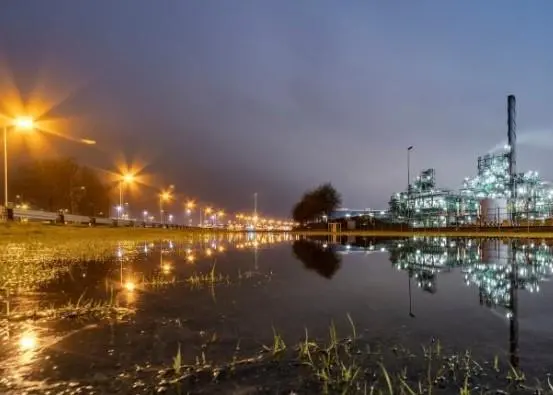
Led by the Port of Rotterdam Authority, the congress next May will involve 11 European and US ports now affiliated with WPCAP. The ports are working on plans to reduce CO2 emissions from shipping and ports and improve air quality.
Chaired by the Port of Rotterdam Authority, the five WPCAP working groups currently developing measures are examining topics including efficiency in shipping turnaround time in ports, making loading and unloading of vessels climate neutral, shore power, and alternative fuels. By sharing knowledge, developing joint projects, developing policy and involving the shipping sector in this, the ports expect to be able to achieve more concrete progress than if ports did this individually.
In the coming spring, the ports will share what has been achieved with interested ports, the shipping sector and authorities (port cities and national governments). Agreements will then also need to be made about the follow-up. Aside from Rotterdam, ports involved in WPCAP include Antwerp, Hamburg, Amsterdam, Le Havre, Barcelona, Gothenburg, Los Angeles, Long Beach, Vancouver and New York & New Jersey.
Rotterdam aims to take a leading role in the energy transition in terms of both industry and logistics. The projects currently in preparation to make industry in the Port of Rotterdam more sustainable will together realise some 20 – 25% CO2 reduction in the Netherlands by 2030, and that is without ending the use of coal for electricity generation, said the port authority.
Rotterdam’s efforts
In the shipping sector, this spring Rotterdam was the first port to bunker container ships with biofuel.
The Port Authority has developed software (Pronto) to improve shipping turnaround time efficiency, and this is now being used by various ports.
The container terminals on Maasvlakte have electrified almost all their equipment. All berths for inland vessels are equipped with shore power so vessels do not need to use generators when berthed at the quay.
For sea-going shipping, a trial is taking place this autumn to test multiple shore power systems. Another large shore power project is in preparation for Calandkanaal.
Inland shipping is trialling sailing using interchangeable battery systems.
Related Articles
 ALTERNATIVE FUELS GREENPORT