

Jamie Graham, Senior Contract Manager, Kingdom Security, UK discusses the escalating risk posed by unregistered drones to ports and national security.
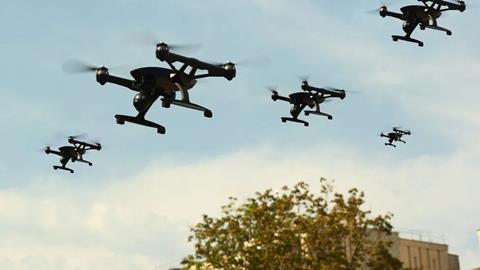
Drones are now everywhere. Much like the rise in AI, the use of drones for various tasks has become a permanent fixture in our lives. Whether delivering food, capturing aerial photos, assisting in search operations, or conducting building surveys, drones have made many mundane tasks more efficient. However, when unregistered drones enter the airspace around ports, they can pose a significant national security threat.
Kingdom Security, part of Kingdom Services Group, manages and protects the assets of several ports across Scotland, with specialist teams monitoring the movement of goods and people in and out of the country. Unregistered and unrecognised drones are increasingly problematic for port security. While the tendency is to assume that unidentified drones are operated by harmless enthusiasts, some drones present serious risks.
Ports face multiple security risks that require careful evaluation. Operating under immense time pressures, ports must ensure seamless operations. Unfortunately, many ports lack restricted airspace or designated no-fly zones. While port users must seek permission to operate drones, in various countries there are no laws preventing the public from using drones near port facilities.
RISKS CHARTED
The risks posed by drones include unauthorised surveillance and the potential for weaponisation, endangering everyone at the port. Specific vulnerabilities at ports, such as regulatory gaps, overseas threats, public access, and insufficient specialist security, exacerbate these risks.
Even hobbyist drones pose cyber security risks, as they are notoriously easy to hack. Hackers can take control of drones or access their broadcasts, exploiting the lax security often found in consumer drones. Malicious threats can then conduct surveillance or cyber-attacks without physical presence.
While banning drones outright is impractical and would hinder beneficial uses, implementing tighter regulations and more robust countermeasures for unrecognised drones is a necessary step forward. Security protocols should include immediate investigation of unrecognised drones and efforts to locate their operators. Given the range of drones, from small manually operated ones to larger, long-range models, this task can be challenging. On-the-spot risk assessments must be conducted based on the day’s operations at a port.
If a drone is deemed hostile, security teams should liaise with the police, as drones could be used to gather intelligence for overseas threats. The use of drones in cyber warfare, highlighted in conflicts like the Russia-Ukraine war, underscores the critical need to protect ports from such threats.
Threat assessments should consider areas where drones might hover or land, employing motion-detection cameras and other technologies to alert security teams. It is also crucial to evaluate spaces where drones could access networks and visual data.
Furthermore, ports using drones for security must implement stringent measures to prevent hacking. While drones can enhance security by monitoring for emerging threats or suspicious activities, ensuring these drones are secure from cyber threats is paramount.
The escalating presence of unregistered drones around ports poses significant security challenges that cannot be ignored. As drones become more integrated into various tasks, addressing their potential misuse for unauthorised surveillance, cyber-attacks, and even weaponisation is urgent. By implementing stringent control measures, enhancing drone detection technologies, and fostering collaboration with law enforcement, it is possible to mitigate the threats posed by unregistered drones and ensure the safety and efficiency of port operations.
Kingdom Services Group network includes offices across the UK in Edinburgh, Glasgow, Birmingham, London, and Belfast. Internationally Kingdom also has a significant presence in India.