

Green technology is making real inroads on the quayside and few innovations are proving as impactful as the electric crane spreader in port equipment.
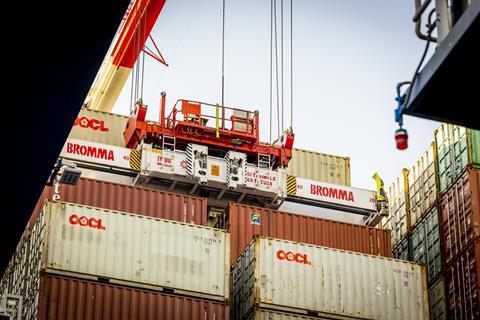
Speaking on our Portside Perspective podcast, Joakim Heijbel, director of sustainability and product management at Bromma, outlined how the shift to electric crane spreaders is delivering real-world benefits in the race toward port decarbonisation.
“When we bring an all-electric spreader into use, we can cut almost 90% of the operational energy consumption and carbon footprint,” he says.
This dramatic reduction is reshaping the way ports view their environmental impact.
As Mr Heijbel explains, the breakthrough came after Bromma undertook detailed life cycle analyses, identifying where emissions were most intense across the product’s lifespan. While many assumed manufacturing would be the main culprit, the data revealed otherwise.
“What we saw, however, is that it’s the use phase that is the lion’s share of the carbon footprint,” Mr Heijbel notes.
“Hydraulics are power-hungry. By replacing them with electric drives, we can reduce not only electric emissions but increase precision and efficiency.”
Electrification at the quay
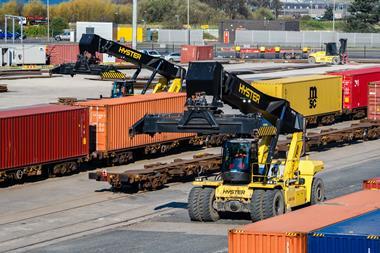
Electric yard spreaders have long been standard in many container terminals, with over 95% of Bromma’s current yard spreaders now fully electric.
The challenge has been scaling that technology to the ship-to-shore (STS) environment, where operational complexity and power demands are higher. Bromma’s new electric STS spreaders tackle that head-on, designed to perform reliably even under heavy workloads while maintaining low emissions.
Mr Heijbel shares that Bromma’s electric STS spreaders offer not just environmental benefits but operational gains too.
“They’re also faster. For example, on certain motions like telescoping, we’ve created up to 25% in time savings. And we’ve had customer feedback highlighting how much quieter the machines are.”
Cleaner quieter ports
Reducing noise pollution is an added benefit often overlooked in electrification discussions.
Ports located near residential areas stand to gain significantly from this. “Electric spreaders are less noisy, which was a pleasant surprise for many of our users,” Mr Heijbel says.
When combined with lower maintenance demands and the elimination of hydraulic oil spill risks, electric crane spreaders are ticking multiple sustainability boxes for their users.
In many ways, electric spreaders are the gateway technology for wider port electrification. They represent a manageable, cost-effective starting point for terminals looking to reduce emissions without overhauling entire infrastructure networks.
As Mr Heijbel puts it, “Start small, but get the wins.”
Greener builds
Beyond the operational phase, Bromma is also focusing on the environmental impact of spreader manufacturing.
A new initiative, in partnership with Swedish steel manufacturer SSAB, is pioneering the use of fossil-free steel in port equipment production.
“We’re actually able to build a spreader now with 60 to 70% fossil-free steel,” Mr Heijbel reveals.
“It’s not all available yet in every grade, but it’s a promising start. We’ve tested strength, durability and reliability and everything indicates it’s a viable, low-emission alternative.”
This move supports a broader circular economy approach, emphasising sustainability from design through to decommissioning. It’s part of Bromma’s commitment to meeting 1.5°C-aligned targets, with a specific goal to reduce greenhouse gas emissions by 40% by 2030.
Electrification in action
Bromma’s manufacturing hub in Malaysia is already ahead of the curve.
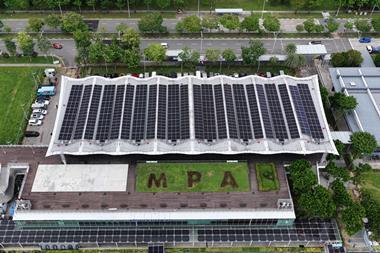
In 2025, it will operate entirely on clean energy, powered by a combination of solar installations and renewable energy certificates.
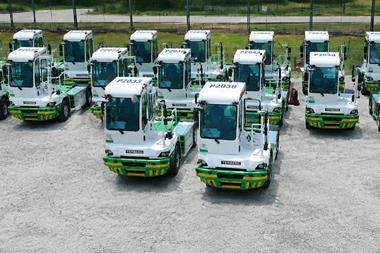
“We now generate 40 to 45% of our electricity ourselves,” says Mr Heijbel. “We’ve also transitioned to a fully electric fleet of trucks inside the plant, all powered by our solar system.”
These efforts show how port equipment manufacturers can take meaningful action across their entire operations, not just in product design. They are also helping set a precedent for other suppliers in the sector to follow suit.
To see how this plays out in practice, Bromma points to a recent customer that switched to the company’s electric ship-to-shore crane spreaders.
This terminal, located in Northern Europe, expects to see a significant reduction in energy consumption. Uptime and reliability is also expected to improve due to the elimination of hydraulic-related service interruptions.
An additional bonus with the all-electric spreaders is the quieter operations, a significant benefit especially in near residential areas.
For this operation Mr Heijbel says the new spreader model is a game-changer, not only for emissions but also for worker satisfaction and local community relations.
Sound advice
A critical yet often under-addressed component of port sustainability is how equipment is made and how it’s disposed of.
Bromma’s forward-looking approach includes not only the use of fossil-free steel but also designing products for longevity, repairability and recyclability.
“It’s not just about using clean energy, it’s about using less energy and materials overall. That means making sure our spreaders last longer and can be upgraded or refurbished rather than replaced. It’s sustainability in every phase of the lifecycle,” says Mr Heijbel.
This aligns with growing interest across the sector in circular economy practices. Mr Heijbel says that as regulations tighten around embodied carbon and end-of-life disposal, manufacturers offering circular-ready solutions are likely to gain a competitive edge.
Mr Heijbel also had a clear message for smaller operators or those with limited budgets: That is, you don’t have to do everything at once.
“Start where the impact is greatest and work from there,” he says. “For many, replacing aging crane spreaders is a relatively low-barrier way to begin your decarbonisation journey.”
This pragmatic approach resonates particularly in regions where grants, green financing, or public-private partnerships are available to help fund sustainability upgrades.
Mr Heijbel says that the adoption of electric port equipment doesn’t occur in isolation, it needs supporting infrastructure such as onshore power supply, smart energy grids and clean energy access.
Bromma recognises this and is actively engaged in conversations with port authorities and energy providers to ensure that the equipment and infrastructure develop in tandem.
“There’s a broader ecosystem at play,” says Mr Heijbel. “Collaboration is key between manufacturers, operators, governments and the energy sector. We can’t decarbonise in silos.”
This holistic perspective ensures that investments in electric spreaders yield maximum environmental and operational returns, not only today but in the decades to come.
Green catalyst
From data-driven innovation and quieter operations to circular manufacturing and infrastructure integration, Bromma’s electric spreaders are doing more than lifting containers, they’re raising the bar on what sustainable port equipment should look like.
They offer ports a practical, proven way to cut emissions, reduce noise, lower costs and future-proof operations.
As global port operators prepare for increasingly stringent emissions regulations, the early adopters of electric crane spreaders are already seeing the benefits. With up to 90% lower operational electric emissions and compelling total lifecycle savings, green spreaders may just be one of the smartest investments an operator can make on the quayside.
Port electrification is also no longer a fringe initiative, it’s becoming a compliance issue. From the International Maritime Organization’s (IMO) 2050 strategy to local regulations in California, the EU and Southeast Asia, ports are under mounting pressure to reduce emissions across all scopes.
Electrification of port equipment like crane spreaders, alongside investment in onshore power supply and energy management systems, is seen as a low-hanging fruit. Industry groups like IAPH (International Association of Ports and Harbors) continue to advocate for equipment upgrades as a critical part of the global port decarbonisation roadmap.
“Regulation is accelerating the shift,” says Mr Heijbel. “But it’s also just smart future planning. Ports that electrify early are positioning themselves for resilience and competitiveness.”
The message is clear, says Mr Heijbel. Electric crane spreaders aren’t just an option, we foresee them becoming the standard in the near future.
With proven emissions reductions, lower operating costs and alignment with global sustainability targets, they represent a practical first step in the broader mission of transforming port infrastructure in the climate conscious era.
As clean technologies evolve and become more affordable, early movers like Bromma and its customers will help lead the way. The future of port electrification is already here and its being achieved one green spreader at a time.