


Morocco is positioning its port infrastructure to anchor global adoption of alternative shipping fuel, centred on competitive green hydrogen production.
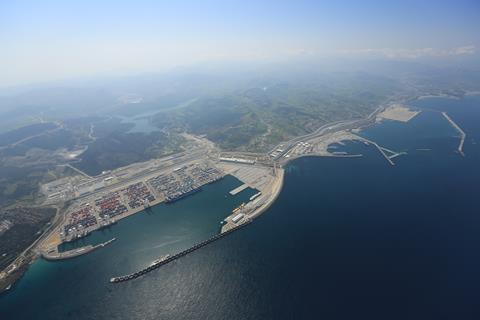
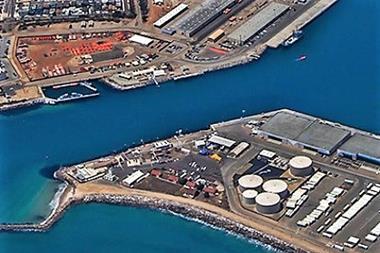
A new World Bank Group study outlines how Tanger Med, Mohammedia, Jorf Lasfar and Tan-Tan could integrate production, storage, bunkering and export to meet rising demand through 2050.
“The most cost-effective configuration foresees hydrogen and derivatives produced and exported from Tan-Tan, stored in salt caverns in Mohammedia, distributed to heavy industry in Jorf Lasfar, and bunkered at Tanger Med,” the report, ’Gateway to Green Energy: Moroccan Ports as Hubs for Hydrogen Fuel Development and Trade’, states.
Satisfying demand
Hydrogen derivatives such as green ammonia and methanol are emerging as scalable alternative shipping fuel solutions as the maritime sector confronts mounting pressure to decarbonise.
The World Bank Group projects ships calling at Moroccan ports could require 0.2 million tonnes of hydrogen-equivalent fuel by 2030, rising to 2.83 million tonnes by 2050.
Going forward, green hydrogen production will also need to satisfy local demand, for example, the OCP Group is planning to produce one million tons of green ammonia by 2027, with ambitions to increase this to three million tons by 2032 for use in domestic fertiliser production.
The opportunity is there. According to the International Energy Agency, Morocco could produce green hydrogen for between US$1.5 and $2.5 per kilogram by 2050, reinforcing its competitiveness as port infrastructure investment accelerates.
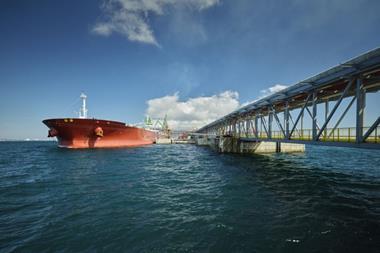
Tanger Med, located on the Strait of Gibraltar, already handles around 1.5 million tonnes of fossil-based bunker fuel annually and is positioned to transition into a green bunkering hub.
Jorf Lasfar, which manages roughly two million tonnes of ammonia each year, could integrate green hydrogen derivatives into fertiliser production, supporting industrial decarbonisation.
At Mohammedia Port, existing salt caverns offer cost-efficient hydrogen storage, while Tan-Tan provides strong solar and wind resources for low-cost production.