

Air Liquide has made the final investment decision (FID) for the construction of ELYgator, a plant for the production of renewable hydrogen at the Port of Rotterdam.
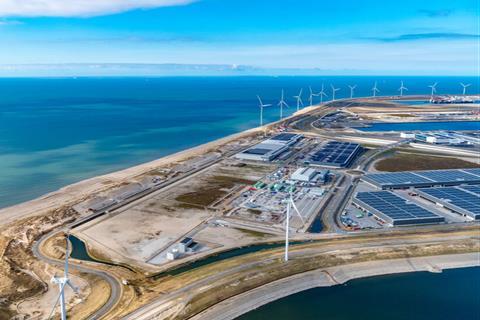
For the Port of Rotterdam, it’s another important step forward in its transition to a CO2-neutral port.
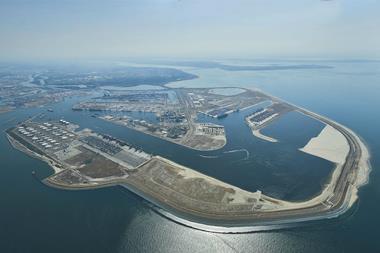
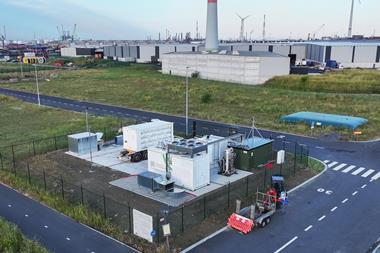
The plant, which will located at the conversion park at the Maasvlakte area, will feature an electrolyser that splits water in order to produce hydrogen at a capacity of 200 MW.
Renewable hydrogen
Air Liquide’s electrolyser will produce electricity from renewable hydrogen from windfarms in the North Sea.
In all, there is space for four of these large electrolysers on this special industrial site. The one from Air Liquide is the second to be built and the investment amounts to more than €500 million.
The ELYgator will produce 23,000 tonnes of hydrogen per year for use by the industry and heavy transport. According to Air Liquide, this will lead to a CO2 reduction of 300,000 tonnes per year.
Air Liquide has indicated that the recently adjusted regulations for the use of hydrogen (the so-called ‘refinery route’) and subsidies from the Dutch government and the EU were crucial for the realisation of the project.
The ELYgator plant will be operational by the end of 2027.
The renewable hydrogen plant is not Air Liquide’s only focus at the port, it’s also focusing on the carbon capture market.
Back in January 2024, Air Liquide announced it would be building a CO₂ capture facility.
The company will capture CO₂ from its existing hydrogen plant in the Port of Rotterdam, leveraging Cryocap, a technological solution for CO₂ capture which uses a cryogenic process.
Captured CO₂ will then be transported through the Porthos infrastructure and permanently stored in depleted gas fields under the North Sea seabed.
The CO₂ capture facility will be operational by 2026.