


Flying the hub flag
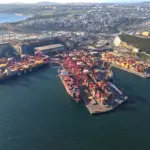
Launched in 1998, the Port of Salalah has established itself as one of the key transhipment hubs in the West Central Asian region and ranks among the top-30 container ports in the world, writes Iain MacIntyre.
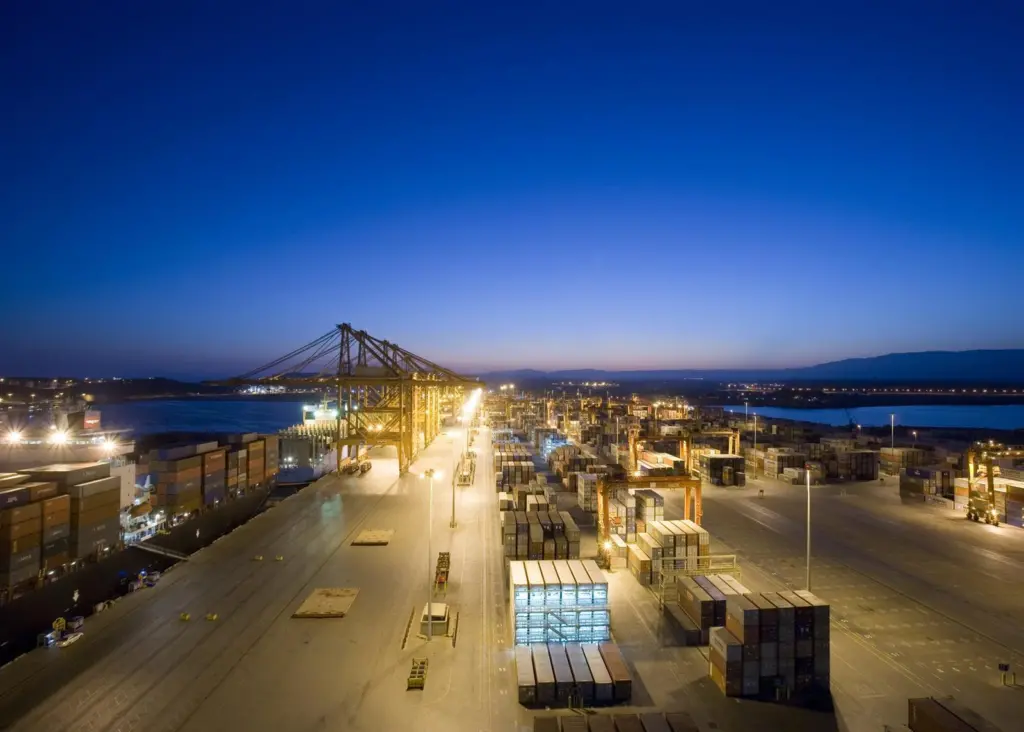
Situated at the heart of the Indian Ocean Rim and only a minor deviation from the major East-West shipping lanes, the deepwater port is the largest port in the Sultanate of Oman, with an equity split of 20% with the Government of Oman, 30% APM Terminals, 29% pension funds and the public, and 21% institutional investors. APM Terminals has a 30-year concession to manage the port on behalf of the Government of Oman.
Chief executive Peter Ford sees his port as offering a “one-stop” transhipment shop. “Because of its advantage as a regional hub, Salalah is well positioned to be the port of choice as customers will seek greater efficiencies from the terminals at which they call”, he tells Port Strategy.
“However, we expect increased competition for the existing transhipment market as terminals struggle to fill capacity and lines look for efficiencies.”
Mr Ford lists his port’s key transhipment hub advantages as including the fastest transit times to Europe and Asia of any location in the region; excellent infrastructure; India and Pakistan access, where main liner capacity is scarce; additional links to Oman and the Gulf; optimal links to/from East Africa; and a crossing point for Intra-Indian Ocean Rim trade, reducing the need for expensive and unreliable direct trades.
Furthermore, he believes the key ingredients to Salalah delivering as a successful transhipment business entail high productivity; service reliability — no congestion, guaranteed berthing windows; simple Customs procedures; value-added services such as reefer, bunkering, warehousing and cargo consolidation; deep draughts; land for expansion; and competitive rates.
Its container terminal entails seven berths of 16-metre to 18-metre-draught providing a total length of 2,505 metres. Providing capacity for six million teu per annum, the container terminal is equipped with 25 super post-panamax gantry cranes, 83 tractors, 1547 reefer plugs and 88 RTGs.
Its general cargo terminal has 12 berths ranging from 115-metres to 600-metres-long with draughts of up to 16 metres, and a dedicated oil pier.
With the port’s main container line customers handling “significantly lower volumes” than projected in the recessionary 12 months to October 2011, throughput for the period comparatively dipped almost 8% to 2.7m teu.
However, this decline was offset by a more than 4% rise in volume at the general cargo terminal during the same period to 5.3m tonnes, with particular increases in both dry bulk and wet bulk volumes noted. Having recorded double-digit growth for 13 consecutive years, the general cargo terminal is currently undergoing an expansion phase.
Having completed phase two of its expansion plans in 2009, Salalah recently revamped its 20-year “master plan” which envisages providing annual capacity for 20m teu, 40 million bulk tonnes and five million liquid tonnes of cargo.
Capital expenditure for the next phase of expansion at the container terminal – development of berths seven, eight and nine to add another 1.3 km of quay and 3m teu additional capacity – is estimated at $525m. Development will begin when industry indicators are correct.
At the general cargo terminal, Salalah plans an additional 1.2 kilometres of multi-purpose berths and facilities at an estimated cost of $120m.
Both the container and general cargo terminals are directly linked to the future growth of the Salalah Free Zone and continued expansion of transhipment capabilities in the region.
Related Articles
 TERMINAL OPERATIONS
 CONTAINER & CARGO HANDLING
 NEWS
NEWS