
EU inland ports back EC’s LNG strategy
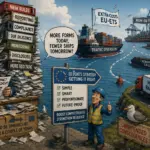
The European Federation of inland ports (EFIP) has welcomed the European Commission’s (EC) ‘Clean Fuel Strategy’ but worries that it may be too early to set up binding LNG refuelling schemes for inland ports.

The EC’s aim of the strategy is to address the remaining barriers preventing the breakthrough of alternative fuels. The Commission requires all TEN-T core inland ports to have a publicly accessible LNG refuelling point for inland waterway transport by no later then 2025. It is also obliging all ports to install shore side electricity supply for waterborne vessels, which the EFIP fully supports.
But, EFIP is worried that some objectives may be too premature for the industry and is pleading for a review of allowing the use of LNG as fuel for inland shipping and as cargo of inland waterway transport. It also proposes to oblige all core TEN-T inland ports to have a refuelling point at least within a certain radius and calls for a long term vision on how the introduction and further development of LNG will be supported in the framework of the new TEN-T policy.
Isabelle Ryckbost, director, EFIP, said: “We believe we should not anticipate the results of studies that are in the pipeline and which precisely aim at defining what the needs are in terms of refuelling points and what the feasibility is of the different options.”
She added: “It is clear that a strict scheme of refuelling points can not be imposed on inland ports as long as, based on the current legislation, LNG can neither be used as alternative fuel nor be transported as cargo in inland waterway transport. Lifting this ban is probably the most urgent policy measure to take. As concerns the places for refuelling points, we would therefore favour, at this stage, a more pragmatic approach.”
Related Articles
 EUROPE
 ALTERNATIVE FUELS GREENPORT