

Growth by numbers
Leixões operator TCL hopes to carry its successes through to its latest investment in Ferrol, as Alex Hughes discusses
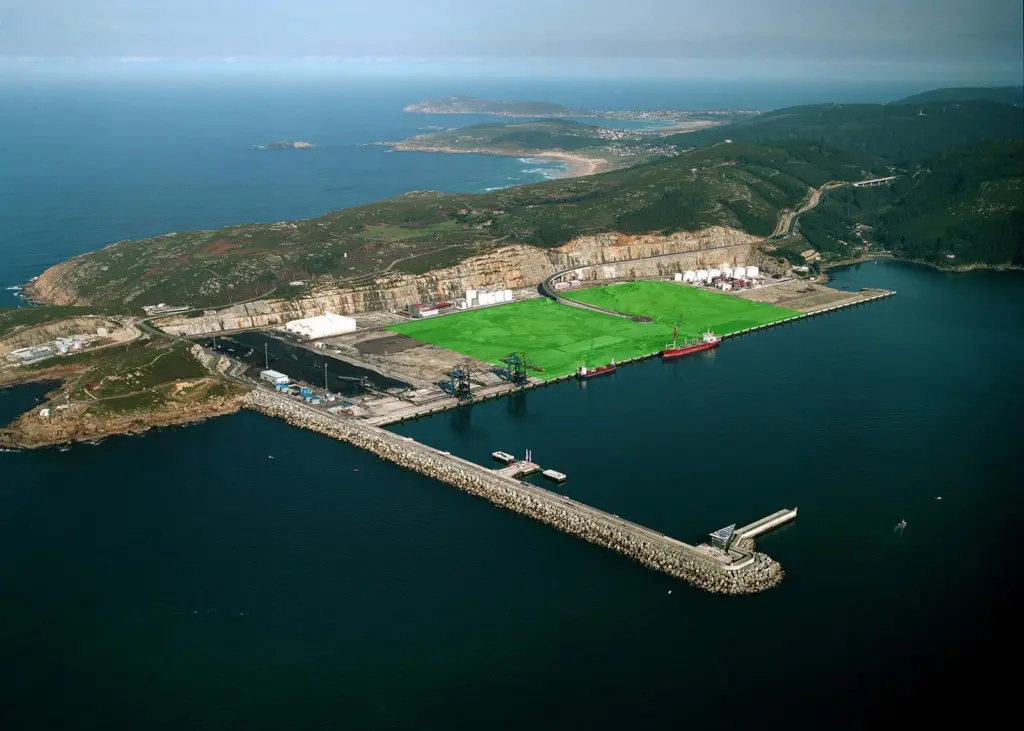
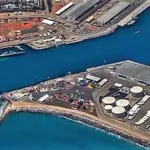
TCL, the Leixões-based terminal operating company in Portugal, continues to defy market conditions.
While other terminals in the Iberian Peninsula report dramatic traffic losses due to the economic downturn, TCL keeps posting record year after record year. In fact, at the end of 2011, the company was able to report that it had just completed 12 consecutive years of rising traffic.
Last year, for example, it registered throughput of 512,281 teu, equivalent to growth of 6.2%. This year, despite the economy in Portugal requiring substantial financial support from the IMF, first quarter traffic was again moving upward, with throughput amounting to 137,039 teu, an increase of more than 11% over the equivalent 2011 period.
In many respects, the terminal has reaped the rewards of a dredging programme, which has enabled a former feeder port to nowadays accept panamax container vessels. However, TCL has also established an enviable record for productivity, which has kept shipping lines coming back year after year.
Last year, TCL was awarded a 35-year concession to operate the new container terminal at the north-western Spanish port of El Ferrol. Although some Spanish companies had initially indicated a willingness to bid, in the end, TCL was the only company to respond positively to the international tender.
Development of the terminal with go forward in phases, with Phase I scheduled to be operational by the first half of 2013.
According to Lopo Feijó, TCL and Ferrol Container Terminal managing director, El Ferrol will have to be both a transhipment hub and import-export port, if it is to succeed.
“The government of Galicia is very interested in promoting development of the region around Ferrol, which already has several significant and powerful industries located there. These currently have to make use of other ports, especially that of neighbouring La Coruña, which has neither a dedicated container terminal nor plans to build one in the foreseeable future,” says Mr Feijó.
Asked who he views as competition for container traffic in El Ferrol, he says that FCT views any ports in the Bilbao-Barcelona range as competing for the same traffic, not just local ports such as Vigo or Marín.
“Ferrol Container Terminal is wholly owned by TCL and our aim is to introduce there the same management philosophy that has proved so successful at TCL in Leixões. At the same time, we intend to take advantage of possible synergies between the two terminals.”
Challenged as to whether Ferrol will be able to genuinely compete for transhipment containers given the presence of other hubs at Sines, Tanger-Med and Algeciras, Mr Feijó says its main advantage is that it will be the nearest deep sea terminal to the main shipping lane of any of the already busy northern European ports.
“The opening of the new Panama Canal could also be an opportunity for us,” he adds.
However, in the Phase I start up period, Mr Feijó predicts that traffic will be modest at best.
“Being a greenfield site, FCT will have to prove to potential clients that it can offer the type of performance they are looking for. Therefore, in the first two years of operation, we would expect to generate annual traffic of perhaps no more than 50,000 teu,” he says.
Nevertheless, capacity will be much greater than this – in the region of 1.2m teu per year. Draft along the 1,000 metres of quay will be 20 metres, making it possible to accommodate any type of container vessels, including the new 18,000 teu-22,000 teu generation.
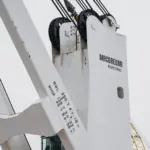
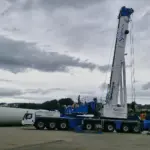
In terms of equipment, FCT took the interesting decision to buy two post-panamax gantry cranes, built by Konecranes, that had formerly been deployed at the Acciona terminal in Algeciras. Barely used, these second hand units are capable of working 18 rows of containers. Four RTGs were also procured from the same source.
“We will also introduce new ship-to-shore cranes – and other handling equipment – in phases. The plan is to eventual have nine operational gantries,” says Mr Feijó. “We’ll leave it up to the market to decide when and how many units we acquire.”
The stacking area, he says, will incorporate as much automation as possible, with efficiency, reliability and flexibility dictating the modus operandi. However, he stresses that, as much as possible, FCT will be a paperless terminal.
Related Articles
 EUROPE
 ALTERNATIVE FUELS GREENPORT