![GreenPort[PortStrategy]](https://www.portstrategy.com/greenport/wp-content/uploads/sites/4/2026/09/GreenPortPortStrategy.svg)
Ensuring future environmental measures
The cruise industry says that it wants to ensure future environmental measures are simple to administer, cost-effective and proportionate, things that are crucial to effective greening of the cruise industry, writes Anne-Marie Causer, GreenPort News Editor.
Top priorities
With the EU Parliamentary elections having taken place in May, Cruise Lines International Association Europe (CLIA Europe) has presented its Cruise Industry Manifesto for 2014 to 2019.
The manifesto strives for a EU regulatory framework that supports safe shipping operations and protection of the environment and the role-played by the International Maritime Organisation (IMO).
Dario Bazargan, policy advisor at CLIA Europe told GreenPort: “As for the future, much will depend on the policy agenda set by the new European Commission. Environmental topics are however expected to continue to be high on the list of priorities for the foreseeable future.”
At EU level, Member States and the European Parliament will continue the discussion on the European Commission proposal for a Monitoring, Reporting and Verification (MRV) system for CO2 emissions from maritime transport with the view of reaching an agreement on the final text by the end of this year.
Moreover, the European Commission is currently working on interpretative guidelines on some provisions of Commission Directive on port reception facilities for ship-generated waste and cargo residues (PRF Directive).
“The cruise industry is fully committed to protecting the natural environment in which it operates and has a strong record of developing sound and socially responsible environmental best practices and policies in order to protect the pristine oceans, beaches and ports visited and reduce cruising’s environmental impact,” CLIA Europe director of government affairs, Marco Digioia, told GreenPort.
Emission Controlled Areas (ECAs)
One of the key issues facing the cruise industry are the new stringent limits regarding the sulphur content of marine fuels used when operating in Emission Control Areas (ECAs), entering into force from 1 January 2015.
“Our member lines have always been keen to comply and respect the introduction of any Emission Control Areas assigned by the IMO”, Mr Digioia added.
Cruise lines have been investing for years in state-of-the-art technologies that help consume less fuel, operate more efficiently and reduce air emissions, and they are ready to do their part on environmental sustainability of their operations.
CLIA Europe and its members have been actively participating in the work of the various sub-groups of the “European Sustainable Shipping Forum” which was set up in November 2013 by the European Commission with the aim of enacting a cost-efficient and coherent implementation of the upcoming sulphur standards for marine fuels.
Bringing together Member States and maritime industry stakeholders, this forum is designed to enable a structural dialogue, exchange of best practices and coordination, in particular during the transition phase before the entry into force of the new standards.
The future impact of the new sulphur limits on cruise operations in ECA is one of the issues that is currently being discussed in the context of the Competitiveness Subgroup of the ESSF.
Port reception facilities
Another issue affecting the cruise industry is the separation of waste on board through advanced waste management systems.
If port reception facilities are not equipped to receive and manage solid waste separating it into streams, there is a risk that the great investments taken by cruise lines to improve waste management on board will be undermined.
The efficiency and availability of infrastructures and port reception facilities in Europe are thus essential for operators to enhance the sustainability of their business and reduce the environmental footprint of their activity.
The Commission Directive on port reception facilities for ship-generated waste and cargo residues (PRF Directive) lays down obligations for Member States to ensure ports are equipped with adequate facilities to receive ship-generated waste.
The trouble is that piece of legislation is quite old and CLIA Europe hopes for a proposal of a new directive soon which has already been delayed several times. An evaluation concerning the implementation of the existing legislation is currently being carried out by the European Commission.
OPS Sea Cruise Europe project
It’s not just CLIA Europe that is working hard to push forward the green agenda in the cruise industry.
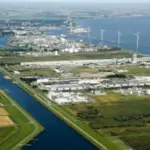
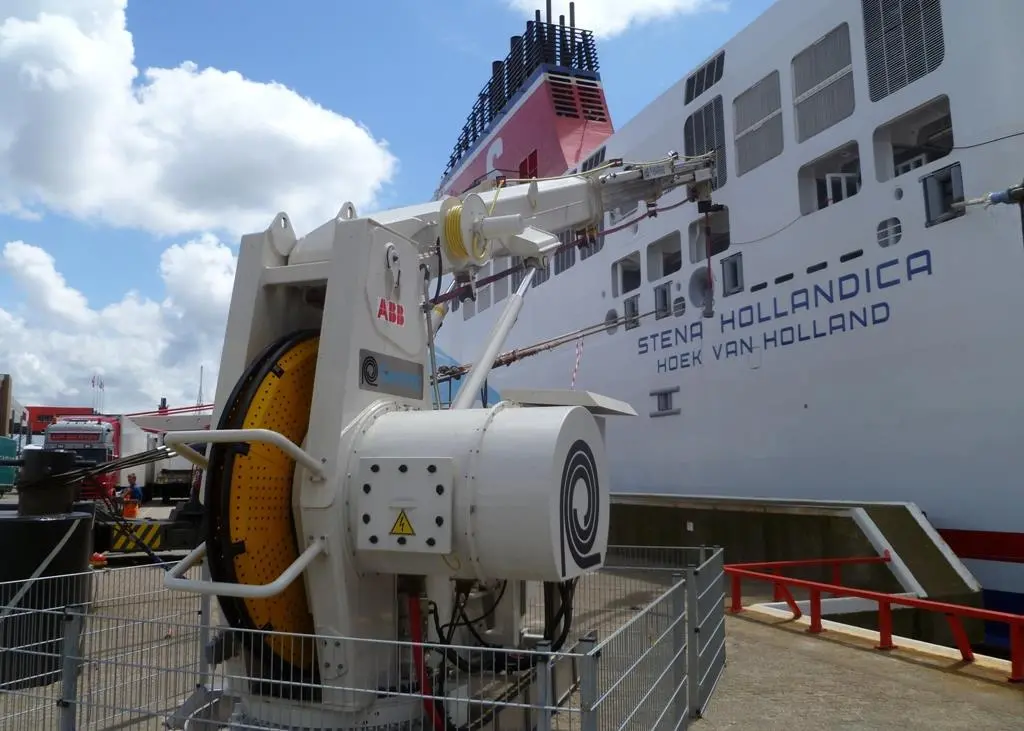
The Port of Amsterdam in close cooperation with Cruise Europe has taken the lead in a new project to push forward on shore power facilities at European sea cruise terminals – the OPS Sea Cruise Europe project.
The ultimate goal of the project is to realise four onshore power supply facilities at European ports.
But the project is still in its very early days of conception. The project leads are still at the stage of finding enough participants, both ports and cruise companies, to push the project forward.
Scrubbers and shore side power
Bouke Vellinga, senior consultant urban development, RoyalHaskoningDHV, told GreenPort: “We aim to organise a small meeting and presentation on either the Cruise Med in September in Barcelona, or/and the Green Port Cruise conference in October. There we first want to find out whether onshore power is still a good development to focus on, as several cruise companies are investing in scrubber technology.”
He said that if onshore power is still a viable alternative, an information exchange will be set up between ports and cruise companies to understand requirements, difficulties, conditions, etc. This input is needed for each partner to build its individual business case. The project leaders would then wish to seek financing for this through a European NSR (North Sea Region) subsidy.
In an ideal world if the project came to fruition the participants would have installed onshore power, either by LNG barge or fixed, and sufficient ships would be using it.
But it’s a chicken and egg situation – uptake of onshore power relies upon demand. As more ships are equipped for onshore power they could exert pressure on ports and terminals to provide them with proper facilities.
Or Europe could follow the lead of North America, where demand has rocketed because regulation insists upon it.
The availability of shore-side electricity for cruise ships is still limited, and it is difficult to predict the scenario in the run up to 2020. However, it must be noted that a recently adopted EU Directive on the deployment of alternative fuels infrastructure requires Member States to ensure that shore side electricity supply for waterborne vessels is installed in key European ports by 31 December 2025.
Meanwhile shippers at the moment are relying more heavily upon other technologies such as scrubber technology to retrofit vessels in time for when the new tighter European ECAs come into force.
GreenPort Cruise conference
Greening the cruise industry will integral to this year’s GreenPort Congress being held from 14 to 17 October 2014 at the World Trade Centre in Barcelona, Spain.
The GreenPort Cruise conference on 14 October will address some of the environmental and sustainability issues facing cruise terminals across the world.
Sessions will include cold ironing or LNG at Mediterranean ports by Valeria Mangiarotti at Port Authority of Cagliari and the onshore power project for cruise ships in Hamburg taken by Manfred Lebmeier from the Port of Hamburg.
More information from www.greenport.com/congress
Related Articles
 CRUISE GREENPORT
 EUROPE GREENPORT
 EUROPE GREENPORT