




Methanol – competitive asset for Maersk and partner ports?
Leading container line Maersk is clearly an early mover when it comes to transitioning to clean fuels.
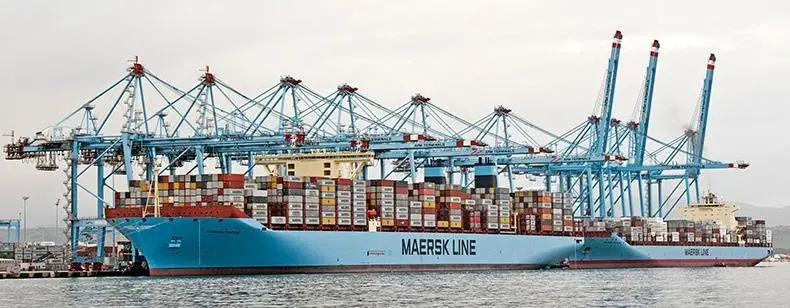
It has decided to opt mainly for green methanol and now has 19 ships on order with dual fuel engines capable of sailing on methanol. In addition, Maersk is focusing on securing the supply of green methanol, and currently has seven partnerships with clean methanol providers in various continents.
However, even with these seven, Maersk is still short on methanol fuel supply; the agreements will generate over one million tons of methanol, but Maersk’s demand is around the six-million ton mark. Thus, Maersk is taking further steps, including exploring a partnership in Spain, which would be the largest of its kind, and may be able to generate two to three million tons of methanol.
The huge efforts of Maersk demonstrate that unlike the current fuels, where there are various established suppliers, for methanol there is no open market. Thus, Maersk’s choice to be an early mover may pay off when methanol becomes the go-to clean shipping fuel. In that scenario, competing companies may face an uphill battle to secure the supply of methanol, and may not be able to source methanol at the same price levels as Maersk. In that sense, it is relevant to note that Maersk’s potential partnership in Spain would involve massive investments in wind and solar energy, which may benefit substantially from EU funding as part of the EU’s greening policies (fit for 55).
In the same way that Maersk may aspire to gaining a competitive edge as an early mover, Spanish ports may aspire to benefit from moving early, by strengthening the ties with Maersk through expanding their role as bunkering ports. Thus, the Spanish ports may need to remind themselves: if you want to be an early mover, you need to move fast!
Related Articles
 INSIGHT & OPINION
 INSIGHT & OPINION
 INSIGHT & OPINION