![PortStrategy[GreenPort]](https://www.portstrategy.com/wp-content/uploads/2026/09/PortStrategyGreenPort.svg)





Reefer market analysis
What are the major trends underway in the reefer market?
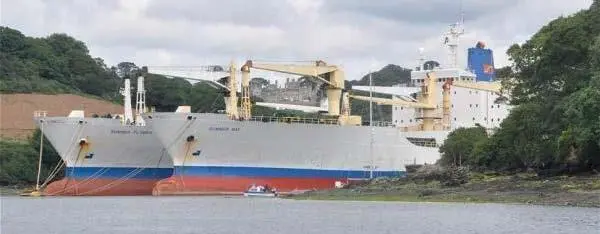
The recently released Dynamar publication, Dynamar Reefer Analysis 2022, aims to provide a detailed insight into the sector. As with previous editions, this latest edition reviews the market structure and considers the two sides of the reefer business, conventional and containers. In terms of format, the edition comprises two separate sections on the container reefer trades and one section analysing the structure of the conventional reefer marketplace.
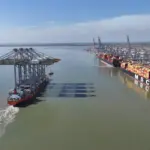
The report highlights the considerable bonanza container carriers and conventional reefer operators enjoyed in 2022, following on from a relatively prosperous 2021. “After struggling for many years… container carriers and conventional reefer operators hit the jackpot,” underlines the report. It points out that capacity was at a premium over much of the period with demand high and congestion soaking up a significant portion of available capacity.
“From a cargo perspective,” outlines the report, “overall perishables trade volumes across the major commodity groups, namely Dairy, Fishery Products, Fruit, Meat and Vegetables, rose to a new high of 173.9 million tons in 2021, showing a strong growth of 3.6 per cent year-on-year from 167.9 million tons in 2020. Volumes grew,” it elaborates, “across all the commodity groups, with meat and vegetables both performing well, rising from 32.2 million tons and 39.3 million tons to 34.2 million tons and 42.18 million tons respectively. In regional terms, there was significant variety with perishables exports falling in the Far East and Central America, while growing strongly in Europe and Africa.”
Supply chain disruption, while easing, was still an influential factor in 2022, and also having an impact was rising inflation. “As a result,” the report states, “in the first three quarters of 2022 container trade reduced by almost 2.5 per cent with higher declines evident in the latter quarter.”
LOOKING FORWARD
Looking at the forward picture, Dynamar says: “…the seaborne trade of perishable products will face challenges. But the longer-term trend is expected to remain in place.
Dynamar forecasts that perishable export volumes will fall slightly in 2022 before rebounding again in 2023. On the shipping side, while for 2023, shipyards are expected to deliver 330 ships with a massive 2.3 million TEU capacity and for 2024, 390 ships with space for 3.0 million TEU are in the pipeline. Slippage or cancellation of orders is likely to reduce the actual deliveries, but still at 20 per cent of the current fleet, the influx of new tonnage is set to severely disrupt the container shipping market.”
The introduction of the Carbon Intensity Indicator (CII) regulation by the International Maritime Organisation in January of this year is seen as an event that will hasten the shrinking of the conventional reefer fleet. Dynamar notes on conventional reefer vessels that: “Generally they are old and fuel hungry and many of them will be forced to sail at lower speeds than the market requires.
Their competitive advantage of being able to provide faster transit times with their direct sailings compared to containership operators with their liner services and hub and spoke format will be lost.”
Demolition of conventional reefers, which is already at a high level, is forecast to increase.
The Dynamar Reefer Analysis 2022 publication is priced at €1220.00 per copy + VAT.
CONTAINERSHIP NEWBUILDS
To elaborate on the containership new build position today. It is noteworthy that during the last 10 quarters 8.6m TEU of containership capacity has been ordered, equivalent to the level ordered in the previous 30 quarters, according to the latest data from BIMCO.
BIMCO calculates that the orderbook now equates to 28.9 per cent of the existing fleet, taking into account scrapping, with the global fleet expected to exceed 30 million TEU for the first time, 16 per cent up on the position today.
Related Articles
 CONTAINER & CARGO HANDLING
 INSIGHT & OPINION
 INSIGHT & OPINION