



LA/LB propose roadmap for next green developments
The ports of Los Angeles and Long Beach are proposing for the next version of San Pedro Bay Ports Clean Air Action Plan (CAAP).
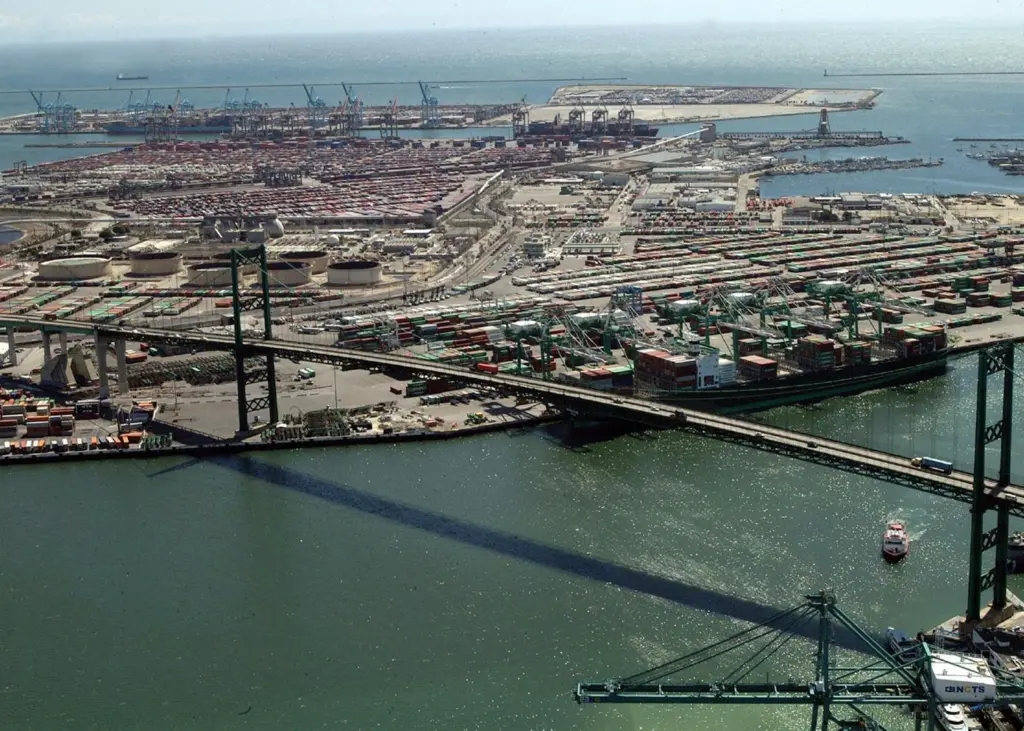
Proposals focus on freight infrastructure investment, innovation and technology to improve supply chain efficiency, and increased advocacy for stricter emissions standards as well as commercialisation of zero and near-zero emission vehicles.
The updated CAAP provides one of California’s first opportunities to implement the vision laid out in the State’s Sustainable Freight Action Plan.
“The Ports of Los Angeles and Long Beach are driving forces of our region’s economy — they should also be models for how we move toward a more sustainable future by balancing growth and environmental stewardship,” said Eric Garcetti, Los Angeles mayor.
He added: “The draft Clean Air Action Plan is an important step in our work to reduce air pollution in our communities, and take action on climate change. I look forward to working with Mayor Garcia to build on this progress and continue strengthening this plan in the coming months.”
This comes after port officials met recently to mark the 10th anniversary of the landmark initiative and unveil the CAAP 2017 Discussion Document, which outlines new concepts under consideration for the third iteration of the CAAP.
The working document build on the success of previous plans and contains the boldest measures yet for moving the San Pedro Bay ports toward their ultimate goal of eliminating all harmful air pollution from port-related sources.
Mr Garcia concluded: “These updates will move the region closer to a zero emissions future. We have already proven that it’s possible to increase jobs and trade with cleaner air and healthier communities and I want to thank all of our partners who helped make this possible.”
The Discussion Document prioritizes reducing greenhouse gas (GHG) emissions from port-related sources 80 percent below 1990 levels by 2050.
The targets are parallel with California’s clean air goals and objectives in the state’s new Sustainable Freight Action Plan, as well as efforts by the cities of Los Angeles and Long Beach to shrink GHG emissions ahead of state targets.
CAAP 2017 improves upon the initial plan adopted in 2006 and updated in 2010 to reduce emissions from all port-related sources.
One original strategy whose importance has increased over time is the Technology Advancement Program (TAP), created to accelerate the development and demonstration of cutting-edge emission reduction technology.
Lori Ann Guzmán, president of the Long Beach Board of Harbour Commissioners, concluded: “We’ve made undeniable gains in improving air quality over the last 10 years, we thank our partners in the goods movement industry for their contributions, and we’re looking forward to public input to make this the best update possible.”
Related Articles
 PORT & TERMINAL NEWS
 PORT & TERMINAL NEWS
 OPERATIONS