



LNG hose development
Trelleborg’s fluid handling operation has been awarded the EN1474-2 accreditation for its revolutionary hose design for LNG transfer between floating terminals and carriers.
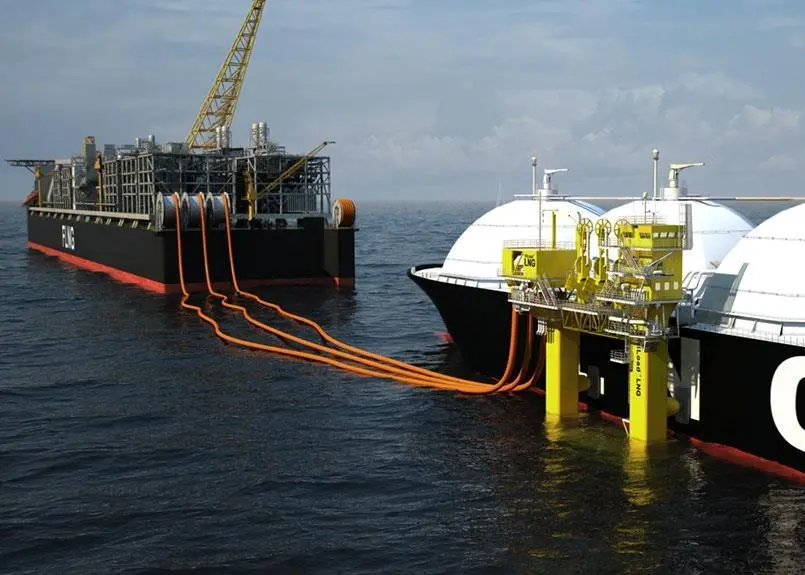
Vincent Lagarrigue, marketing manager for Trelleborg’s oil and marine hoses, said: “For our customers, it is reassuring to know with certainty that all possible measures have been taken to eliminate the risk of the LNG transfer becoming unduly hazardous or being halted by the elements.”
He continued: “This accreditation can be seen as a ringing endorsement of the safety of our products and sends a strong message to the market – the name Trelleborg is synonymous with quality and safety.”
Until this development, most LNG transfers were done through a side-by-side configuration via a cryogenic marine loading arm between two vessels.
This close proximity led to a number of operation difficulties and safety issues, such as collisions between two vessels.
The new approach means vessels can now be situated in tandem with one behind the other at a distance of 100-150m, this enhances overall safety and the efficiency of the LNG transfer process.
New efficiency of the LNG transfer process enables it to occur even in the most challenging of weather conditions.
Given the demanding environments in which these hoses are used, exhaustive checks must be in place to determine that they are fit for purpose since design flaws can have potentially enormous impact on production, cost and the environment.
To meet the requirements of EN1474-2 standard, Trelleborg successfully tested several full scale hose prototypes in static and dynamic conditions.
The tests demonstrated the ability of the hose to cope with extremely high loading conditions in severe operating environments.
It is hoped that the new development will bring LNG transfer in line with similar operations in the oil sector, where more than 90% of transfer operations now take place via a tandem configuration.
Related Articles
 ALTERNATIVE FUELS GREENPORT
 ALTERNATIVE FUELS GREENPORT
 ALTERNATIVE FUELS GREENPORT