

LNG key in avoiding supply disruption, says EC
The European Commission has put LNG expansion at the heart of its sustainable energy security package in a bid to ensure the European Union is protected from disruption to gas supply.
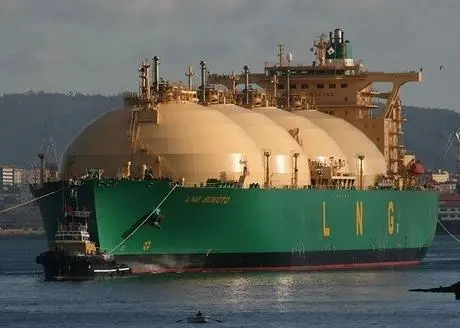
EU gas production is said to decline sharply in the coming years and the EU will have to rely more on imports, hence diversification of supply is a key EU objective. LNG represents a major alternative for countries dependent on a single source of supplier making them vulnerable to potential supply disruptions.
In a statement announcing the package, Miguel Arias Cañete, European Commissioner for Climate, Action & Energy, said: “Gas can be the bridge between coal and renewables. Gas will still be an important part of our energy system in 2030 but our strategy is not about using more gas, it’s about using it more intelligently.”
“In this context, energy efficiency has to be prioritised if we are to improve our energy security and make good on our Paris commitments. For every 1% increase in energy efficiency, gas imports fall by 2.6%,” he added.
The Commission sees potential for a 50% increase in global energy supply within the coming years. It would like to see new LNG terminals where they are most needed, namely the Baltic, Adriatic and Black Seas and on the coast of the Iberian peninsular. The Commission also points to the lack of liquid gas hubs in central, south east and south west Europe and wants ambitious roadmaps to fix this by mid 2016.
In terms of international LNG trade, the Commission plans to engage with current and future suppliers, notably the US and other major consumers, to ensure that LNG can be traded freely on global markets.
The Commission also calls for greater scrutiny powers over intergovernmental energy agreements, and has laid down plans to ensure that neighbouring EU member states prioritise protected consumers – householders and essential social services – over their own non-protected users in the event that gas supply in the region is disrupted.
Member states will have to prepare regional level risk assessments, preventative action and emergency plans and update them every four years.
Related Articles
 ALTERNATIVE FUELS GREENPORT
 ALTERNATIVE FUELS GREENPORT
 ALTERNATIVE FUELS GREENPORT