
Will Johor and Tanjung Pelepas ever join forces for the greater good of the country,wonders Wing Kah-goh
In Malaysia, the big story doing the rounds is how best to gear up the nation’s ports in the wake of the ‘super-sizing’ of containerships. In particular, questions are being asked about the merits of having Johor Port and the Port of Tanjung Pelepas (PTP) competing against each other given how close they are geographically.
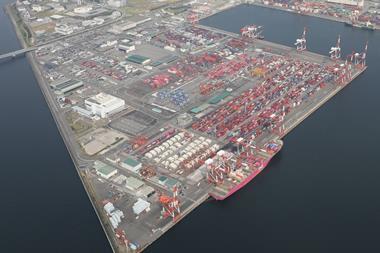
Both facilities are owned by Malaysia Mining Corp Bhd (MMC) and the parent has made it known that it is considering turning Johor Port into a bulk and breakbulk facility,siphoning off its boxes to PTP to cut out the competition between the pair.
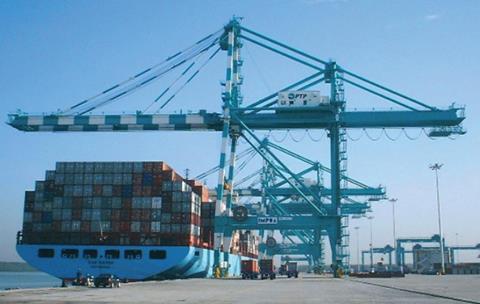
But Johor Port Authority (LPJ) chairman Abdul Halim Suleiman cautions:“Johor Port is just 10 minutes from the Pasir Gudang industrial area, whereas moving the containers to PTP could take up to two to three hours.” Last year, Johor Port handled 880,611 teu, up 5.2%. In March, Johor Port took delivery of a new post panamax crane for use at its container terminal, bringing to six the number of such units there.
The terminal will also take delivery of three new gantry cranes in the second quarter of this year. Johor is one of a number of ports that has got to upgrade to meet the demands of the enlarged container shipping industry. It currently has a quay length of 760m and is already facing some congestion.
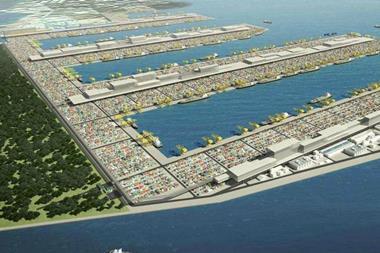
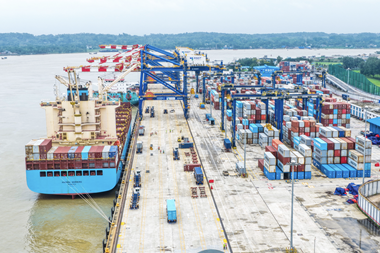
While the major ports such as PTP, Northport and Westport have all prepared for the largest ship types to call with successful dredging programmes, quay lengthening and equipment purchases,the smaller ports – such as Bintulu Port, Penang Port, Kuantan Port and Johor Port – have not prepared for the inevitable cascading of tonnage which will see intra-Asia and feeder vessels get larger and larger.Intra-Asia ships are already in excess of 2,000 teu on average for the first time, while feeder ships are now on average in excess of 1,000 teu.
“These upsized ships will require regional ports to expand their infrastructure and deepen their channels in order to accommodate longer and wider vessels which also require a deeper draught,” International Shipowners Association of Malaysia vice-chairman Ooi Lean Hin told local newspaper Business Times earlier this year.
Mr Ooi,who is also Evergreen Marine Corp (Malaysia) Sdn Bhd vice-chairman, continued: "For shipping lines in the intra-Asia market to continue calling at these ports, they would have to look at increasing their draught to 13m to handle ships of up to 3,000 teu."