

In the UK, a no-deal Brexit initiative under which lorries going to the Port of Dover are granted access to an entire side of a motorway has witnessed a number of collisions in its first two days of operation.
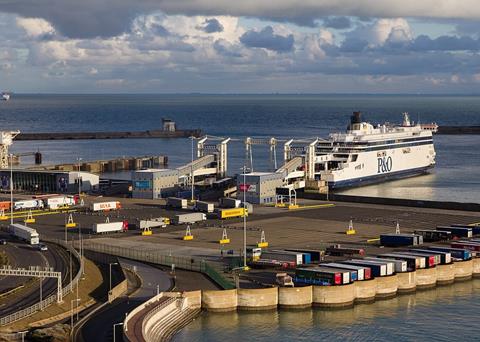
Operation Brock (Op Brock), which supersedes Operation Stack (a plan used previously for temporary cross-English Channel traffic issues), sees Heavy Goods Vehicles use the coastbound side of the UK’s M20 motorway, with all other traffic restricted to a contraflow system on the motorway’s opposite side.
The contraflow is in place between two junctions of the M20 carriageway bound for UK capital London and has a speed limit of 50 miles/hour.
Scheme concerns
Op Brock is designed to decrease traffic problems both in the event of the UK leaving the EU without an agreement and due to other Port of Dover disruption.
However, local news website Kent Live reported that on March 26, the day after the initiative was introduced, there were multiple collisions.
One motorist was reported as asking: “How long until someone dies?”
“A contraflow system should be better at keeping traffic flowing when there are delays — but I have serious concerns,” Dover’s Member of Parliament, Charlie Elphicke, was quoted as saying. “It is yet another section of the M20 with a reduced speed limit. The coastbound side is now 30mph and for freight only, which is pointless during normal conditions.”
Yet, in a video, dated March 27, regarding the introduction of the system from KentOnline, a journalist claimed that there have not been too many accidents or crashes involving cars, although he did note that some issues surrounding the initiative exist, with one concern being that “this is not really a proper test of the scheme because it doesn’t involve dealing with closures at ports or [the] Eurotunnel, as was planned for”.
According to officials, who stress the importance of reviewing the situation on a week-by-week basis, there is currently no end date for Op Brock.