![PortStrategy[GreenPort]](https://www.portstrategy.com/wp-content/uploads/2026/09/PortStrategyGreenPort.svg)




All change at Santos
The outgoing Santos port administration has turned in record profits, but the new Ports Minister has signalled he does not see a future for the proposed whole port privatisation. Rob Ward explains
Santos Port Authority (SPA) has returned record profits over the past year as its management team strives to create a leaner, more efficient operation making it even more attractive to investors for a privatisation push… although that process will reportedly now be put on the back-burner with a new left-wing government in Brasilia.
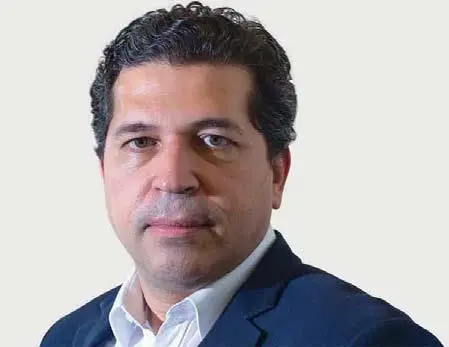
Fernando Biral, the outgoing president who has headed up SPA since April 2020 and was Chief Finance Officer before that, told PortStrategy that the regular record profits in recent months were part of his team’s legacy to the port authority and he hoped that the soon-to-be appointed new president of SPA – yet to be named (at the time of writing) – will also instil a “professional ethos” to the management of the state- run entity and try and “keep politics out of the SPA”.
SPA recorded a net profit of Reais416 million (US$80m) for the first nine months of last year, which was 55.2 per cent higher than for the same period of 2021, and more than for the whole of 2021! (which registered Reais329M profit). Cargo handling for the third quarter hit 42.8m tonnes (up 17.2%), itself a quarterly record, and the forecast for full-year 2022 at the rapidly expanding Brazilian port is for 164 million tonnes (including 2.5m TEU).
“We are clearly delighted with these figures which are a result, mostly, of contractual readjustments and the optimised allocation of certain port areas for transition contracts and new leases,” Biral told PortStrategy in a rare interview.
“These changes have been vital and absolutely necessary to recover the inflationary losses that we had after many tariffs were frozen since 2018. Overall inflation during the period has been around 25 per cent so the tariff increases, of around 13 per cent, were justified. The increase in volumes and adjustments in tariffs plus the curtailment of our costs have all helped.
“We are generating as much cash as we can so we can invest in projects that are within our strategic planning [the PDZ], such as building a new road, the perimetral, improving rail networks, plus deepening the channel [see preceding article] and other vital spending.”
He added that the pool of money now piling up in SPA’s coffers – believed to be in the region of Reais1.7billion (US$325.3 million) would also be used for something Biral called “Equilibrium,” balancing out compensation possibly/ probably owed to terminals judged by Antaq (the Brazilian agency for ports and shipping) to have suffered contract anomalies at the hands of Companhias Docas, like SPA. Santos box and breakbulk terminal Ecoporto [see Port and Terminal news] and ADM (a grain facility) are in this category.
PRIVATISATION U-TURN
However, just as PS went to press the new president of Brazil Luis Inacio da Silva (Lula), appointed Marcio Franca, a former Sao Paulo State Governor, as Minister of Ports and Airports (a ministry which in turn has replaced the wide-ranging Infrastructure ministry), and he has said he is not in favour of privatised port authorities.
That means that a key part of Biral’s intended legacy looks set to fall into the dustbin of history – at least for now – but he hopes that the “leaner, meaner, more efficient” SPA, will help generate funds to pay for “urgently needed capital [deepening] dredging” and to pay off debts owed to port operating companies. Strong and regular maintenance dredging during the third quarter of 2022 led to overall costs rising 76 per cent up to Reais147 million, but without that dredging the SPA costs would have fallen by nearly 6 per cent, “proving how effective our strict cost controls have been in recent times,” added Biral.
Before the arrival of Biral, and his predecessor Casemiro ”Tercio” Carvalho, SPA regularly recorded financial losses (such as Reais94.9M in 2015 and Reais22.5M in 2016) but since they took over, every year has “yielded record profits” – Table 1.
Another aspect of the outgoing executive’s legacy to Santos is a “New Deal” between SPA and the three railway companies that use South America’s biggest port
“We are about to sign ground-breaking contracts with the three main railways using Santos – Rumo, MRS Logistica and VLI – and my team here at SPA have been working incredibly hard on this,” explained Biral. He added that the contracts, called “estatutoes”, were like concessions with terminals but with “some differences” and the aim was to “double cargo moved in/out of Santos by rail from 50 million tonnes per annum to 100 million tonnes.” The extra cargoes would be mostly grains, but also containers.
“Biral and Tercio ruffled more than a few feathers during their time in charge,” said one former port terminal director, who had dealings with them. “But overall, turning in a decent profit can be good for the port if the money is used for improvements, such as much more dredging.”
| 2015 | BRL (94.9) million |
| 2016 | BRL (22.5) million |
| 2017 | BRL 44.4 million |
| 2018 | BRL (468.7) million |
| 2019 | BRL 87.3 million |
| 2020 | BRL 202.5 million |
| 2021 | BRL 329.1 million |
Related Articles
 EQUIPMENT
 OPERATIONS
 OPERATIONS