![PortStrategy[GreenPort]](https://www.portstrategy.com/wp-content/uploads/2026/09/PortStrategyGreenPort.svg)


Global collaboration to reduce ship emissions
Canada’s Vancouver Fraser Port has launched several environmental initiatives.Christine Rigby, environmental specialist-air emissions at the port, explains what’s driving them

Vancouver Fraser Port Authority is responsible for the stewardship of the federal port lands in and around Vancouver, British Columbia and is federally mandated to facilitate Canada’s trade objectives while protecting the environment and considering local communities.
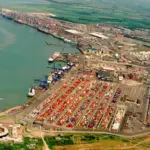
The port authority manages the Port of Vancouver, which is Canada’s largest port and the third largest tonnage port in North America, a dynamic gateway for domestic and international trade and tourism, and a major economic force that strengthens the Canadian economy.
EcoAction Program
A number of environmental initiatives have been put in place by the Vancouver Fraser Port Authority in order to reduce the impact of port activities on the environment and the communities in which we operate. One of these initiatives is the port-led EcoAction Program. Launched in 2007, it recognises a variety of fuel, technology and environmental management options that make ship operators eligible to receive discounted harbour due rates. It focuses on vessel incentives to reduce emissions, offering fee discounts of up to 47% to vessels going beyond requirement.
With the advent of the North American Emission Control Area, the EcoAction Program has shifted from emphasising low sulphur fuels, to increasing focus on vessel efficiency, and greenhouse gas and underwater noise reductions. It relies heavily on third-party rating systems, including the Environmental Ship Index, the Clean Shipping Index, RightShip, Clean Cargo Working Group, Green Award and Green Marine, to identify environmental leaders in the shipping industry.
Collaboration on ship emissions
Led by the Vancouver Fraser Port Authority, a group of international ports, governments and non-governmental organisations are exploring the potential for international collaboration to support improved environmental performance in shipping.
More than 50 ports and growing around the world offer incentives to vessels that go beyond regulatory requirement to reduce environmental impacts such as those relating to air emissions and underwater noise. Likewise, the number of ports offering environmental infrastructure such as shore power is on the rise. Incentives may be based on any one of a number of criteria such as:
Third-party environmental rating systems
Energy Efficiency Design Index
Lower emission fuels and technologies
Technologies to reduce underwater noise
Ship classification society notations/designations
Each port develops its incentive programme and promotes its environmental infrastructure in relative isolation, which makes for a fragmented patchwork of opportunities that marine carriers have to then navigate. With the number of ports offering incentives and environmental infrastructure on the rise, amidst a growing number of priorities locally, regionally and globally, it’s becoming increasingly challenging for them to do so.
Given the evolving nature of incentive programmes, we want to make it easier for marine carriers to take advantage of port-based financial incentives; for ports to offer incentives to environmentally-friendly vessels; and for other industry stakeholders to become involved, increasing the potential for incentive programmes to result in greater benefits. We also want to maximise use of environmental infrastructure.
The benefits of working together
When incentive programmes are looked at as part of a larger, globally interconnected system rather than on an individual port or region basis, the potential for efficiencies and synergies becomes increasingly clear. By working together, a cohesive approach that both allows for differing contexts and priorities while simultaneously making it easier to participate on a large scale becomes a possibility
Bringing together the many existing ideas on how to improve this space is a key aspect of the International Collaboration on Ship Emissions Reduction Initiative. Over the past two-plus years, through individual discussions and hosting of a quarterly global discussion forum, the goals of this international collaboration have evolved. Given the evolving nature of incentive programmes, the aim is to make it easier for marine carriers to take advantage of port-based financial incentives; for ports to offer incentives to environmentally-friendly vessels; and for other industry stakeholders to become involved. This will increase the potential for incentive programmes to result in greater benefits and better use of environmental infrastructure.
Feedback to date suggests creation of a joint web-based platform, to act as a one-window portal for marine carriers, ports and other stakeholders. Here, marine carriers could go to learn about and participate in multiple incentive programmes around the world, and ports could access information needed to provide incentives. It would also provide opportunity for other stakeholders to become involved, adding further value to the system. The one-window approach is becoming common practice in web services, with booking of flights and hotels being a common example.
Specific aspects of the web-based portal may include:
- Marketing and communications platform – to jointly promote port incentive programmes and environmental infrastructure around the globe in one easy-to-access location
- Incentive calculator – to allow shipping lines to enter a route and high-level environmental data (e.g. final scores in third party rating systems, engine tier) and easily assess potential cumulative incentives available across all ports on a route by vessel
- Incentive application portal – to allow ports to access information entered centrally by shipping lines, to simplify and even automate the application and administration process for discounts
- Information management system – tools to raise awareness and facilitate coordination and management of information related to incentive programmes
The proposed web-based portal does not attempt to replace existing incentive programmes or third-party environmental rating systems, nor does it propose to make incentive programmes mandatory or to harmonise the criteria that incentives are based on. The proposed website would, however, make it easier to offer, learn about and participate in incentive programmes worldwide.
It would also facilitate tracking of the cumulative benefits, both financial and environmental, of these opportunities, as well as support the development of partnerships and identification of synergies, adding value to participation.
The website may have additional co-benefits such as increasing use of environmental infrastructure at ports, by helping marine carriers understand where, for example, shore power or LNG bunkering services are available, and by increasing confidence in compatibility of the systems/infrastructure.
How ports can participate
On 20 February 2019, with the help of Project Team members from the Port of Gothenburg, Port of Long Beach, Port of Los Angeles, China Waterborne Transport Research Institute, Natural Resources Defense Council (China), Transport Canada and the United States Environmental Protection Agency, the Vancouver Fraser Port Authority launched a set of surveys to gather broad stakeholder input on this approach. Surveys have been developed for marine carriers and related associations; ports and related associations/governments; and other stakeholders.
The surveys are intended to improve understanding of the current situation in relation to both incentive programmes and environmental infrastructure, as well as to gather feedback on the proposed approach and gauge interest and support for development of an international collaboration.
While surveys completed by 3 April will be used to develop the preliminary analytics for this initiative, the surveys will remain open to facilitate gathering of feedback from as many stakeholders as possible to ensure the initiative is well-informed going forward.
Next steps
The results of the surveys will be analysed and compiled by Eastern Research Group and Energy and Environmental Research Associates along with the Project Team, and used to refine and validate the proposed approach. These results will then be taken back out to stakeholders for comment before a final report is developed in Summer 2019.
Pending a positive outcome from this first engagement-focused phase, a second phase would be launched later in 2019 focusing on development of a business plan, including operational and financial models.
Related Articles
 ALTERNATIVE FUELS GREENPORT
 OPERATIONS
 ALTERNATIVE FUELS GREENPORT