


BETTER BOLLARDS
With proper specification, testing and tapping into smart solutions today’s marine bollards can contribute a lot to safe and efficient vessel berthing. John Bensalhia reports
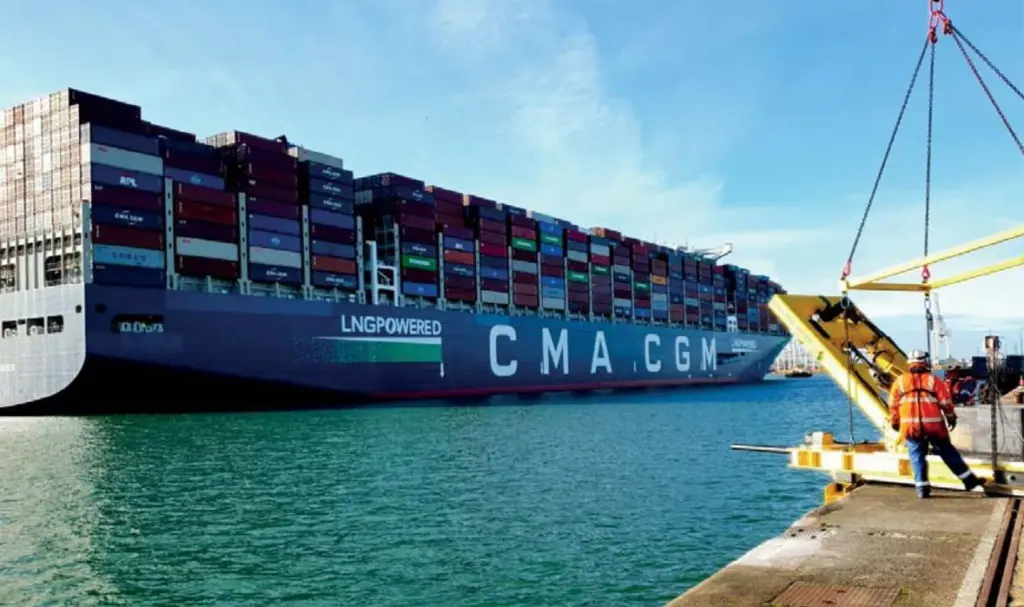
While ongoing influences such as bigger ship sizes, higher demand for cargo and challenging weather conditions add extra pressure on marine bollard systems, technological breakthroughs have resulted in more advanced products such as smart bollards.
However, let’s backtrack four years. In discussing regulations with respect to the design and use of heavy-duty marine bollard systems, Erik Broos of the Port of Rotterdam delivered a paper to the PIANC World Congress on the loadings that multiple lines impose on bollards. Ben Simpson, Business Development Executive, Fendercare Marine, takes up the story.
“BS 6349-4 suggests that a maximum of two ropes from the same vessel should be considered, but we know that this is rarely the case. Onboard ship the design of the mooring equipment is based around the minimum breaking load (MBL) of the mooring line with a design factor of 1.25. The winch brakes are set at between 50 and 60 per cent of the MBL of the line. We know the design criteria based on the provisions within the relevant parts of BS 6349.
“The actual load imposed by the mooring line,” Simpson elaborates, “will vary with the material from which the line is made and the angles through which the load is applied. Most conventional mooring lines are elastic, to an extent, so the shock loads are absorbed by the rope. Where the situation becomes very unclear is when mooring lines from different vessels are placed on the same bollard. These ropes may have very different characteristics and as such, apply their loads to the bollard in very different ways.”
Simpson notes that there is a trend towards vessels using HMPE mooring lines which are, to all intents and purposes, inelastic as wire rope and should be used in conjunction with mooring tails of a more elastic material such as nylon. “However,” he says, “there are instances where mooring tails, for whatever reason, are not used, leading to a shock load that may be applied to the bollards. At what level will depend on the accuracy of the winch brake setting if indeed the lines are still on the winches.”
Simpson adds that nowadays there are more requirements and specifications for independent bollard testing for new and existing bollards on quaysides: “This is so the client understands the loads that can be placed on existing bollards and that bollards that have been recently supplied can be validated.”
Fendercare in partnership with Associated British Ports (ABP), has identified, designed and engineered a rigorous testing regime in order to demonstrate each bollard would be capable of holding the safe working load within the terminal. “By carrying out FEA analysis and destructive and non-destructive testing, we can provide confidence that the bollards are able to sustain and endure the working loads of the large vessel docking on the quayside.”
THE CASE FOR TESTING
UK-based Bollard Proof, a specialist bollard testing company, has recently tested bollards in Belfast, ABP Immingham and Southampton, Grangemouth, Rotterdam, Antwerp, Marseille, Corsica, Martinique and Guadeloupe. The testing included corroboration of in-house testing of smart bollards with internal and external load sensors.
Generally, taking the testing route can deliver both greater understanding and ultimately knowledge of whether a bollard system is ‘man enough’ for the intended role. Bollard Proof points out that both old and new bollards can be tested.
“With existing facilities, bollards might be so old that load capacity data may not exist,” says Rob Gabbitas, Technical Sales Manager. “Bollard Proof,” he elaborates, “can test and calibrate such bollards with a safety margin and bring a new lease of life to berths, making them fit for duty with an entirely new type of ship. This,” he explains, “has certainly been the case where we have tested bollards which were 100 years old and have as a result enabled mooring facilities to adapt and accommodate cruise vessels, heavy load-out applications and project cargo vessels in the renewables sectors. Aside from the safety aspect, testing can be a very economical alternative to installing new bollards.”
New bollards can also be tested. Gabbitas notes that many suppliers provide in-house pull testing of bollards, but while this will prove the integrity of the casting or fabrication of the bollard, it cannot ensure the strength of the foundation and anchorage, or pre-tensioning of the fastening of the bollard once installed.
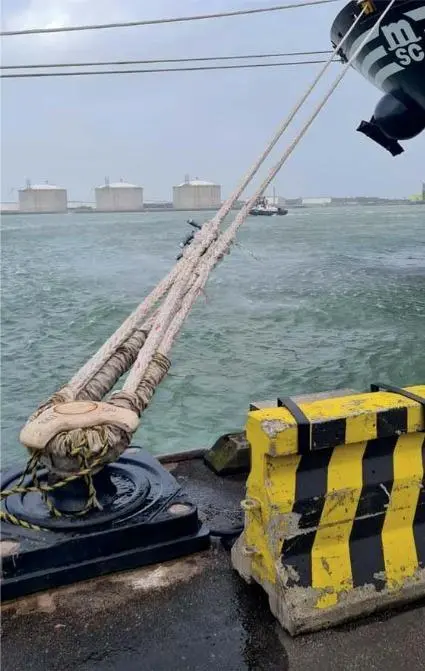
Recent years have seen significant growth in the supply of bollards from less traditional sources. While first cost-beneficial in many cases, the global supply chain has seen the distance and visibility between customer and foundry lengthen considerably, with associated concerns as to provenance and quality of castings. “A number of high-profile bollard failures have raised red flags for many clients in terms of their risk strategies and contingency plans, should busy berths become operationally compromised or unsafe to use,” says Gabbitas.
SMART SOLUTIONS
Until recently, it has not been possible to measure the load on mooring lines using a bollard. The lack of exact load data for moored vessels means that ports have had to assume maximum mooring loads.
“For the operator, it is important to know exactly what the loads on the mooring lines are, especially in the case of bad weather, with high waves, strong currents and gusts,” explains Debora Berkhof of Straatman BV. “If the loads on the lines are too high the ropes can break and the ship will detach from the quay, which can cause serious accidents. The use of Smart Bollards can prevent this from happening. They increase safety by giving a real-time overview of the loads on the mooring lines, and provide a better understanding of overall mooring forces as data is logged.”
Smart Bollards can also help the terminal or port to improve efficiency with the loading/unloading of vessels. “For port operations, a ship must be fully stable whilst moored,” says Berkhof. “Loose mooring lines can result in excessive movement of the ship as a result of passing vessels or high winds. Any excessive movement of the ship can potentially result in crane operators damaging the ship during loading/unloading operations. By constantly monitoring the loads on mooring lines, operators, crew, and port and terminal personnel can ensure the load remains constant, and the ship remains stable. This will inevitably result in smoother, faster, and safer loading and unloading of cargo.
“As installations of Smart Bollards increase, and ports around the world start to notice the benefits, we believe the rate of take-up will grow quickly,” contends Berkhof. “The level of visibility and data collection that the system offers, combined with the unobtrusive design of the system, makes the upgrade an attractive prospect for port operators.”
The Straatman smart bollard system utilises a dashboard to feature all the information generated by the smart bollard. This includes: load on bollard; line direction, line angle, tide level, weather data and vessel history (AIS data). The administrator of the system can add users and set alarms. With the provided API, all data can be accessed to be imported into other systems. Data is accessible to the port authority, terminal operator and the vessel operator.
“Every Smart Bollard is connected to our cloud management system,” says Debora Berkhof. “Besides all data from the Smart Bollards, information from incoming vessels is collected and registered (AIS integration) in a vessel database, together with actual weather information from the location itself. With our standard API our system can easily be integrated in other systems.”
The latest addition to Straatman BV’s Smart Bollard system is a predictive mooring application, developed with Royal Haskoning. “This software application can predict specific mooring forces and ship motion days in advance. This is achieved by combining logged data, ship specifications, and weather forecasts.”
Arwen Brenneman of Canada-headquartered Reliance Foundry reports that Citysage, Reliance Foundry’s new smart cities division, is working on several marine applications for local municipalities. “In one bollard-related example, we are implementing a project that monitors current tide levels and combines this data with local forecast data. Our machine learning system analyses these two data sources and predicts likely future events, sending email and/or text alerts to managers about incoming flooding events. This system will also cue a series of smart bollards to display red, yellow, or green LED lights to let site users know when there is an incoming flood risk along the shore (and up the feeder rivers that lead to the area). Crews can be dispatched to prepare the area and shut down pedestrian spaces that may leave people at risk.”
Related Articles
 OPERATIONS
 OPERATIONS
 OPERATIONS