![PortStrategy[GreenPort]](https://www.portstrategy.com/wp-content/uploads/2026/09/PortStrategyGreenPort.svg)


At the pump
Current developments indicate that LNG will be soon coming on stream. However, bunkering of these vessels could become the key issue.
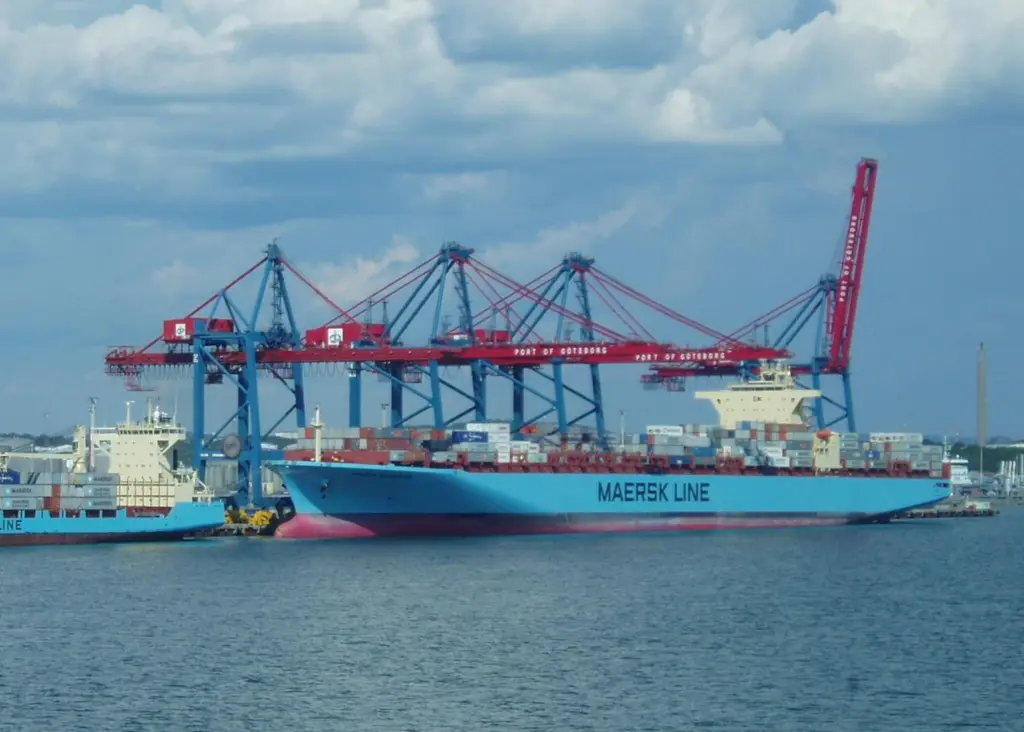
There are initiatives afoot: LNG GOT is a collaboration between Göteborg Energi and Gasnor with a view to a long-term investment in LNG fuel supplies at the port of Gothenburg. A terminal is now being constructed which will be able to receive deliveries of liquefied natural gas for further delivery to bunker boats, with an aim to start delivering LNG in 2013. The interesting thing about this is that Gothenburg plans to bring the LNG to the ships, and refuel during ordinary operations rather than make the vessels deviate to a special facility.
However, there are still some issues that need to be overcome before LNG is generally taken up, says Benjamin Scholz of GL Group.
He explains that at present, there is little experience of LNG fuel supply to larger vessels, especially via bunker vessels. “Despite some small niche solutions, a reliable technology has not been established for this missing link,” he says.
His point is that LNG bunkering must be a comparable option to normal fuel oil bunkering. While LNG bunker vessels might well be the most flexible and cost efficient solution, the major challenge of a bunker system is still the economical and safe LNG transfer within normal port limits during normal harbour operations.
Nowadays bunkering of existing gas fuelled vessel is usually a LNG transfer from a truck or a comparably small shore-based tank installation to a bunker point onboard via a single walled stainless steel hoses.
However, explains Mr Sholz, “a spontaneous release of LNG could have a serious impact on any vessels.” He says, “One worst case scenario is a spill along the bunker line, which would immediately evaporate. As evaporated LNG is much lighter as air, despite its relatively low temperature, the gas cloud will rise along the ship’s side and could be ignited simply by smoking passengers or other ignition sources. Further, if the LNG came into contact with the ship shell structure, the affected steel might well immediately become brittle causing structural damage.”
However, the picture is further complicated because the transfer rates of today’s refuelling operations are generally too small for the planned maritime applications of the future. A cruise berthing window would mean a gas fuelled liner would have to receive about 2,000 m3 of gas in a four hour time slot, as evaluated by the GasPax project. Further, the potential hazard depends on the amount of spill which is linked directly to the transfer rates.
Mr Scholz points out that present guidelines regarding gas operations always assume typical gas industry conditions and a direct transfer for bunkering in port limits is not covered by this scenario. Industry measures however, such as pressure test and purging procedures, plus secondary barrier principles (twin wall hoses, etc) can substantially reduce underlying risks. There is no doubt that a profoundly safe technology in conjunction with strict safety procedures will evolve in the near future.
Apart from the pure bunkering process, operational and navigational challenges have to be considered. Rough sea conditions or even collisions could result in risks and loading stresses of bunker equipment beyond their design limits. Additional technical solutions like dry disconnect couplings would have to be considered to minimize a potential spill.
Additional technical safeguards have to be considered like the release of gas due to opening of pressure relief valves due to large amounts of boil-off gas being created due to pressure differentials.
Mr Scholz predicts that there will be a growing interest in LNG bunkering in port boundaries. “If technical and organisational solutions can be addressed,” he says, “the risks can be kept below acceptable levels and LNG bunkering will become as established as normal fuel oil bunkering.”
Related Articles
 ALTERNATIVE FUELS GREENPORT
 ENERGY & TECHNOLOGY GREENPORT
 ENERGY & TECHNOLOGY GREENPORT