![PortStrategy[GreenPort]](https://www.portstrategy.com/wp-content/uploads/2026/09/PortStrategyGreenPort.svg)


Clean technology post-pandemic
In the wake of the Covid-19 pandemic and at the beginnings of the road to recovery, three clean tech companies have united to debate environmental efficiency in the post-pandemic era, reports Anne-Marie Causer
In the wake of the Covid-19 pandemic and at the beginnings of the road to recovery, three clean tech companies have united to debate environmental efficiency in the post-pandemic era, reports Anne-Marie Causer
With the global transportation sectors continuing to suffer the effects of the measures enforced by governments worldwide to minimise the spread of the pandemic, the optimisation of vessel efficiency already has and will play a crucial role in ensuring the commercial buoyancy of the sector going forward.
That is the view coming out of a recent online debate held by three big players in the Swedish clean-tech sector.
Swedish clean technology innovators Lean Marine Sweden AB, I-Tech AB and PowerCell Sweden AB are of the view that economic recovery will not be instantaneous and that maintaining a financially and environmentally sustainable business will be a bigger challenge than ever before.
During a virtual industry discussion on 13 May, the trio discussed how antifouling coatings and marine fuel cells, among other things, will play an integral part in the marine sector’s recovery.
Biofouling challenge
During the webinar, Philip Chaabane, CEO, I-Tech, discussed some of his concerns about biofouling control and what happens when ships sit still for too long, as has been the case for some during lockdown.
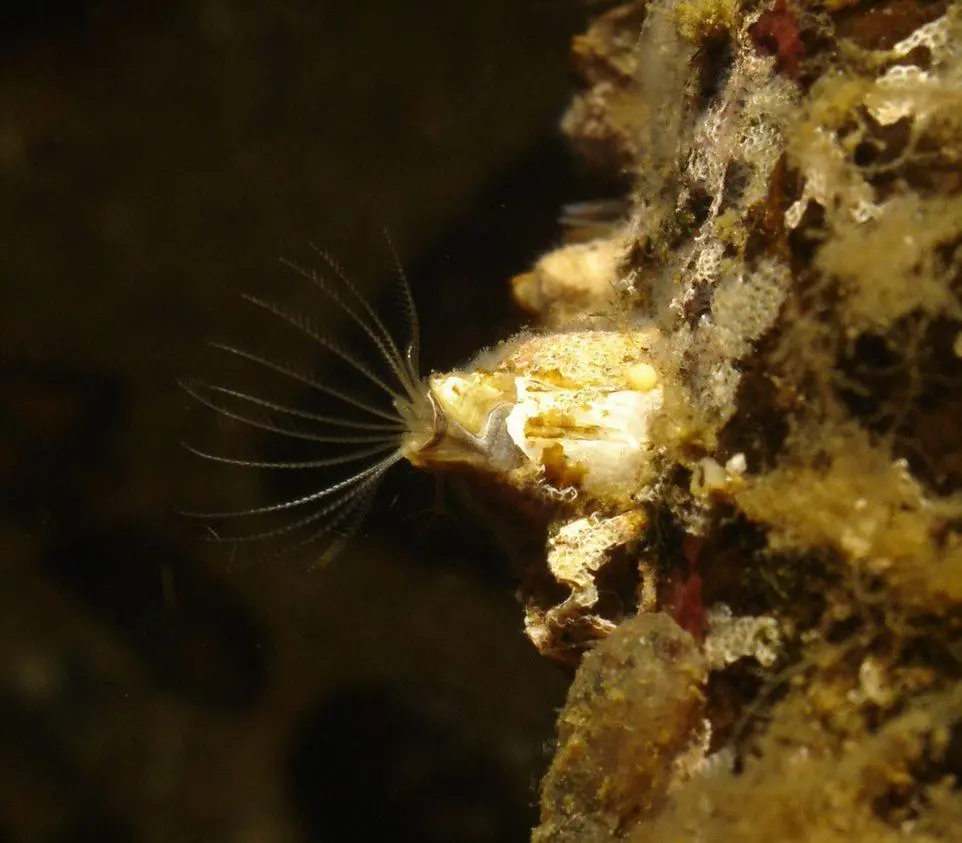
“Idling is a huge risk for ships when it comes to barnacle colonisation on the hull. With the number of ships idling increased due to current lack of need for goods transportation during the pandemic, the probability that a huge number of ships will have barnacle fouling below the waterline is very high,” he said.
Mr Chaabane explained that a ship’s hull is instantaneously occupied by macro molecules, be these sugars or proteins. Then, microbial fouling occurs which is usually one cell organisms that create a slime layer – this slime layer can arise quickly, in a matter of hours.
After a few weeks tertiary colonisers come in – this includes barnacles. If idling goes on for longer, for months at a time, all sorts of animal fouling can populate the hull including weeds and molluscs.
The way to prevent biofouling is the use of antifouling coatings he said.
“The better they are, the better they will prevent fouling. For this technology area there are no shortcuts and no cheap solutions that can be found to resist biofouling. However, since the ROI case is very attractive for antifouling coatings, they are a good long-term investment.”
New research commissioned by I-Tech, conducted by the Safinah Group, found that a lot of ships surveyed at drydock (249 ship sample size between 2015-2019) pre-pandemic were fouled by barnacles. In fact, 44% of vessels surveyed had more than 10% coverage of barnacle fouling – a lot under usual business conditions.
Imagine what that sample would look like when surveyed at their next drydockings post-pandemic, barnacle fouling will be a lot higher for a lot more vessels due to increased idling (barnacles only strike when a ship is sat still).
Barnacles cause huge hydrodynamic drag problems which means less efficiency, more fuel consumption and more emissions, so fouling is an important issue to get to grips with post pandemic.
Going forward, Mr Chaabane said that regulation will help drive the increased use of advanced antifouling technology. Biofouling management enforcement is currently only served by guidelines from the IMO. However, on a regional basis and even port by port there are stricter regulations being enforced all over the world.
Some vessels have been turned away due to having too much fouling and posing too high risk of transporting IAS into the ecosystem. Owners of these vessel have had to sail their vessels away to undergo hull cleaning, with great added expenses and delay to cargo delivery/pick up schedules.
CO2 emission reduction targets are also a driver for advanced antifouling coatings requirement. From the hull alone, the around 100 million tonnes of CO2 could be saved per year based on a 10% fuel saving unlocked from premium antifouling coatings use across the global fleet.
Zero-emissions vessels
Johan Burgren, business manager, PowerCell, discussed the role that zero-emission vessels, including hydrogen powered ones, will play in the run up to IMO targets on reducing greenhouse emissions by 2050.
“Zero-emission vessels may have to set sail around 2030,” he said. “Therefore, hydrogen fuel cell technology is now in spotlight for ship owners and operators since this decade is the right time for zero -emission vessel projects to be hitting the water to achieve IMO targets in 2050.”
A hydrogen fuel cell works by hydrogen gas and fresh air reacting over a membrane creating an electrical current. Fuel cells are generally modular, it is possible to build 100 gigawatts to multi megawatts systems easily by coupling them together.
Fuel cells enable the usage of automotive- based alternative fuel technologies, similar to batteries, in maritime and land applications.
Today, in the shipping industry, hydrogen is not acquainted as a bunker fuel. But Mr Burgren said that he believes that just as bunker oil has taken over the steam machines of the past and developed over time, hydrogen will follow the same pattern, even though at the beginning it may not be a full transition to emission-free hydrogen fuel.
PowerCell was founded within the Volvo Group in 1994 for developing and reforming systems for fuel cells, to shift cars from diesel to hydrogen. Since then, its stack technology has been developed on 100 kilowatts fuel cell stack – the size of carry-on luggage.
“Covid-19 is not only a crisis time for some companies, it has also been a time for reflection, regrouping and development of disruptive technologies,” said Mr Burgren.
“Earlier, the reflections were around alternative fuels to be used in the existing or converted machinery such as methanol, LNG and so on. With fuel cells, we are adding something completely different: different fuel and a different energy conversion system. This takes some time to develop into full scale solutions. But it is an advantage in terms of the flexibility of the system.”
In terms of a timeline for hydrogen fuel cell technology uptake in marine, Mr Burgren believes that the implementation of zero emission newbuild vessels and the transformation of retrofits will start during this decade.
Hydrogen vessel projects are already happening. PowerCell signed a contract worthen 77 MSEK in April 2020 for developing 3000kW fuel cell system for a 120m vessel with a leading European shipyard. This vessel will have full fuel cell autonomy with hydrogen liquid storage. This will be the largest vessel that has been built so far with fuel cell system and the system and the storage will be fully integrated in the hull.
In just a couple of years it will be possible to reach 9-12 MW fuel cell systems which would answer the need of an oil tanker for instance, Mr Burgren says.
“It is time to reflect, look at what is coming in the future and time to act.”
The webinar take home message was that reducing polluting gaseous emissions in-line with stringent targets set by the IMO will remain high on the agenda.
There is reason to believe that the pandemic will further increase demands from environmentally conscious customers on the industry. As such, the operation of cleaner, greener ships with superior fuel efficiency will be required.
Ports and terminal operators would do well to listen to their customers and ensure they can provide all of the new requirements that ship operators need going forward.
Box-out
Lean Marine Sweden AB offers innovative solutions for fuel saving and increased operational efficiency for the marine industry through its automated and direct fuel-saving system FuelOpt and performance management and reporting software, Fleet Analytics.
I-Tech AB is a biotechnology company that has developed the product Selektope, an active agent that prevents barnacle attachment on submerged surfaces such as ships and boat hulls, but also other marine installations.
PowerCell Sweden AB develops and produces fuel cell stacks and systems for stationary and mobile applications with a world class power density. The fuel cells are powered by hydrogen, pure or reformed, and produce electricity and heat with no emissions other than water.
Related Articles
 ALTERNATIVE FUELS GREENPORT
 ENERGY & TECHNOLOGY GREENPORT
 ENERGY & TECHNOLOGY GREENPORT