![PortStrategy[GreenPort]](https://www.portstrategy.com/wp-content/uploads/2026/09/PortStrategyGreenPort.svg)

Electric cranes save on emissions in Thailand
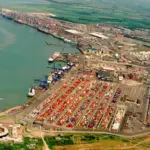
Vahle electrification systems are helping to clean up crane operations at Thailands Laem Chabang port.
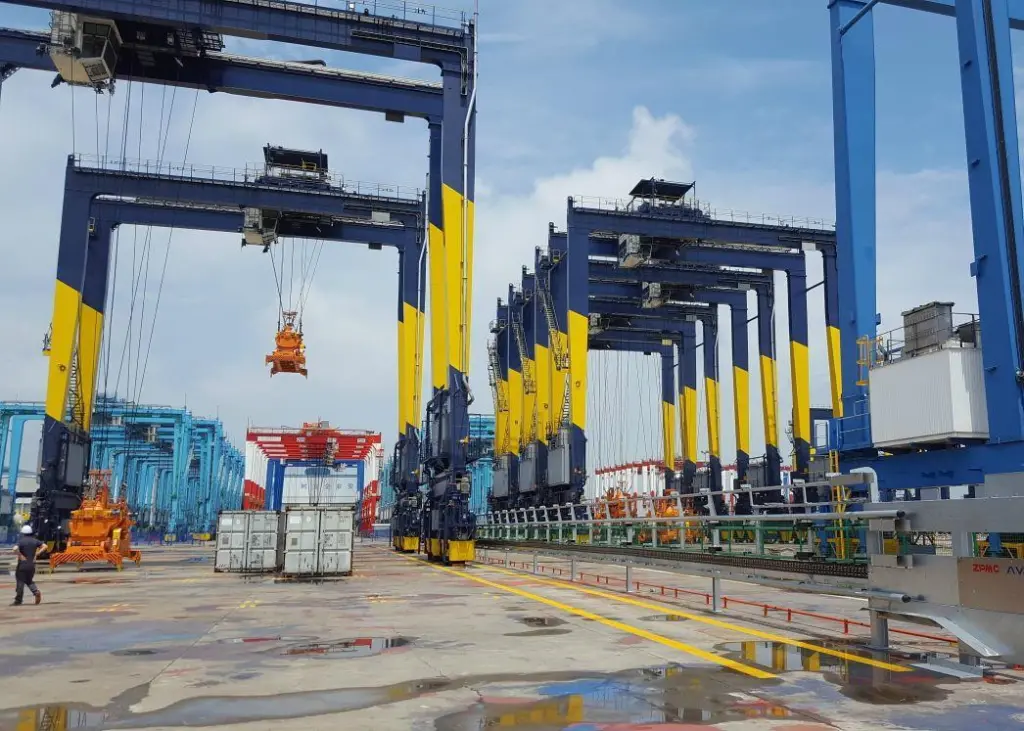
Hutchison Port Holdings has equipped ten new RTGs with 2+2 Vahle electrification systems in order to speed up the efficient transport of containers to and from the port. This is a substantial order for Vahle.
Control software developed by Vahle enables the cranes to enter the system automatically and to couple and uncouple in a very short time with no need for manual intervention.
The Vahle components are completely integrated into the wheelhouses of the RTGs, the result of a successful collaboration with crane manufacturer ZPMC in Shanghai.
For the power supply, almost 2.5 km four-pole Vahle U35 conductor system was installed, in addition to about 1.3 km of SMGX data communication.
Getting automated
This fulfils the prerequisites for complete automation, which is now to be implemented step by step at the port.
Vahle said that Laem Chabang will be the first port in the world to operate with remote controlled cranes.
Retrofitting with e-RTGs has a number of financial and environmental benefits. The cranes are low-maintenance and low in fuel consumption, as well as producing almost zero C02 emissions.
The cranes, which traditionally run on diesel, are also equipped with an electric motor similar to a hybrid car, meaning that 95% of the time the cranes run on electricity only, also reducing noise in the port.
By the time the third and final stage of electrification and automation is completed around 2020, Vahle will have delivered electrified 17 large ship-to-ship cranes and 43 RTGs to the port.
Related Articles
 ALTERNATIVE FUELS GREENPORT
 ENERGY & TECHNOLOGY GREENPORT
 ENERGY & TECHNOLOGY GREENPORT