![PortStrategy[GreenPort]](https://www.portstrategy.com/wp-content/uploads/2026/09/PortStrategyGreenPort.svg)



Fuel saving eRTGs in Georgia
The Georgia Ports Authority (GPA) has completed of the latest phase of its electric RTG infrastructure.
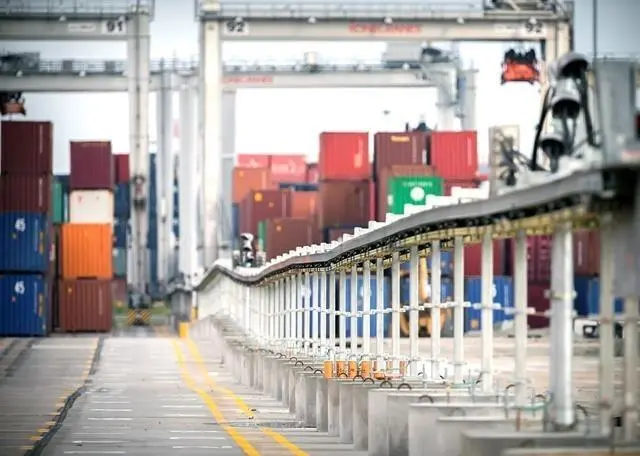
Electric RTGs use up to 95% less diesel fuel than conventional RTGs, GPA is currently in the process of electrifying its entire fleet, which will number 170 RTGs by 2026.
With the completion of this phase (Phase 3), 45 out of the current 146 RTGs have been transitioned from diesel to electric power or purchased with electric power capability.
“We’re excited to expand on our eRTG program, the first of its kind at a North American port,” said Griff Lynch, GPA executive director.
He said: “As part of a decade-long initiative promoting sustainable operations, this technology further establishes GPA’s role as an environmental leader in the logistics industry.”
The eRTGs currently in operation allow the GPA to avoid the use of approximately 700,000 gallons of diesel per year, for a savings of $2.2m.
Once the entire fleet is converted, the Authority will see annual savings of approximately 3m gallons of diesel. At full build-out the system will lower fuel and maintenance costs by $11m annually, even after factoring in the purchase of electricity.
The news was announced at an event commemorating the 1,000th rubber-tired gantry crane produced by Konecranes.
Tuomas Saastamoinen, Konecranes sales and marketing director, concluded: “I appreciate how the GPA has worked closely with us to constantly improve our crane desig. It is wonderful to have delivered our 1000th RTG to the GPA in 2016.”
Related Articles
 ALTERNATIVE FUELS GREENPORT
 ENERGY & TECHNOLOGY GREENPORT
 ENERGY & TECHNOLOGY GREENPORT