![PortStrategy[GreenPort]](https://www.portstrategy.com/wp-content/uploads/2026/09/PortStrategyGreenPort.svg)

Green hydrogen study targets CO2 reduction
BP, Nouryon (formerly AkzoNobel Specialty Chemicals) and the Port of Rotterdam have joined forces to explore making “green hydrogen” for BP’s Rotterdam-based refinery with the potential for significant reductions in CO2 emissions.
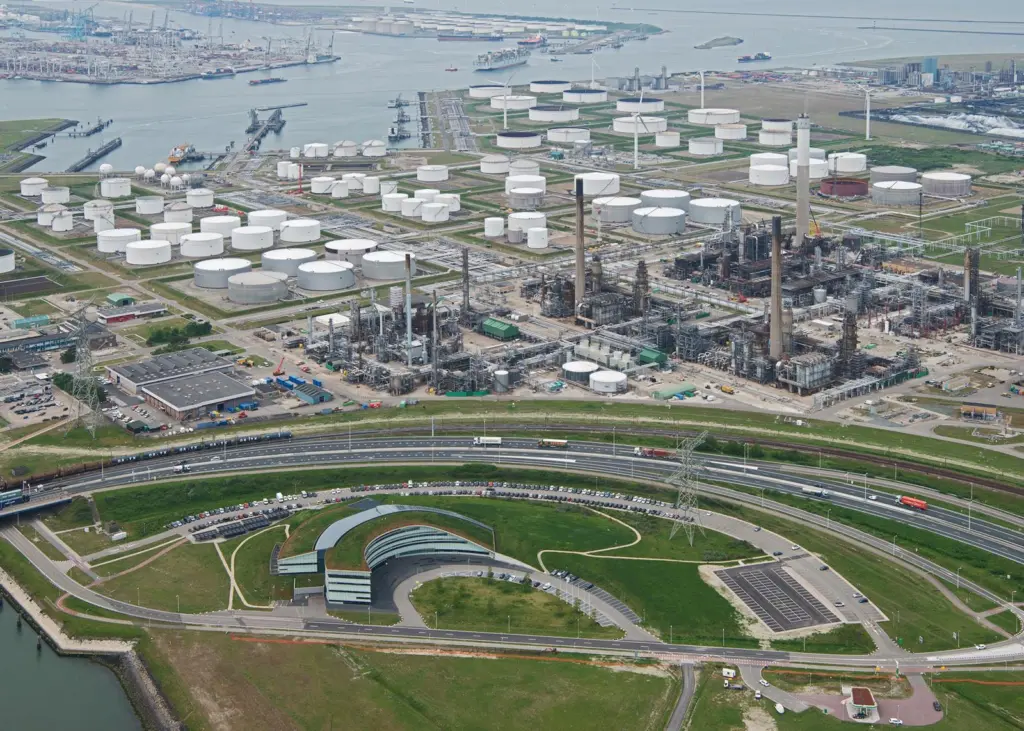
The parties have signed a memorandum of understanding (MoU) to study the feasibility of a 250-megawatt water electrolysis facility to produce up to 45,000t of green hydrogen yearly using renewable energy for the refinery. The electrolysis facility would be the largest of its kind in Europe.
Allard Castelein, CEO of the Port of Rotterdam, commented: “Development of large-scale electrolysers connected to offshore wind farms is vital for making solid progress with the new energy system in order to realize our climate goals. This 250-megawatt electrolyser is a key proof point that Rotterdam has the ability to be a frontrunner in the energy transition, which is an important differentiator for the port industry.”
350,000t CO2 reduction
The refinery currently uses hydrogen made from hydrocarbons, to desulphurise products. Replacing this entirely with green hydrogen could potentially result in a reduction of 350,000t of CO2 emissions per year based on current circumstances.
Nouryon would build and operate the facility based on its leadership position in sustainable electrochemistry. The Port of Rotterdam would facilitate local infrastructure and investigate options for further development of a green hydrogen hub in the area.
The partners intend to take a final investment decision on the project in 2022.
Related Articles
 ALTERNATIVE FUELS GREENPORT
 ENERGY & TECHNOLOGY GREENPORT
 ENERGY & TECHNOLOGY GREENPORT