![PortStrategy[GreenPort]](https://www.portstrategy.com/wp-content/uploads/2026/09/PortStrategyGreenPort.svg)



Its time to start scrubbing
Like it or not, shippers are coming under even more pressure to be cleaner both at sea and in port. In this article, Sigurd Jenssen, Director, Exhaust Gas Cleaning, Wärtsilä Environmental Solutions, takes a look at the environmental benefits of scrubbers.
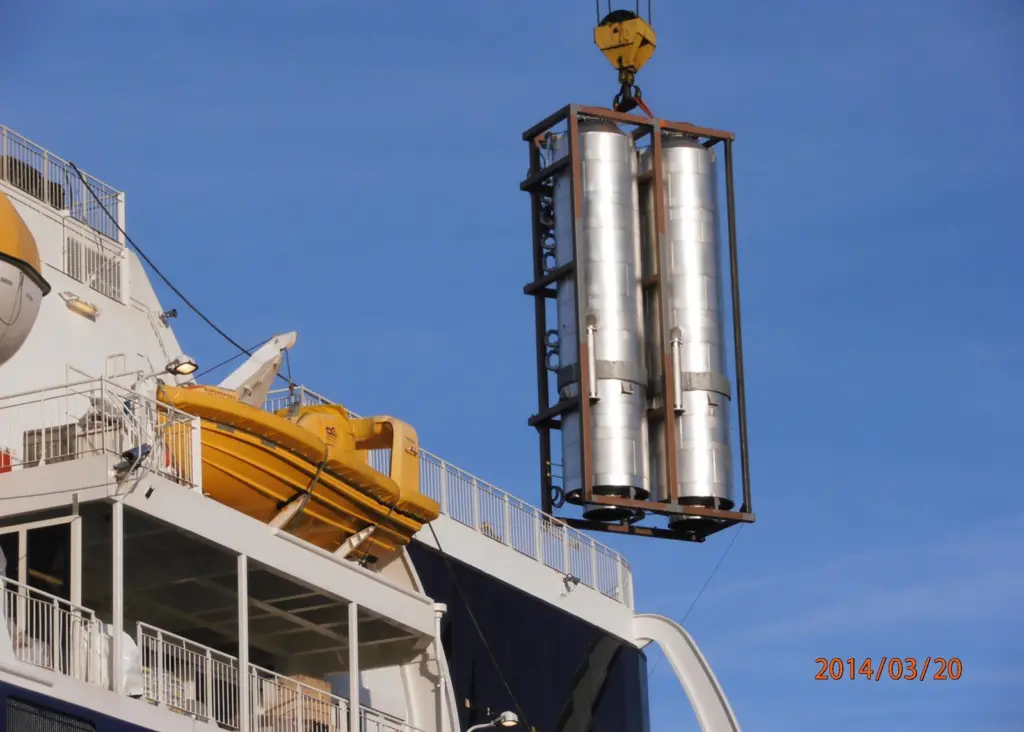
Like it or not, the shipping industry is having to come to grips with the fact that sulphur oxide (SOx) and particulate matter emissions from ships have to be curbed. The question that owners and operators face is no longer ‘whether or not’ to invest in greener operations, but rather ‘which method’ is best suited for their needs to make this possible. The choice is essentially between using cleaner fuel, meaning either low sulphur diesel or gas, or installing a scrubber system to clean the exhaust before it is released to the atmosphere.
Either way, the decision as to how to comply with the upcoming regulations has to be made soon. Ships sailing in Emission Control Areas (ECAs) will have to meet legislation that requires SOx emission levels equal to or lower than that of a 0.1% sulphur fuel. This legislation enters into force from 1 January 2015, so those operating in such areas should already have decided how to proceed. Shippers should also be looking towards the global limit for ships sailing outside ECAs where emission levels will be restricted to the equivalent of a 0.50% sulphur fuel from either 2020 or 2025. Planning for compliance should already be underway.
The development of scrubbing technology
Exhaust scrubbing for ships is a fairly recent phenomenon, so there are understandably many who do not fully understand the process. In 2009, just five years ago, Wärtsilä’s scrubbing technology for marine applications was the first ever to be granted the Sulphur Emissions Control Area Compliance Certificate by the classification societies Det Norske Veritas and Germanisher Lloyd. Since that significant milestone certification, Wärtsilä is helping to lead the way in further refining and improving the technology.
With all the ongoing dialogue regarding legislative compliance, payback time and cost, it is also perhaps important to pay some attention to the environmental impact that scrubbing has. Sulphur oxides are formed in the combustion process when sulphur in the fuel oxidises, thus forming SOx. Sulphur oxides reacts with water, and forms H2S=4, meaning that when emitted to the atmosphere they will react with the water in the air to form harmful acid rain. However, the fact that SOx dissolves in water also makes scrubbing technology possible.
In a scrubber, the exhaust gas is sprayed with alkaline water. The SOx will dissolve in the water and be removed from the exhaust gas along with other harmful emissions, such as particulate matter. If the wash water from the scrubber is cleaned before being discharged in to the sea, most of the particulates and heavy metals that have been cleaned from the exhaust gas will also be removed.
A lifecycle analysis to evaluate the use of scrubbers compared to running on low sulphur fuel was recently carried out by Shell. The study concluded that running on HFO with a scrubber installed will actually be more beneficial to the environment than running on MGO (low sulphur marine gas oil), as the refining processes are comprehensive. This is, of course, just one study but it nevertheless indicates that we are heading in the right direction.
The options
The big advantage that scrubbing has over low sulphur fuel is that it allows operators to continue to run on cheaper fuel oil and still be able to comply with the sulphur limits. This means that the scrubber will pay for itself in the form of fuel cost savings, with the return on investment depending on the price difference between HFO and MGO.
This article focuses on wet scrubbers as they have been thoroughly tested and validated. They also represent the preferred cleaning method, which makes it the most relevant technology. A full wet scrubber portfolio includes open loop, closed loop, and hybrid scrubber versions.
Open Loop systems: This term refers to a system where seawater is used as the scrubbing fluid. It is called ‘open loop’ because the water is taken from the sea, led through the scrubber, and then released back into the sea, thus forming an open loop. This is the simplest option with the lowest operational costs.
Closed Loop systems: The closed loop system is filled with water, which is then re-circulated. The water is not, therefore, taken from the sea and only a small amount of the scrubbing water is let out from the system and released to the sea. There is often a misunderstanding that a closed loop unit will not have any discharge to the sea. This is never the case, since the scrubbing water cannot re-circulate forever, but has to be gradually exchanged for clean water to maintain the scrubber’s operating efficiency. The quality of the water discharged back to the sea, however small the amount, is important. Wärtsilä has always been very strict about cleaning the discharge water, even from the open loop system, and is committed to meeting all relevant legislation. The alternative in the closed loop system is to store the discharge water for a period of time in a tank to produce a zero-discharge mode.
Hybrid systems: Wärtsilä’s definition is that the hybrid system can run in both open and closed loop modes to enable flexibility benefits for customers operating in both low and high alkalinity waters.
Inline system: Wärtsilä has introduced its Inline system to overcome the problem of space restrictions that exists on some vessels. It operates as a conventional open loop system and can also be used with hybrid systems. Color Line’s ‘Superspeed 2’ ferry operating between Denmark and Norway was the first to install this option because of the limited space available in the funnel.
Making the right choice
In deciding the system that best suits any particular vessel, it is essential to consider three things; alkalinity, the operating routes, and not least, the system supplier. Alkalinity is the term used for the ability of water to buffer acid and can, to some extent, be found naturally in all waters. In scrubber systems, alkalinity will help neutralise the SOx and keep the pH value higher. On the open sea, alkalinity levels are generally quite high and the seawater can, therefore, be used for scrubbing. Here the open loop system works well. In some areas, however, such as America’s Great Lakes and many inland waters, the alkalinity is too low for open loop scrubbing to be practical. For ships operating in such areas the closed loop system would be the better option. Obviously, a hybrid system enabling either an open loop or closed loop mode would be best for ships that sail mostly in high alkaline waters but enter low alkaline waters for shorter periods of time.
As to the equipment, there are today a number of suppliers of marine scrubbing systems and the selection process can be difficult. The main thing is to opt for a serious supplier with a good record of technical development and whose products are classification society certified. Wärtsilä, as one of the leaders in scrubber technology, has signed contracts for more than 50 ship sets, totalling in excess of 100 scrubber units.
Handling the sludge
The disposal of scrubber sludge has become an important issue. Crew members have to be capable of effectively managing the sludge, while disposal sites in ports have to be established. Wärtsilä has been in discussion with a number of the larger ports across Europe on the issue of sludge disposal and each has indicated a willingness to receive scrubber sludge. The costs vary from port to port, but the quantity of sludge produced by scrubbers is significantly less than that of engine sludge, which must be disposed of separately. It can be assumed, therefore, that the savings from being able to continue using HFO will not be much affected by these disposal charges.
Finally, a scrubber is not an ‘off-the-shelf’ product and cannot be treated as such. Each vessel is unique, which means that so too is the scrubber system. Early involvement in the planning process of technical experts from the supplier is, therefore, recommended.
Related Articles
 ALTERNATIVE FUELS GREENPORT
 ENERGY & TECHNOLOGY GREENPORT
 ENERGY & TECHNOLOGY GREENPORT