![PortStrategy[GreenPort]](https://www.portstrategy.com/wp-content/uploads/2026/09/PortStrategyGreenPort.svg)

Port energy pioneers
The role ports are already playing in global energy transition is crucial, but they need to up the pace.
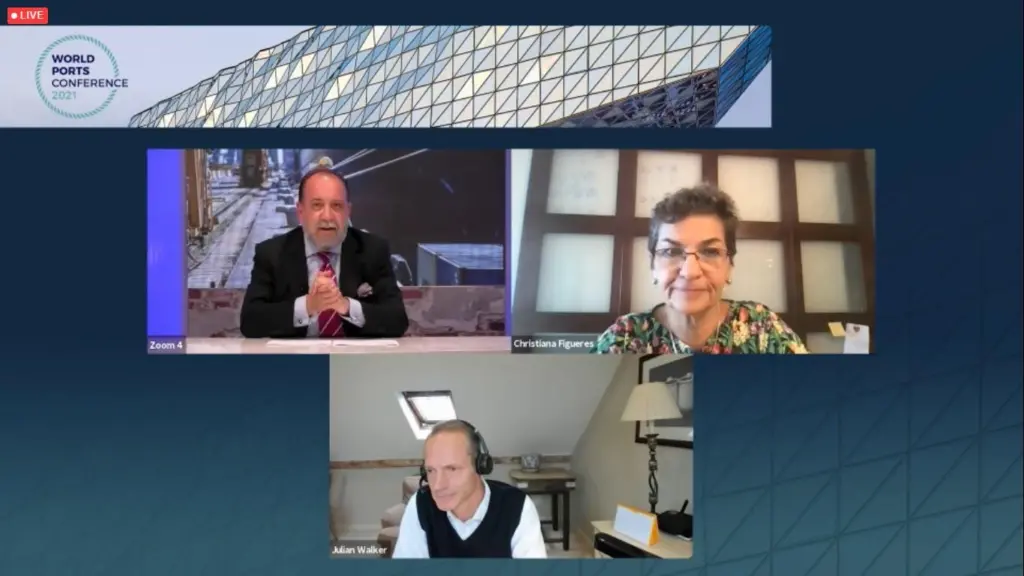
That was the view of Jacques Vandermeiren, CEO, Port of Antwerp, at the discussion on ports as energy transition hubs at the second day of the IAPH conference.
“By creating coalitions of the willing we can achieve the enormous challenge of becoming carbon neutral by 2050,” he said.
Energy systems
Ports create energy systems he said, they are users of energy, importers, exporters and processors.
“So it’s the whole chain that needs to be rethought and recalculated and it’s not a challenge that can be solved alone.”
As well as looking at its own energy usage, a port should play a part as a facilitator and community builder between port stakeholders, the city and the community.
He pointed out that Antwerp’s merger with Zeebrugge is largely about strengthening the ports position in energy transition.
“We have to forget individual interest and even competitors need to join forces,” he said.
The port’s next step he said was to sign an onshore power MoU with France and German to work on an international level.
This is because he said, the energy transition needs to happen on a global scale and bring everything into line including power outage, levies and so on.
Buy in
All panellists agreed that whether a port is owned publicly or privately there is an equal demand to deliver sustainability.
Julian Walker, chief commercial office, ABP, pointed out that it has experienced this first-hand with its investors.
It’s a case of stakeholders “moving up to protect their assets, not about saving the planet,” said Christiana Figueres, the co-founder of social enterprise, Global Optimism.
But this so called “technology decade” is one to be excited about, she added. And ports are at the forefront of the transformation.
There will be opportunities for developing nations to “leapfrog” old tech and embrace new ways of working helping to make them become more globally competitive quickly.
And there will be opportunities for smaller transhipment hubs too, not just the big energy ports.
“This decarbonisation of the global economy is irreversible and this time it won’t just be driven by the large market players,”
But never was there more of a need for global collaboration than now. To not collaborate is “suicidal,” Ms Figueres said.
Related Articles
 ALTERNATIVE FUELS GREENPORT
 ENERGY & TECHNOLOGY GREENPORT
 ENERGY & TECHNOLOGY GREENPORT