![PortStrategy[GreenPort]](https://www.portstrategy.com/wp-content/uploads/2026/09/PortStrategyGreenPort.svg)


Renewable energy in port electrical grids
The electrification in ports is inter-linked with the drive for an improved environmental footprint as well as improving the operating cost efficiency. The integration of renewable energy is now a real addition with electrical power supply in ports being of ever increasing importance, writes Chris Pretorius, Energy Management Division, Siemens AG.
While port electrification is providing a significant environmental contribution, it brings challenges that need to be managed like:
- Understanding the impact of what port electrification means to the loading and capacity of the electrical power grid
- Reliability of the electrical power supply and the impact on port operations through:
- Power black-outs and poor power quality from fluctuating frequency and voltages
- Cyber security events
- The introduction of new electrical power tariff structures and their varying business models
- The increasing role electrical power costs in the OPEX (operating expenditure) of ports
Clearly the days of “electrical power is there and we don’t need to worry about it” are gone. A common thought is the idea that renewable energy will “save-the-day”, but this can only be successful with a holistic approach. The factors vary depending on the country, the local electrical utility regulations and the current electrical supply agreement. There are many points to be considered.
Electrical tariff structure
Electrical tariffs typically have two main components, namely:
- The Grid Usage Charge (€ cent/kWh)
- The Grid Connection Charge (€/kW), also called the Maximum Demand.Additionally, other possible cost drivers are load profile (in de-regulated environments), penalties from a poor power factor, or power quality penalties. The power consumed (usage measured in kWh) can be influenced through identifying and eliminating inefficient usage of power. The maximum demand influences the kWh price paid, and can be mitigated by the reduction of unnecessary peaks in power through intelligent operation.
Recently in a major European port, considerable additional electrical power costs from the utility were incurred, when all the electrical vehicles were charged simultaneously. This led to an usually large peak in the power consumption resulting in a higher tariff being imposed by the utility for that month. This has now been eliminated by ensuring that the electrical vehicle charging is staggered.
Load shedding supports this with peak shaving or load shifting. With this the power consumption is not reduced, but only deferred to a later time. Typically, it must be distinguished between the following:
- Loads or consumers that can be disconnected for a short duration without adversely effecting port operations eg battery charging of electric vehicles, air-conditioning, heating, cooled warehouses etc
- Processes or loads that must have a continuous dependable power supply like STS cranes, safety and security relevant equipment etc.
Energy efficiency relates directly to the power consumed. The lack of awareness and transparency leads to a poor and inefficient usage of energy. Typical examples are unnecessary use of lighting, heating and cooling as well as inefficient motors and drives. The importance of this topic resulted in the European Energy Efficiency Directive, which requires energy audits every four years, according to EN 16247-1 as well as energy management according to EN ISO 50001. These requirements are mandatory in the European Union since December 2015.The four steps namely “Plan, Do, Check, Act” ensure that transparency of energy consumed and user awareness is achieved, leading to significant sustainable reduction in energy consumption. Typically, the focus is on improving the efficiency of the electrical motors where an improvement up to 30% can be achieved. Use of an intelligent motor management programme provides significant support to this.
Renewable energy in ports
Renewable energy supports the environmental targets in a port, especially together with the above-mentioned points. This must be anchored within the port strategy, and obviously be affordable to achieve the financial targets. The decision requires a holistic plan (roadmap), backed up by a business plan. A business transformation programme is typically required and normally addresses the following questions:
- What strategies can ports undertake to reduce emissions?
- What strategies can ports suggest to its tenants for emissions reduction?
- How can a port use its indirect influence with tenants to incentivise carbon reduction?
- Can innovative business models be created that are attractive to the port authority as well as to its tenants?
- What is the price of a resilient electrical power network?
Smart Grids
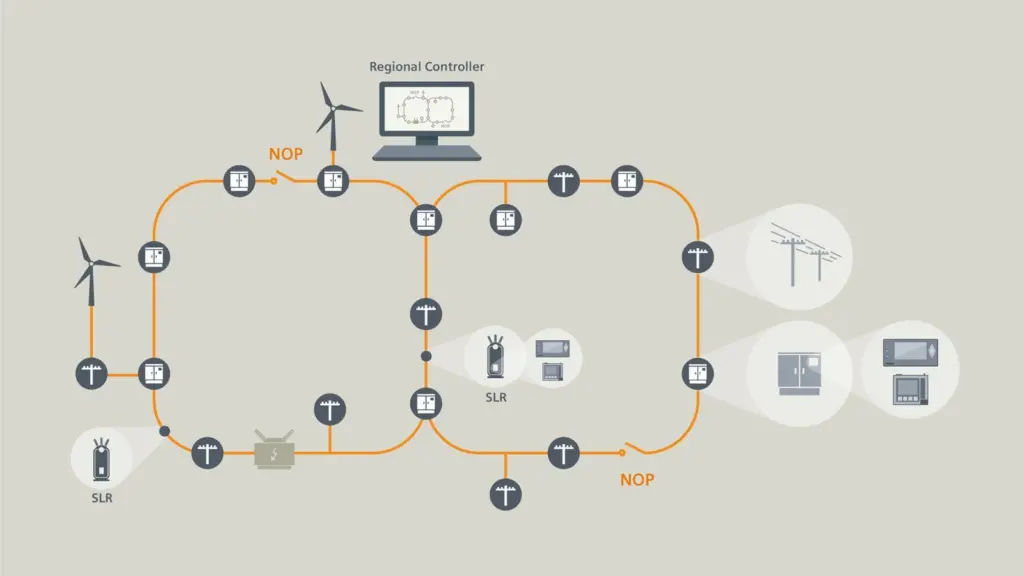
Smart Grids (often incorporating Microgrids) vary in size, complexity and scope. They all require intelligent software, communication and often include renewable integration. The components vary depending on the application. A Microgrid is generally made up of some, or all the elements illustrated in Image 1 and 2 and is managed by the Microgrid manager control system.
The typical objectives for Smart Grid or Microgrids are:
- Ensure reliability of the electrical supply
- Provide improved resilience under adverse conditions
- Support meeting environmental targets eg emission reduction
- Reduce OPEX through lower power supply costs The typical economic factors that need to be considered are:
- CAPEX investment costs eg renewables, storage and related equipment
- OPEX costs including the fuel and power costs
- Price of a resilient electrical power network ie security of supply
- Deferral of investment in the electrical distribution network
A good example of renewable integration (see image 3) can be seen in the Port of Antwerp, Belgium, with the “Wind aan de Stroom” project which has 11 Siemens wind turbines each producing 3MW of power. The turbines are integrated into a Smart Grid of the power utility, Eandis. The holistic approach assured meeting the objectives by using wind turbines that suit the location, close coordination with the local power utility, and a maintenance contract over 15 years to ensure the plant availability.
A further example where renewable power in a port environment is under consideration is the new Siemens Wind Power Rotor Blade factory in Port of Hull.
Recently, the Port of Los Angeles, announced plans to install a US$26.6 million solar Microgrid. The holistic approach will also include energy efficiency upgrades, zero emission cargo handling equipment and vehicles, charging infrastructure, and a dockside vessel emissions treatment system.
Innovative environmental improvements
The environmental improvements continue with some innovative examples of the more recent developments being the Siemens Onshore Power Supply in Hamburg-Altona (see image 4) and the Siemens eHighway System in Sweden (see image 5), which links the port at Gävle with two industrial regions, which focus mainly on steel, pulp, paper and mining.
Other innovative projects like the Siemens Integrated Truck Guidance in Duisport should make significant contributions to the ports air quality.
The integration of renewables, energy efficiency and legislation (environmental and tariffs) are all inter-related and therefore must be handled together in one holistic approach. The selected path must follow the strategic direction selected by the port authority and must be supported by a clear implementation and operating plan.
Our global experience at Siemens has shown that not only the correct equipment, but also the timely inclusion of the responsible staff, are essential to a successful project. In conclusion, the electrification and renewable energy in ports will be increasingly important for their economic success.
Related Articles
 ALTERNATIVE FUELS GREENPORT
 ENERGY & TECHNOLOGY GREENPORT
 ENERGY & TECHNOLOGY GREENPORT