![PortStrategy[GreenPort]](https://www.portstrategy.com/wp-content/uploads/2026/09/PortStrategyGreenPort.svg)



Rotterdam thermal plant recycles waste
REKO has started construction on a new EUR125m thermal treatment plant at the Port of Rotterdam that will process an annual total of 1.2m tonnes of residual mineral waste into clean sand, gravel, electricity and heat.
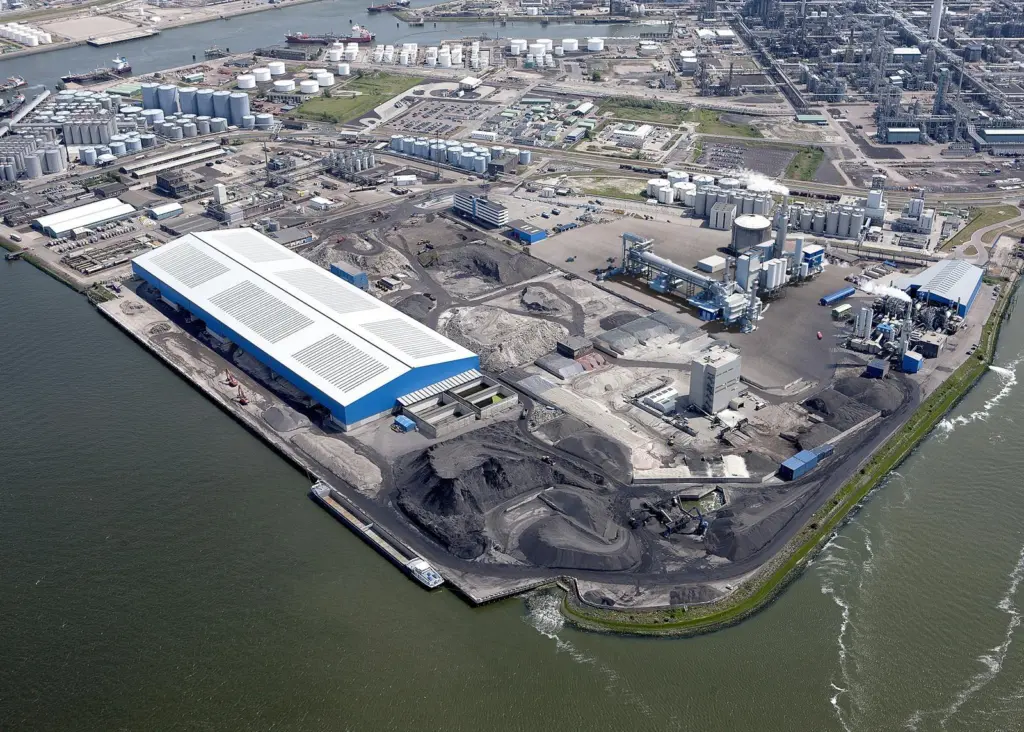
Most of the waste materials processed by REKO in its existing plant comes from road re-construction (asphalt fragments) and building projects (roof paper). During processing, the asphalt is thermally treated in a rotary kiln at a temperature of 10000C, leading to the complete incineration of all harmful components. The thermal cleaning process results in clean sand, gravel and filler – ready for re-use – as well as hot flue gases.
REKO’s director David Heijkoop said: “A major added benefit is that it reduces the need for newly-extracted sand and gravel, leading to a lower impact on the landscape. None of the waste processed by REKO ends up in landfills.”
PAH solution
The plant can process tar asphalt granulates, enabling any environmentally hazardous components found in the material, including PAHs, to be destroyed. REKO can also ship in tar asphalt by water for ease of transport.
Mr Heijkoop added: “Ships don’t have to fill their holds with sand and gravel from abroad, but rather bring asphalt that can be converted into clean sand and gravel at REKO’s facility. It’s the embodiment of the circular economy.”
Heat production
Energy recovery from the hot flue gases is accomplished by a waste heat steam boiler with a close coupled steam turbine which converts the heat into electrical power. The new system, designed to be more efficient and produce more energy than the existing plant, will also produce heat to be delivered to the regional heat grid currently covering parts of Rotterdam. REKO has plans to extend it to other cities and eco-designed houses.
The plant is expected to be operational in mid-2020.
Related Articles
 ALTERNATIVE FUELS GREENPORT
 ENERGY & TECHNOLOGY GREENPORT
 ENERGY & TECHNOLOGY GREENPORT