![PortStrategy[GreenPort]](https://www.portstrategy.com/wp-content/uploads/2026/09/PortStrategyGreenPort.svg)

Shore power drive
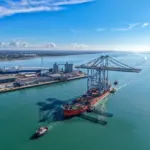
North European ports are committing to provide shore power to large container vessels by 2028.
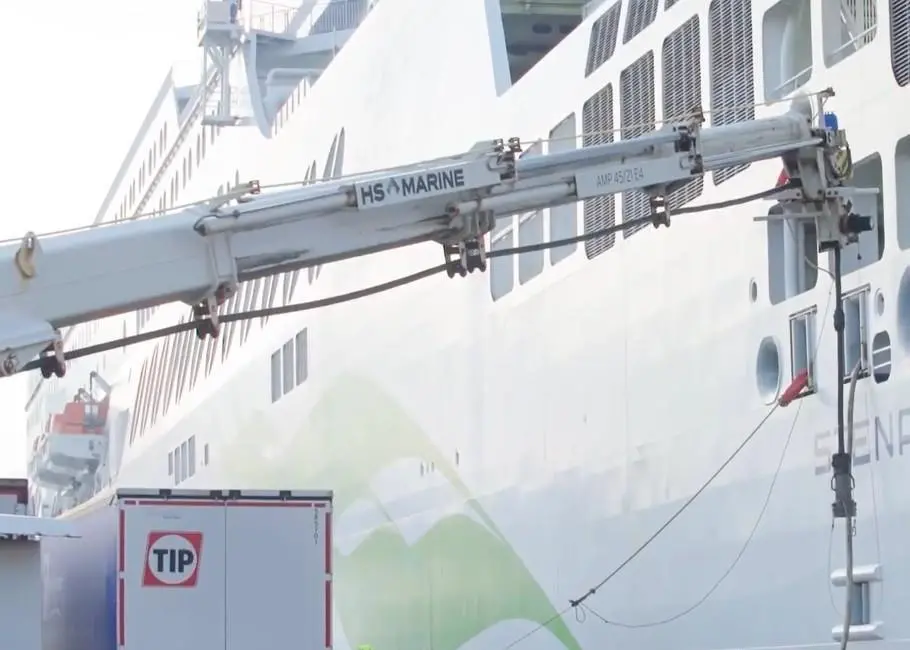
During the World Ports Conference on 21 June 2021, the ports of Antwerp, Bremen, Hamburg, Haropa and Rotterdam signed a Memorandum of Understanding (MoU) to create the necessary conditions and a level playing field to facilitate Onshore Power Supply (OPS) implementation.
“With the joint declaration of the major European container ports on the North Range, we are getting a little closer to zero-emission shipping in line with our greenports strategy,” said Robert Howe, CEO Bremerhaven.
“Together with Haropa Port, Antwerp, Rotterdam and Hamburg, we are sending therefore an important signal: for fair competition, for clean shipping and clean supply chains, for maritime climate protection.”
Green commitment
The MoU sets out the ports’ common commitments with regard to OPS.
It also advocates a clear regulatory framework for the use of shore power or an equivalent alternative.
The ports are also asking for an equivalent valuation of fuels – and in particular the equalisation of certain levies and taxes on electricity for shore power use with those on marine fuels – and sufficient availability of public funds to implement these projects.
By moving forward proactively, the ports hope to pave the way for other ports, terminals and shipping segments to follow their example.
Whereas the signatory ports acknowledge the fact that OPS cannot be the solution for all berths, vessel-types and sizes of vessel, they acknowledge that OPS is a very suitable solution to reduce ship emissions at berth.
Considering the size and energy demand of ships, the deployment of OPS requires large investments and requires technological challenges to be overcome.
These mainly relate to frequency conversion, grid connections and flexibility needs, which, together with a lack of public funding, constitute just a few of the many hurdles that are delaying the uptake of the technology.
Related Articles
 ALTERNATIVE FUELS GREENPORT
 ENERGY & TECHNOLOGY GREENPORT
 ENERGY & TECHNOLOGY GREENPORT