![PortStrategy[GreenPort]](https://www.portstrategy.com/wp-content/uploads/2026/09/PortStrategyGreenPort.svg)


Turning waste into thermal energy
Canada’s Terragon Environmental Technologies is helping the maritime sector to produce zero-waste discharge and generate its own energy.
The waste expert is currently working with the ports, shipping, industrial, military and defence sectors to try to avoid the pollution caused waste diversion, transportation and land filling.
Andrew Korney, director of sales, told GreenPort: “For the company, the port model creates a nice business case for increasing environmental stewardship. But the same business-model will not work in every single port across the world. We’re learning more as we go along, and it is getting quite interesting.”
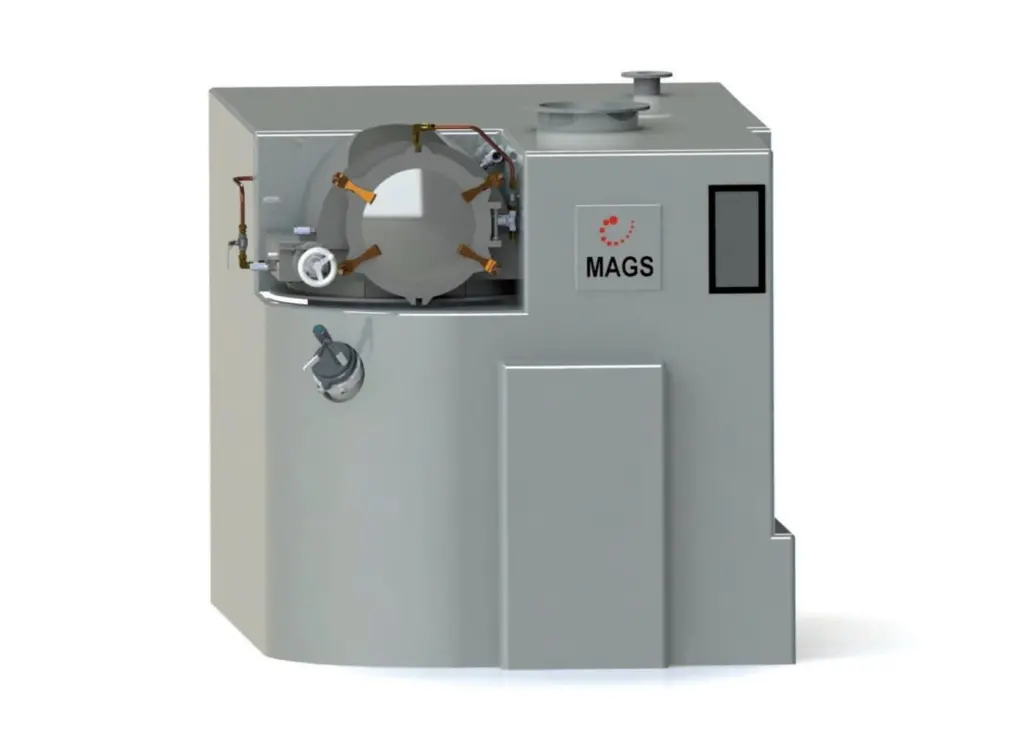
Terragon’s micro auto gasification system (MAGS™ V7) system is suitable for most industry sectors. It takes common waste that includes plastics, paper, food, cloth, used oils and wood and produces surplus thermal energy that can be reused.
The system incorporates a double-barrel design and has a maximum capacity of 40kg/hr throughput for treating solid waste.
Mr Korney explained that the benefits from the system are the same for both land and/or marine based industries.
It enables ports to receive waste from vessels and process it onsite. This eliminates congestion from waste haulers entering/exiting the port, pollution from trucks, and hauling to landfills etc.
The aim of the MAGS system is to avoid the addition of more garbage to land-fills – MAGS waste volume reduction is over 95%. But the biggest environmental benefit is that MAGS sequesters carbon that would otherwise be released into the atmosphere.
Thermal energy is produced by the system, which could be used in buildings within the port. It is also possible to convert it to hot air or into the HVAC system for air conditioning.
In addition to this, ports sometimes need to deal with regulated waste or USDA which needs to be handled/destroyed in a way to prevent infestation or disease from entering another country/location, something MAGS can do easily.
The system is also simple to operate, so the need for highly-skilled operators isn’t required.
The sea based regulations for emissions from shipboard equipment that process waste (incinerators) are quite lax – so MAGS was designed to meet many strict land based regulations, in order for it to be used in ports and other sensitive areas, including the Arctic.
“Ports in the Arctic will have different needs than, say, ports in the Caribbean,” Mr Korney told GP. “Using the energy is key to increasing efficiency and comes down to providing a $/kW for the site.”
Terragon Environmental Technologies was recently voted the ‘one to watch’ at the Fathom Ship Efficiency Awards.
Related Articles
 ALTERNATIVE FUELS GREENPORT
 ENERGY & TECHNOLOGY GREENPORT
 ENERGY & TECHNOLOGY GREENPORT