




Double agent
Independent ship agents weigh up better IT with increased officialdom, finds Martin Rushmere
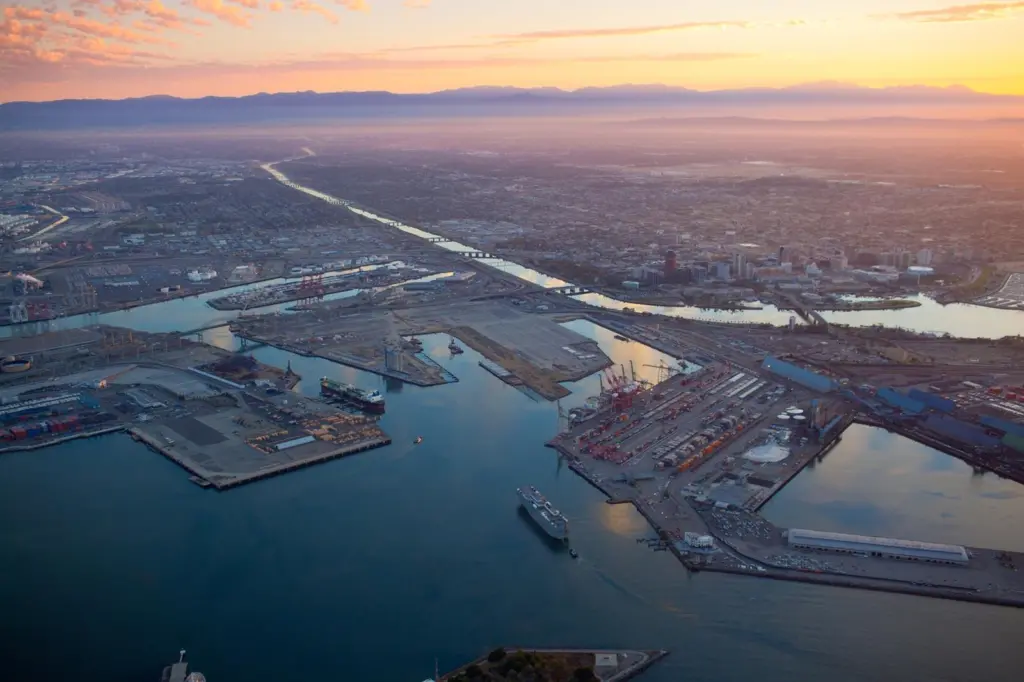
Occupying a quiet corner of the industry, shipping agents are making the most of the increasing reliance on electronic communication while grappling with the increasing burden of paperwork and official regulations.
The sector has been described as “plankton in the sea of commerce”, but its role encompasses an enormous variety of work that vessel owners are only too happy to leave to someone else – and which has long been underappreciated in the maritime world. Only recently was the definition of an agent included in the IMO’s Facilitation Convention.
A big point of debate is whether ports will come to offer the same services, shutting out independent/third party agencies; the unanimous response from the sector itself is “no”.
Says Jonathan Williams, general manager of the Federation of National Associations and Shipbrokers and Agents: “There’s a conflict of interest If a vessel damages a port facility, there will be a problem. Can the vessel owner rely on the port being impartial in dealing with liability? Trust and professional ability are the essentials in this business.”
Scott Jones, past president of the Association of Ship Brokers and Agents (USA), notes that there is almost no possibility of US port authorities offering the services. “They are almost all landlord ports, leasing out the terminals and transhipment facilities. Changing this practice will certainly not happen anytime soon.”
He also emphasises the loss of competition and conflict of interest. “The customer would not be served as well and costs would increase.”
Bryan Phillips, chief innovation officer for Inchcape, points out an extra complication: “Shipping lines would probably face much more paperwork, having to deal with different reporting requirements at each port, whereas agencies operate on a uniform system that cuts down on time and money. Competition would also be reduced at ports, which would have a monopoly and could feel free to charge what they want.”
Rates and fees are entirely a matter for agents and customers among FONASBA member associations. “There are no set fees or methods of setting rates,” says Mr Williams. “It’s entirely up to the parties involved.”
In the US, antimonopoly (antitrust) laws are aimed particularly at preventing rate collusion in the commercial sector. Mr Jones says: “There are probably as many different rates as there are shipping lines and they range from ‘el cheapo’ levels, providing the most basic services, to high quality, premium agreements that provide everything the customer wants.
“They also vary according to the region. Vessel berthing for grain loading on the Columbia River is somewhat cheaper than for bulkers docking at some California ports.”
Third party agencies mostly continue to be found in the non-container world. “It is a matter of logistics,” says Mr Williams. “Container lines operate mostly on fixed schedules to specific ports, so it makes sense for them to provide their own agency services. Bulk etc. change routes and destinations at a moment’s notice and it’s unworkable for vessel owners to have an office in every port.”
There is some involvement in container shipping, with Inchcape counting Maersk and MSC among its customers in selected locations for liner husbandry, looking after a vessel once it is in the port.
Electric avenue
But the big change in the industry is electronic communications. FONASBA sees this as one of its new spheres of activity, while agencies are investing heavily and promoting their systems to their clients.
Graham Bog, chief operating officer for S5, points out that agent functions worldwide were traditionally “handled through fragmented network of local port agents, which required clients to maintain large centralised agency department to manage multiple agents using different processes. This has been transformed by the impact of modern communications and IT advances, which have enabled worldwide agency requirements to be handled through a ‘one stop shop’.
“These can now be delivered through, a global hub structure operating 24/7 supported by an integrated live systems and a worldwide network of offices, with a clear focus on where tangible value can be delivered. Major blue chip clients have been increasingly attracted to such a partnership which can help them manage change in a challenging market. Underlying this approach is the belief that simplicity reduces cost while complexity increases cost.
“Through investments in global systems, hubs and port offices,” says Mr Bog,” the agents’ role can thus be transformed into a proactive international partner adding tangible and quantifiable value ; whether in terms of process efficiency, cash management or cost control.”
Inchcape offers YourISS2, a uniform tablet-friendly system that assembles all operational data in real time that is sent to clients instantly. “This does away with the need for e-mails and the need to go back to the office to compile information in time-consuming spreadsheets and such like,” says Mr Phillips. The usual information such as disbursement accounts and statements of fact is included.
Added value
The latest service goes beyond supplying only information specific to a client’s vessel and voyage. Inchcape is now supplying general business information of interest to clients – port conditions, weather, efficiency and industrial strike analyses – that allow vessel operators to plan and change schedules and destinations easily and quickly.
“We are only using information that is publicly available and are not including anything that is proprietary or confidential,” says Mr Phillips.
S5’s Mr Bog adds: “Ongoing IT developments are critical to our continued ability to add significant value, enabling full operational and financial visibility, enhanced communications, systems integration and electronic compliance monitoring through automated KPIs. A new generation of our operating system will be launched in this summer.”
The onus is on the agency sector to prove that it can deliver real value in a dynamic and changing market – it is disingenuous for agents to complain that their role is not appreciated.
“The dynamics of the container sector have been completely different, with the agents’ role dramatically reduced,” says Mr Bog, “as the container lines took over most major functions themselves including sales and marketing, documentation and logistics. The agents’ role in this area has dramatically contracted and is restricted to niche trades and outsourced functions such as port husbandry. This is unlikely to be reversed. The major lines have all made major investments in sophisticated systems and there is little scope for these being replaced by third party agents’ systems.”
IT has changed monitoring and establishment of KPIs. The overall change has been to make them much more precise. One agency splits them into internal (how the agency is performing) and external (how well the client is performing).
Internal factors include the time taken for documents to be uploaded; the variance between the original quote for departure and arrival at a specific port compared with the actual cost; and the time taken for the final invoice to be sent after a vessel has sailed. (The benchmark used is a maximum of 30 days.) External measurements include ship turnaround time compared with the average of similar ships at a specific port.
Human touch
But the biggest asset of all is the human element – getting to know clients and anticipating their requirements. The closer this gets, the better the service. “Ninety five percent of port calls go off very smoothly,” says Mr Williams.
The 5% with problems most commonly centre on complaints, sometimes based on misunderstandings but more often on lack of information, from cargo owners about the handling and treatment of their consignments. “It might be raining when stuff is being loaded, or there is rust in the hold that the cargo owner is worried will affect the condition of sensitive commodities,” says an agent. “Often one party or the other has not thought to give the agent all the details – and we have to sort it out.”
The other big problem is complying with the growing list of laws, customs regulations and security requirements. This is especially true of North America (which Mr Jones describes as “the most overregulated place on the planet”) where a myriad of civilian and security agencies, some overlapping each other, troop on board at each port call.
But the trend is worldwide. Moran Shipping Agencies, a US company, says on its website: “Now more than ever before, the negative impacts of non-compliance and the complexities of regulations continue to increase in scope, with the escalation of the occurrences of fines and delays representing a growing problem for ship owners and charterers worldwide.”
Related Articles
 EQUIPMENT
 EQUIPMENT