![PortStrategy[GreenPort]](https://www.portstrategy.com/wp-content/uploads/2026/09/PortStrategyGreenPort.svg)






Kalmar offers vision of supply chain future
A world where container logistics companies never touch a physical container, nor own or operate a single ship, terminal or container handling machine: that’s a future scenario considered by cargo handling solutions and services firm Kalmar.
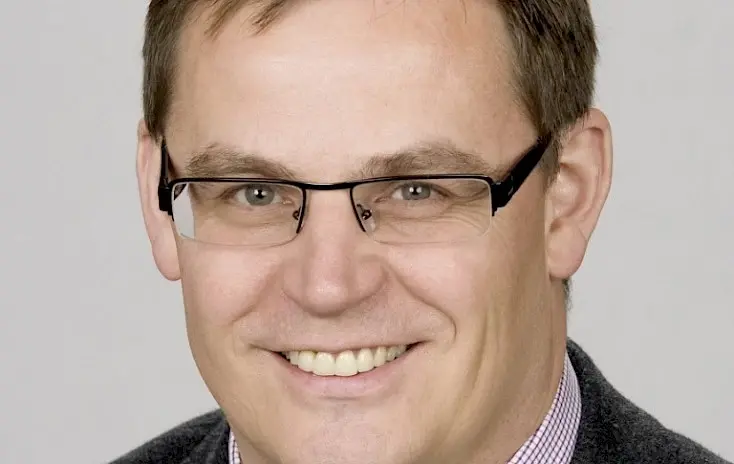
In a Port 2060 insight piece entitled The $17bn market opportunity, Jari Hämäläinen, terminal automation director at the company, claimed that the current convergence of key disruptive technologies such as the Internet of Things, blockchain and artificial intelligence is anticipated to lead to an autonomous supply chain responding to each contextual situation based on the real-time data from all connected devices and systems.
“The openness and transparency of this system of systems will drastically increase the productivity and efficiency of global container logistics,” he argued.
“At the same time, it will remove several layers of middlemen, eliminate manual process phases and shortcut many logistics features as we understand the term today.”
Opportunities on offer
According to Mr Hämäläinen, an identified $17bn of waste and inefficiency in the world’s supply chain is “a great opportunity” for both existing players and new entrants, and companies with new business models will be observed making profit by understanding and optimising cargo flow.
“New digital marketplaces and novel brokering models will emerge, as openness and de facto standardisation create a world in which intelligent solutions can span the entire supply chain — and perhaps redefine the entire maritime industry in the process,” he claimed.
All of this, he argued, will make global business faster and result in quicker deliveries, a transparent supply chain for consumers and companies and a radical shift in how business in Kalmar’s sector is conducted.
Mr Hämäläinen also suggested that the established players might seek to protect their existing markets while new entrants may think differently and challenge the status quo — and that for the industry leaders, the real competitors might not be who they think.
Concluding his insight piece, Mr Hämäläinen argued that container handling equipment, ships and twenty-foot containers will continue to be needed.
However, he explained that cutting many of today’s players out of the autonomous supply chain loop can make a market opportunity “vastly bigger” than business for any logistics firm owning and operating physical assets today.
The business or businesses set to fill this gap might come from today’s global logistics leaders, from another field or from the software-based start-up realm.
“So, what should we do about this?” he concludes. “Carry on with business as usual — or start changing the world, and our own ideas, before someone changes them for us?”
Related Articles
 CONTAINER & CARGO HANDLING
 CONTAINER & CARGO HANDLING
 EQUIPMENT