






New port tools to maximise investment
BMT Asia Pacific has introduced two new tools designed to maximise return on interest for port investors and operators.
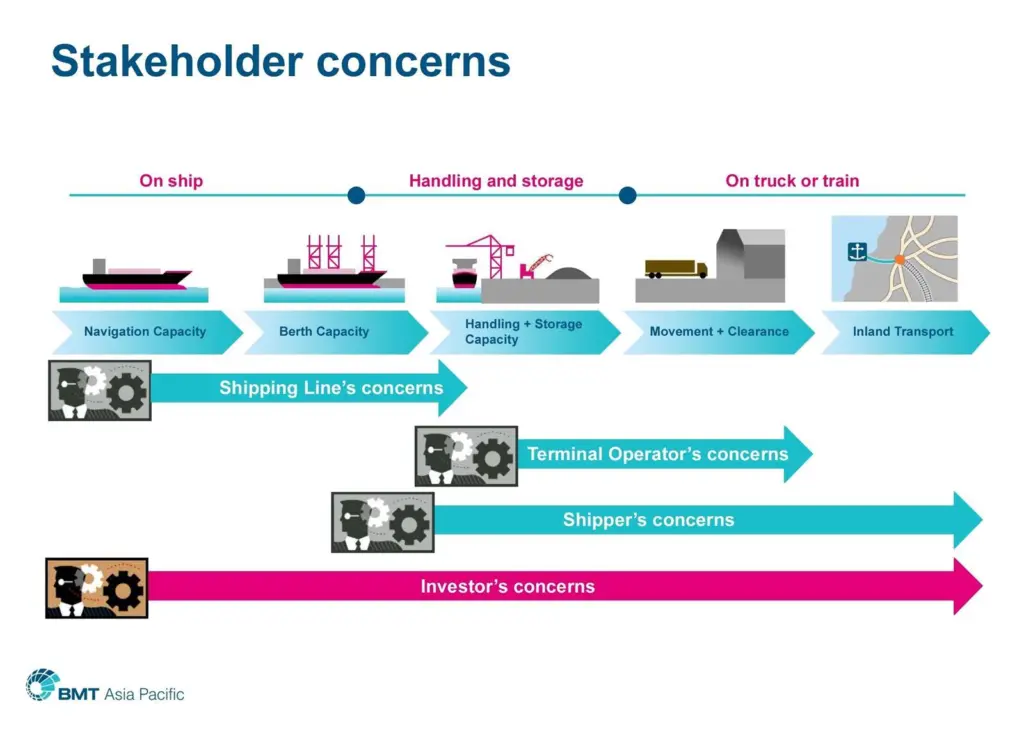
The Port Choice Model and Port 360° are designed to evaluate the competitive advantage of a given port within its environment. The tools uniquely apply both quantitative and qualitative methodology to measure a spectrum of criteria defined by leading port experts and economists.
“For operators, the tools allow them to gain an overview of the competitive situation affecting their port/terminal projects in a structured manner,” Dr Richard Colwill, managing director, BMT Asia Pacific, told Port Strategy.
“Port development proposals can be adjusted to exploit gaps in the market, competitors’ weaknesses, avoid direct competition with existing facilities where this is unlikely to be advantageous to the project, and identify issues for negotiation/lobbying with local government/stakeholders,” he added.
Typical market share tools draw upon typical; market studies including historical market share data, distance or travel time estimates but BMT’s tools go one step further.
The Port Choice Model includes trucking time from factory to port, average waiting time in ports, frequency of sailings and terminal handling charges.
Port 360° meanwhile examines the competitive strengths of ports or terminals at the same port in relation to cargo throughput, physical attributes, hinterland connectivity and management and operating systems.
BMT told PS the Port Choice Model has recently been validated and deployed in support of the Hong Kong Government’s “HK Port Masterplan 2030” where there was a requirement to evaluate the ultra-competitive South China port environment in order to advise on future growth strategies.
Related Articles
 EQUIPMENT
 EQUIPMENT