




Pumped up and confused
Martin Rushmere gets his hands dirty in the murky MARPOL waste disposal debate
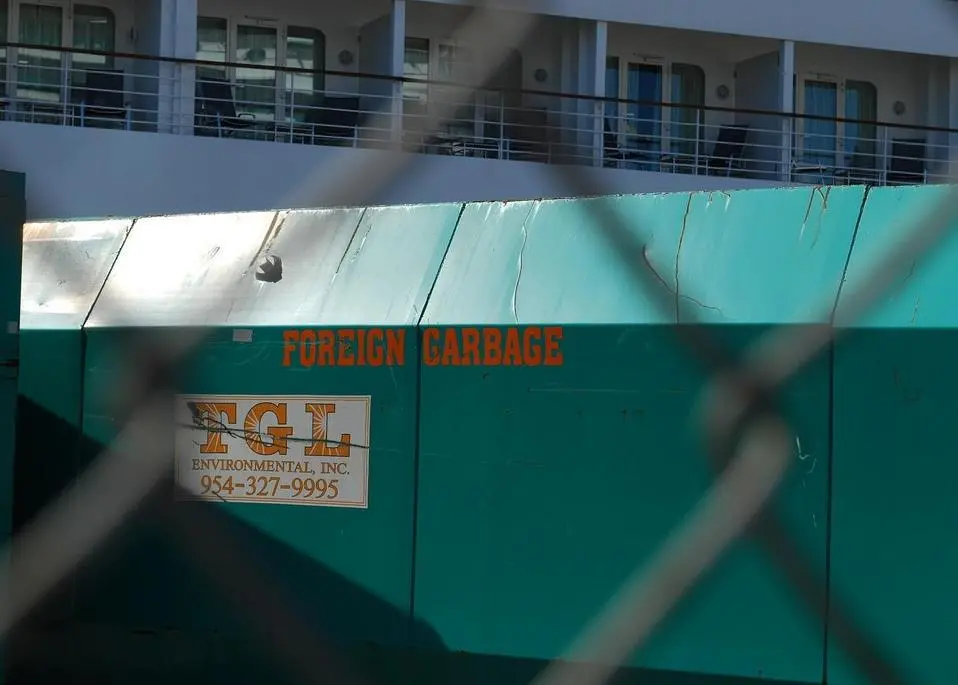
Widespread confusion on the exact requirements for ports in relation to provision of waste/residue disposal facilities has authorities feeling their way in the dark.
US ports are particularly puzzled, it seems. In terms of the Maritime Pollution (MARPOL) Convention protocols, the IMO lists reception facilities at main ports throughout the world, with about 200 ports being listed for the US.
At three of the biggest – Long Beach, Los Angeles and Oakland – port officials deny that many of the facilities exist, while officials at some ports are unaware that MARPOL regulations specify that facilities have to be provided for different types of waste.
As an example, a metals recycling company (owned by a larger group of the same name that also manufactures steel) is listed as a waste reception facility at Oakland under Annex 1. A spokesperson for the company says: “Despite our name being list on this site we do not take or accept ballast water at our facility.”
What’s more, the port authority says that senior officials “don’t believe” that facilities exist at the port for any of the types of residue/waste listed under MARPOL. “You may be looking at outdated information on the web,” said one official.
The Port of Long Beach is unaware of the need for the facilities, with a spokesman saying, “You should try the Coast Guard.”
Confusion reigns
There are at least two possible reasons for the confusion. The information could well be outdated, with the IMO website for the US last updated in July 2011, although no one in the IMO, the US Maritime Administration or the Coast Guard (responsible for enforcing the regulations) has apparently noticed this.
Secondly, the US is so expensive for offloading waste that almost all foreign-flagged ships keep their waste and discharge at foreign ports. At Los Angeles, almost all waste has to be hauled from vessels by barge and taken to official waste disposal outlets operated by the city or the county. Says a manager of one of the biggest barge operators: “In the dozen or so years that I have been here, we have not serviced any container ships. It’s all cruise ships (which have to offload at their home port) and harbour craft such as tugs and pilot boats. Foreign-flagged vessels offload at foreign ports because it’s so much cheaper.”
One industry source reckons that foreign reception facilities charge 10%-20% less than the US.
Added to this is the fact that California is one of at least four US states that classify oily water as a hazardous substance, with stricter and more expensive measures having to be taken.
The Jones Act comes in as a further factor for Gulf of Mexico ports, as they deal with a large number of US-flagged oil supply vessels. Galveston/Houston is among the main regions dealing with these and in the main there are few problems.
Two strikes
However, in December 2013 the Coast Guard issued a warning letter to a facility in the region. “In recent months, the Coast Guard received complaints alleging that certain waterfront facilities within the Sector Houston-Galveston area of responsibility are charging an unreasonable price to remove MARPOL residues/waste from vessels.
“The cost of these services should not present a disincentive to users which may deter the use of reception facilities. Upon investigation, we have substantiated some of these allegations.”
A Coast Guard official says that the problem is not serious, that one facility in particular has now been warned twice about overcharging (the first warning was given more than three years ago) and that the difficulty often seems to stem from facilities being unaware of MARPOL regulations.
A Coast Guard official says less than a dozen complaints are made a year in the US.
Bidding war
Unlike Europe, contracts for taking the waste from ships in most US ports are awarded on an open tender basis by the disposal facility – which are often municipal authorities.
This is probably the reason for the complaint to the IMO in May 2013 about Long Beach. “Unreasonable charge to dispose 75m3 of oily residues (sludge), at the terminal T121, Port of Long Beach, USA. Master of vessel discussed the problem with the port agent who advised that this is the only method available. Disposal fee is $1.35/gallon.”
The Port of Long Beach does not know about the incident, with a spokesman saying,”We are not familiar with this.”
Effective March 28, 2012, large passenger and oceangoing vessels (those over 300 gross tons) are prohibited from discharging all sewage, whether treated or not, while in California marine waters. (Clean Water Act, Section 312)
At the Port of Los Angeles, a spokesperson says: “Waste disposal from ships is directly contracted between the ship operators and the waste disposal operators. The approximate cost to pump out and dispose of sewage water from the ship’s holding tank is $2,340 for every 5,000 gallons of waste (approx. $0.50/gal.).
“The cost to dispose of other waste (e.g., oily water, bilge water, solids, etc.) varies, depending on waste type and handling requirements.
“Permits are required from the Coast Guard (for sewage and oil pump outs) and California Fish & Game department (oil pump outs).”
In California the barge haulers have to obtain a Mobile Transportation Permit and be certified as an Oil Spill Response Organization.
Lengthy complication
A complicating factor for the US, according to industry sources, is that vessel masters are unsure of the notice period for requesting waste disposal.
Just what the definition of a ‘reasonable fee’ is remains a mystery. The IMO is non-committal on the issue, with a spokesperson saying,”Words like ‘reasonable’ are not usually defined.”
Worldwide, the biggest procedural problem with complaints is the back and forth between the flag state, the port state and the actual owners of a vessel. The two states have to be notified and given “reasonable time” to respond.
Which is possibly why so few complaints are made to the IMO. “We are getting perhaps 20% to 30% of all incidents worldwide,” says the IMO spokesperson. Says one port official: “It all takes so long, with paperwork having to be filed in addition to the other paperwork, that shipping lines often don’t see the point.”
Most cases involve ports in developing countries, where infrastructure is usually worse than in industrial countries, and shipping lines do not bother to complain – knowing that the situation will be the same the next time.
A notable feature of reported incidents is that in industrial countries, port authorities undertake thorough investigations of the complaints and issue detailed summaries of their findings, particularly the US.
Related Articles
 EQUIPMENT
 EQUIPMENT
 EQUIPMENT