



FRUIT: ON FERTILE GROUND
Brazilian gateway ports for fruit are capturing greater cargo volumes. Rob Ward assesses their performance and plans to facilitate further growth
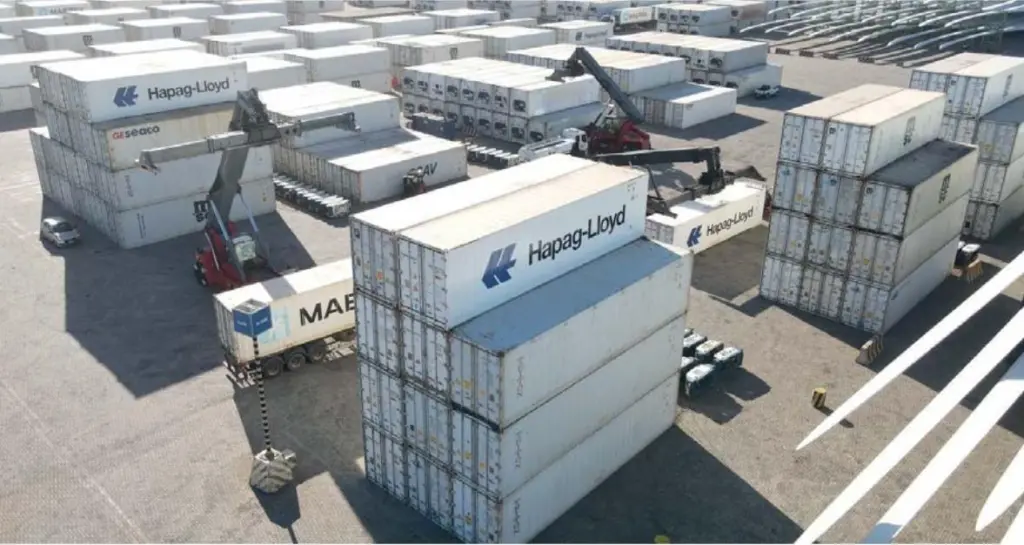
Driven by a worldwide and southern Brazilian appetite for more fruit, the north coast port of Pecém has posted record throughput in 2021 of 470,000TEU, which is 10 per cent higher than the previous year and much more than double its throughput of 200,000TEU in 2017.
To meet this growing demand APM Terminals Pecém has launched a Reais150 million (US$29.01million) spending spree on new equipment, including a new ZPMC Ship to Shore Gantry Crane (SSGC) which will be arriving in Brazil in either July or August, just in time for the next peak fruit export season.
Once the new SSGC (with a reach of 22 rows) arrives, productivity at the terminal – which since 2008 has been majority owned by AP Moeller Terminals, which also has port facilities in Santos and Itajai in Brazil – is scheduled to improve by more than 50 per cent. When the new crane is added to the two existing SSGCs supported by one Liebherr MHC, the facility will be able to operate two large container vessels simultaneously for the first time. It also has a draught of more than 15 metres so can handle the largest vessels currently deployed on East Coast South America trade lanes.
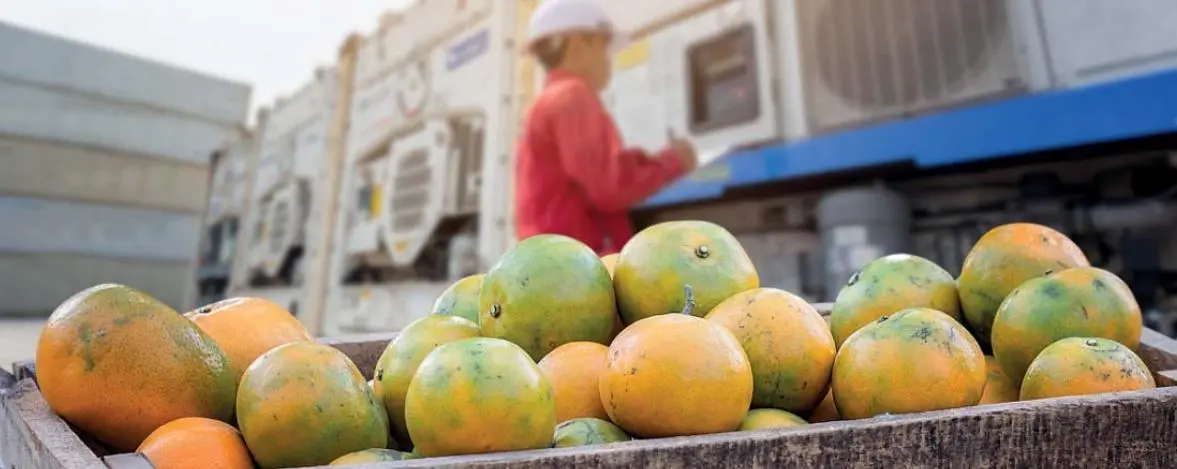
Around 37,000TEU of fruit passed through the container yard at Pecém during the recently completed season (which closed at the end of March), with the main fruits driving the rise in exports out of Brazil in recent years being mangoes, melons and grapes, with apples and lemons/limes providing strong support, although apples tend to get exported more often from the south of the country, mostly via Itajai and Paranagua, rather than via Pecém.
According to the Brazilian Association of Fruit Producers and Exporters (Abrafrutas, based in Brasilia), the South American country exported 1.24m metric tons of fruit last year (which is approximately 130,000TEU) and burst through the US$1billion per year barrier for the first time. Overall volumes were up 18 per cent and sales were up 20 per cent. A weak Real (which is now Reais5.2 to the US dollar compared with 4 three years ago, and just 3 five years ago), has made Brazilian fruit considerably more attractive to importers in both Northern Europe and the US as well as Canada, and that’s where the vast majority of exports are headed.
BURGEONING VOLUMES
Abrafrutas biggest revenue earner is mangoes, with US$248 million worth of exports in 2021, followed by melons (US$165 million). Volume-wise mangoes accounted for 272,560mt (up 12 per cent over the 2020 figure (equivalent to around 26,000TEU) and melons for 257,902mt representing a nine per cent increase year on year. Grapes accounted for US$155m and 76,631mt, up 43 and 55 per cent respectively. Lemons/limes saw sales of US$123m and a volume of 144,944mt, up 21 per cent across both criteria. Apples came in at US$73.8m and 99,000mt, up 79 and 58 per cent respectively, and taking the mantle of the biggest climbers.
North Europe receives some 70 per cent of all the fruit exported from Brazil and with this in mind managers at APM Terminals Pecém, located some 30 miles west of Ceara state capital Fortaleza, each year see an additional service to the region during the peak export season, which usually runs from August to March. In addition, the facility hosts seven cabotage and Gran Cabotage services which help ship the fruit to the south of Brazil and Argentina/Uruguay respectively.
Abrafrutas attends key trade shows in Europe – such as Fruit Logistica in Berlin this month (April) and Fruit Attraction at the Ifema Feria in Madrid (in October) – every year to bolster export markets. Last year the organisation, along with the Complexo do Suape (the port authority for Pecém), also attended an event in Madrid.
Marcelo Gurgel, the commercial manager for APM Terminals Pecém, told Port Strategy that the terminal operator itself would also this year have a presence at both the Madrid and Berlin shows, highlighting its commitment to this key market, and with the aspiration of further growing volumes.
“We are the biggest exporting terminal for fruit in Braziland the last year has certainly been a good one,” Gurgel said, adding, “but there were some problems with the global crisis and shortage of empties, etc. For this year we are expecting further increases and we are adding more extra services for our customers.”
One of the key services out of Pecém is the Hamburg Sud/Hapag Lloyd Tango options to the East Coast of the United States (ECUS), which connects north Brazil to Miami and Florida (via Port Everglades), and the North East conurbations around New York City and Philadelphia. Some 15,894TEU was carried between last August and March of this year. Also notable is MSC and Hapag Lloyd hosting the NWC service to northern Europe from Pecém as well as the WMED service. The carrier notes that Antwerp, the first port of call on the NWC, is 10 days sailing away, and Rotterdam (the main hub for melon imports in Europe, where around 40 per cent are unloaded or transshipped) just 12 days. NWC transported 28,100TEU this season.
“Pecém is one of the most modern and secure ports in Brazil, therefore melons loaded there can be processed quickly and efficiently,” states MSC.
Pecém’s seven cabotage services ship its main fruits (mangoes, melons and grapes), along with more specialised fruits from the Amazonas region (such as caju, guarana, cupuacu, aca and acerola), to the major population centres in the South and South East regions of Brazil (including the Sao Paulo megapolis with around 20m inhabitants). Cargo moves via the ports of Rio de Janeiro, Santos, Paranagua, Itajai and Rio Grande.
Some of the more exotic fruits are loaded at Vila do Conde, close to Sao Luis, which also has regular cabotage connections to the populated south of the country. In the other direction, Pecém sees the unloading of large numbers of containers stuffed with rice, one of the main staples for Brazilians in the North and North Eastern states, in Bahia (port of Salvador), Pernambuco (ports of Recife or Suape), and Ceara (Fortaleza and Pecem).
The main cabotage services are those from Alianca Navegacao (a Brazilian flag sister company of Maersk Line), Mercosul Line (acquired by CMA CGM in 2017) and Log In (the last surviving Brazilian box carrier until December of last year when MSC bought a majority shareholding). These services link the Amazonas port of Manaus to Pecém, and then all key ports down to Santos, Rio de Janeiro, etc with onward connections to Argentina and Uruguay, where mango and melon shipments are also unloaded.
NUMBER TWO AND THREE
The port of Natal, in the state of Rio Grande do Norte, is the second biggest fruit exporter, with 28,000TEU handled from August 2021 to March 2022 with CMA CGM its biggest box carrier. The French company’s Caribbean and US Gulf service shipped around 49,886TEU during the current season, mostly from Natal, which is the closest port to Europe.
The port of Salvador, in the northeast state of Bahia, is the third largest gateway for Brazil’s mushrooming fruit exports. In 2022 Salvador handled 9188TEU of melons and grapes from the Sao Francisco Valley, which was eight per cent more than the 8486TEU handled in 2020.
“We have had a very good 2021 and we are optimistic that 2022 will also be a very good year,” says Demir Lourenco, the CEO for Tecon Salvador, the box terminal operated by the Wilson, Sons group. This facility has also undergone considerable expansion to be able to deal with growing reefer and dry cargoes. “We are completing the dredging of a new quay and once that is done our capacity will rise from 430,000TEU per annum to 530,000TEU,” highlights Lourenco.
Tecon Salvador initiated a US$113 million expansion plan back in 2018 and this July expects the remainder of that plan to be officially completed when a newly extended linear pier of 800m begins operations. The extension has taken longer than expected to complete due to delays in obtaining the environmental license for capital dredging but it is all systems go now. In the meantime, three New Panamax SSGCs arrived just over a year ago – bringing the total in service up to nine – in anticipation of the extension, thereby allowing the facility to operate two large container vessels (each of up to 366m in length) and one smaller ship simultaneously for the first time. Previously it was just one large vessel, with a maximum length of 307m, and one small ship.
Another parcel of the expansion plan was the addition of five more RTGs, giving a present-day fleet total of 16.
In terms of reefer plugs, Tecon Salvador deploys just 600, leaving it some way behind APM Terminals Pecém – which has 1,800 in situ – but Lourenco told Port Strategy that this number is sufficient for today’s needs and more would be brought in “as and when required”.
The three key fruit shipment ports – Pecém, Natal and Salvador – are all equidistant from the Sao Franciso Valley fruit growing region in Pernambuco, from where 80 per cent of all Brazil’s mangoes are grown.
One senior executive for a major carrier, who did not wish to be identified, said he would like to see more fruit and reefer shipments added from the Pernambuco port of Suape.
Related Articles
 OPERATIONS
 OPERATIONS
 OPERATIONS