



No holds barred
No fears of overcapacity in the burgeoning Middle East market, finds Felicity Landon
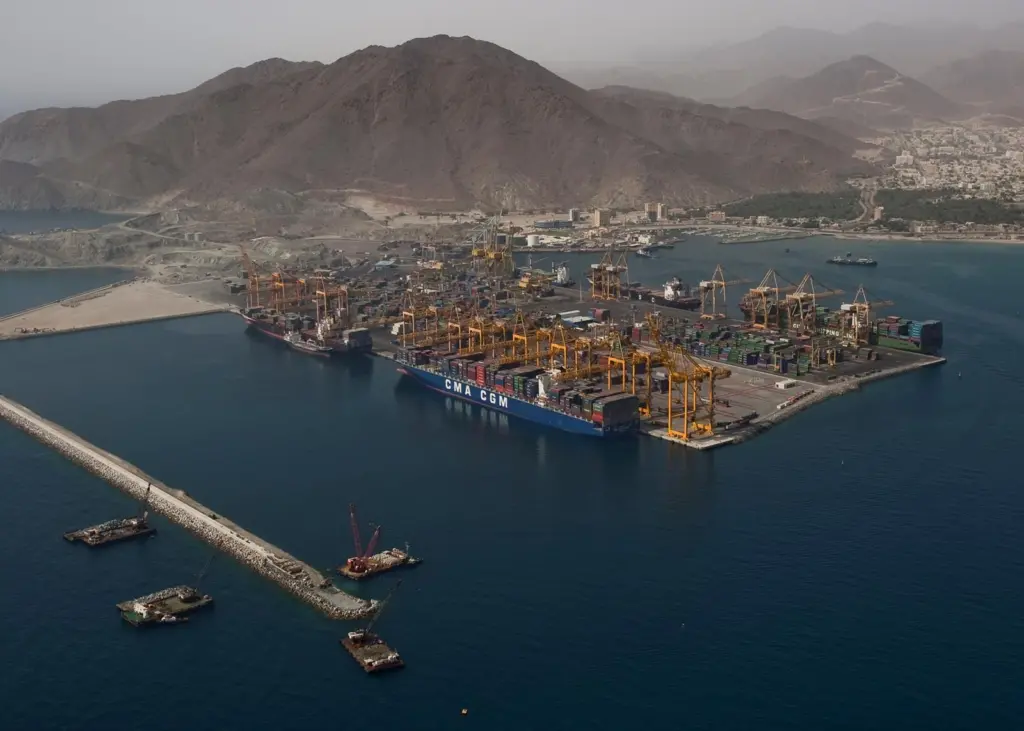
From Salalah to Umm Qasr, port investment and expansion on a massive scale is under way and planned in the Middle East. According to the regional projects’ tracker MEED Projects, the GCC states have a pipeline of port investments worth $15bn over the next five years.
However, with cargo volumes on an upward path – and with uncertainty in some quarters as to whether all the projects will materialise – there seems to be little concern about overcapacity.
“These investments will contribute to the efficiency of the supply chain overall, which is very good for trade,” says Natasha Bukhari, DP World’s group corporate communications manager. “The Gulf region is both a vital hub serving the 2bn people in the wider Middle East, north and east Africa and the subcontinent, and a significant gateway for goods originating from or destined for the rapidly growing GCC market.”
She adds: “Capacity that caters for the growing needs of the region is very much needed, and we believe that competition is a key driver of improved efficiency, as well as creativity and innovation; we see this as a huge benefit to the global supply chain.
“As shipping lines order larger and larger vessels to achieve economies of scale, ports need to meet those new demands – and meet them efficiently,” says Ms Bukhari.
More moves
DP World reported a 7.5% growth in volumes for the first half of 2012, across all regions, and handled more containers in the second quarter than the first, with higher levels of utilisation.
While the unrest across the Middle East affected numbers at terminals such as Sokhna, Jeddah and Aden last year, the port operator says it has seen some of those volumes return over recent quarters. Its UAE, Middle East, Africa and Europe region delivered a 3.2% increase in the first half of 2012.
Notable among DPW’s investments are its plans for Jebel Ali. Meanwhile, operations at Aden Container Terminal and DP World Sokhna have been boosted this year with the arrival of two new gantry cranes at each facility.
Gulftainer, which operates the Khorfakkan Container Terminal and Sharjah Container Terminal in the UAE on behalf of Sharjah Port Authority, gained additional services at both facilities in the first quarter of this year.
The company says it achieved record volumes at both terminals in April, and progress has continued. It is predicting growth of more than 20% by the end of the year; throughput at both KCT and SCT increased by more than 23% in January to July, compared with the same period in 2011.
“With the increase in size of container vessels, most lines are looking towards ports that can handle these ships efficiently,” says Gulftainer communications manager Kathryn Bradley. “KCT is one such terminal which has super post panamax ship-to-shore cranes capable of handling these megaships as well as terminal capacity that can handle transhipment volumes.”
Cash commitment
Gulftainer has invested more than $100m this year in upgrading its facilities at KCT in order to meet the demands of increased business and increasing vessel sizes, says Ms Bradley. The port is on Sharjah’s Indian Ocean coast, outside the politically sensitive Straits of Hormuz and close to the main east-west shipping routes.
KCT is accepted as one of the fastest container ports in the world, regularly achieving 40 moves/hour per gantry crane. SCT is next to Sharjah’s industrial area, which accommodates over 45% of the non-oil manufacturing capacity of the United Arab Emirates. Here there has been extensive expansion works and dredging, with draught increased to 12.5 metres earlier this year.
Overall, investment at the two facilities has provided additional ship-to-shore cranes, RTGs, reachstackers and tugmasters and trailer combinations, with manning levels increased accordingly. Additional container stacking space is being created at KCT.
Gulftainer also has specific inland container depots, or dry ports, in the UAE. The Sharjah Inland Container Depot (SICD) is the base of its third party logistics company, Momentum. Founded in 2008, this company now operates one of the largest heavy transport fleets in the UAE.
Further north, meanwhile, Gulftainer opened the Iraq Container Terminal in Umm Qasr at the end of last year.
Blue boom
APM Terminals’ Middle East operations include Aqaba in Jordan, Khalifa Bin Salman Port in Bahrain, and Salalah in Oman, where it holds a 30% share.
Earlier this year, a major expansion was announced at Salalah, to increase dry bulk and liquid cargo handling capacities to a combined 20m tonnes a year. The investment plans include extending the multipurpose quay by 1,200 metres, with 18 metres draught. The Omani government, which holds a 20% stake in the port, announced it had awarded a commercial bid representing investment of $143m for the project; the port is expecting to double its non-container cargo throughput by the end of 2014.
Salalah, which is 50% owned by institutional and private investors, was the second largest container port in the Middle East region last year, handling 3.2m teu; in May this year it handled its 30 millionth teu.
At the end of June, the port announced it had just handled its highest quarterly container volume in its 14-year history, recording a throughput of 920,000 teu. For the first half of 2012, container volumes grew by 13%, while non-container volumes were up by 4% year on year.
“The use of Salalah as a distribution location for the growing markets of East Africa, India and the Middle East has begun to accelerate, with the agreements signed this year in the port and free zone,” said Port of Salalah chief executive Peter Ford.
New feeders introduced in April and July, connecting Salalah with Jebel Ali, Muscat and Mumbai, were being well received by customers, he added.
Kuwait, meanwhile, has also stepped into the arena with hopes for its own transhipment hub. In April 2011, the Kuwaiti government held a foundation stone laying ceremony for the $1.2bn Mubarak Al-Kabir Seaport to be built on Boubyan Island.
The government has said the project will be developed in four phases, with phase one including roads and railways connecting all parts of the island. Ultimately the plan is for 60 berths with a depth of 20 metres each, a clear challenge for Umm Qasr.
Related Articles
 PORT & TERMINAL NEWS
 PORT & TERMINAL NEWS
 PORT & TERMINAL NEWS